Rugby League World Cup free-to-air TV faces a paywall in the UK
The Rugby League World Cup is heading for a major UK broadcast shake-up in 2026, and it is already turning into a political and cultural row, not just a sports rights story. The immediate flashpoint is simple: Premier Sports has secured exclusive rights to show this autumn’s Rugby League World Cup in the UK and Ireland, while the BBC does not bid. That means fans who have grown used to watching the sport’s biggest international tournament on free-to-air television now face a subscription paywall.
Into that gap steps Lisa Nandy, the UK culture secretary and MP for Wigan, who publicly urges the International Rugby League (IRL) to strike a deal that keeps at least some matches available on free-to-air TV. Nandy frames it as more than convenience. Rugby league, she argues, is “a source of pride and identity that brings communities together across the country”, and she says she shares supporters’ disappointment that the World Cup will not be freely available. Her call is reported by The Guardian and echoed in a separate report carried by Yahoo News.
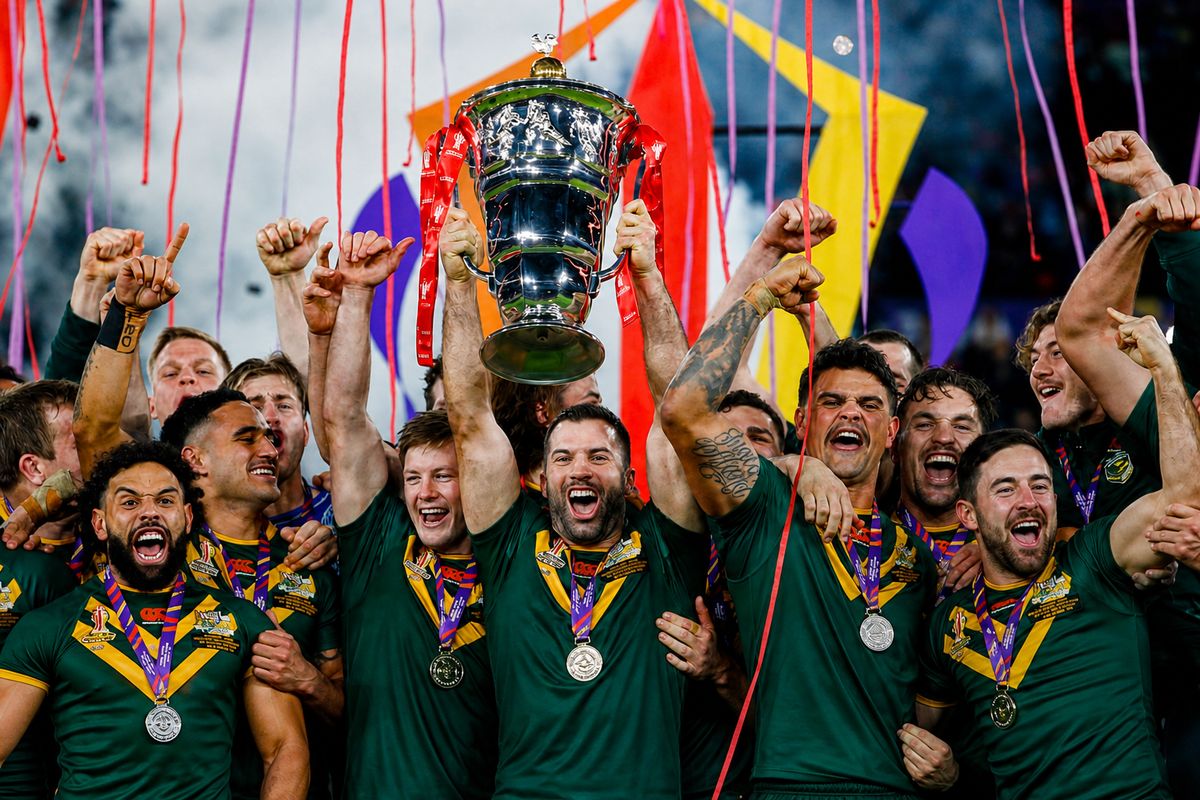
And that is the crux of it. This is not a niche tournament quietly moving platforms. The last edition, staged in England and played in 2022, was a showcase event with the men’s, women’s and wheelchair competitions running together. The BBC showed every match live. The Guardian reports England men’s matches drew audiences “well in excess of one million”, and the cumulative audience for the whole tournament was “more than 30 million”. Those are big numbers for a sport that still fights for oxygen in a crowded UK media market.

What has changed in 2026, and why the BBC is not showing the World Cup
The specific development is the rights outcome for the 2026 Rugby League World Cup, which is hosted in Australia, with some matches staged in Papua New Guinea and Christchurch, New Zealand, according to Yahoo’s report. Premier Sports acquires exclusive UK and Ireland rights, and the BBC, despite its long relationship with rugby league, does not bid. The result is a sudden break with recent expectations, because the BBC has consistently shown the Rugby League World Cup “irrespective of where and when the tournament has been held”, as The Guardian puts it.
It is worth being clear about what “exclusive” means in practice. If the rights holder keeps everything behind its own subscription product, then casual viewers do not stumble across England games on BBC One, and families do not watch finals because they happen to be on a familiar channel. The Guardian notes the backlash is already significant, including criticism “from within parliament”. Nandy’s intervention is essentially a push for a sub-licensing arrangement, where Premier Sports retains the package but allows a free-to-air broadcaster to show a selection of matches, most likely England fixtures.
There is precedent for that kind of compromise. Yahoo notes Premier Sports operated as lead broadcaster for the 2013 and 2017 men’s tournaments, but the BBC still showed some matches at each event. In other words, the current situation is not simply “pay TV versus free TV” as an abstract argument. It is a question of whether the sport can replicate a model that has worked before, and whether the rights deal has been structured with that flexibility in mind.
The IRL’s public line, via its secretary Danny Kazandjian, is that renewing the relationship with Premier Sports helps “develop our business”, and increases the international federation’s capacity to invest “consistently and in a meaningful way in the global game”, as quoted by The Guardian. That is the trade-off in a single sentence: more guaranteed rights revenue now, versus the reach and cultural footprint that comes with free-to-air exposure.
Lisa Nandy, the IRL, the BBC and Premier Sports: who holds the levers
Lisa Nandy is not a random minister parachuting into sport for a headline. She is a self-described rugby league fan and represents Wigan, one of the game’s heartlands. That matters because rugby league’s UK identity is bound up with specific towns and regions, and because the sport has long argued it is under-served by national media compared with football and rugby union. When Nandy says she “wholeheartedly” shares fans’ disappointment, it lands as a statement of personal stake as well as government interest.
Still, her power is indirect. The rights are a commercial agreement between the IRL and Premier Sports, and the BBC’s decision not to bid is the BBC’s. Nandy can apply pressure, convene conversations, and frame the issue as one of cultural access, but she cannot simply instruct a broadcaster to show matches. That is why her wording is telling. She urges the IRL to “work with UK free-to-air broadcasters”, rather than demanding the BBC reverse course. It is a nudge towards a deal, not a decree.
The BBC’s role in rugby league is long-standing. Yahoo highlights that the national broadcaster shows games from Super League and the Challenge Cup, and it “aired last year’s Ashes series”. The Guardian adds that the BBC showed every match of the 2022 World Cup, which was staged in England. So the BBC is not walking away from the sport entirely. But it is stepping back from the biggest international event, at least in terms of holding the rights itself.
Premier Sports, meanwhile, is not new to rugby league either. Kazandjian points to Premier Sports showcasing elite tournaments, “none more so than the 2017 Rugby League World Cup”. That history is part of the IRL’s justification. But it also underlines the tension: Premier Sports can be a committed partner, yet its reach is inevitably smaller than a free-to-air broadcaster. The Guardian explicitly predicts the audience numbers will be “significantly lower” if no free-to-air deal is reached. The source material does not provide subscription figures for Premier Sports, so any claim about exact reach would be guesswork. The direction of travel, though, is obvious.
Why Rugby League World Cup free-to-air coverage matters, beyond fan convenience
Sports rights debates often get reduced to a familiar argument: “pay TV pays more, free TV reaches more”. Fair enough, but rugby league’s case is unusually sensitive because the sport’s growth strategy depends heavily on visibility. The 2022 tournament is the clearest example in the material provided. The Guardian reports a cumulative audience of more than 30 million across the tournament, with England men’s matches drawing well over one million. That kind of mass reach is not just a nice-to-have. It is how a sport recruits new fans, attracts sponsors, and convinces parents that rugby league is something their kids might want to play.
And the 2022 edition’s format matters here. Men’s, women’s and wheelchair tournaments were held simultaneously, and that same approach is repeated in 2026, according to both The Guardian and Yahoo. When all three competitions sit under one broadcast umbrella, the platform choice affects more than the headline men’s matches. Free-to-air coverage can lift the women’s and wheelchair games by association, because viewers arrive for one match and stay for another. Put it behind a paywall and that casual crossover becomes harder to achieve.
There is also a community dimension that Nandy leans on. Rugby league’s traditional UK base is concentrated in specific areas, and the sport often talks about itself as a social glue, not just entertainment. When a major event moves from BBC One to a subscription service, it changes who can participate in the shared national moment. That is not a moral argument against subscription broadcasting, but it is a real-world effect. A family that watched the 2022 final on BBC One now has to decide whether to pay for access in 2026. Some will. Many will not.
None of this means the IRL is acting irrationally. International federations are under pressure to fund development, stage tournaments, and support member nations. Kazandjian’s quote about building capacity to invest “meaningfully” is a hint at the financial reality. But the risk is that rugby league trades away the very exposure that makes future rights valuable. In media terms, it is the classic short-term certainty versus long-term brand building dilemma.
Historical context: from BBC dominance to mixed rights, and a tournament that keeps moving
The Guardian notes the BBC has “consistently” shown the Rugby League World Cup regardless of host nation, which creates a sense of tradition for UK viewers. Yet Yahoo adds an important wrinkle: Premier Sports was lead broadcaster for the 2013 and 2017 men’s tournaments, with the BBC still showing some matches. So the historical picture is not a simple golden age of uninterrupted BBC coverage. It is more like a pendulum between exclusive and shared arrangements, depending on the cycle and the deal.
The 2022 tournament, held in England, becomes the benchmark because it was comprehensive and easy to find. All 61 matches from that tournament were shown by the BBC, Yahoo reports. That is a huge volume of free-to-air coverage, and it likely reset expectations among fans. When people get used to wall-to-wall access, anything less feels like a downgrade, even if earlier tournaments had more fragmented coverage.
The tournament’s recent hosting history also explains why 2026 feels messy. Yahoo reports a joint World Cup event had been due to be hosted by France in 2025, only for it to be postponed after organisers pulled out. Australia then steps in to lead host, with some games in Papua New Guinea and Christchurch. That kind of disruption can affect everything from sponsorship to scheduling to broadcast negotiations. The source material does not spell out whether the postponed France plan directly influences the UK rights outcome, so it would be wrong to claim a direct causal chain. But it is not hard to see how uncertainty in the event’s planning could make broadcasters more cautious.
And then there is the wider market reality. Sports rights inflation has pushed many events towards subscription platforms, while public service broadcasters have to make hard choices about what they can justify paying for. The material here does not provide BBC budget details or the value of the Premier Sports deal, so the financial comparison cannot be quantified. But the pattern is familiar across sport: niche or mid-tier properties often face the toughest squeeze, because they are valuable enough to attract pay TV interest, but not always valuable enough to force a free-to-air compromise.
Industry implications: what this rights decision signals for rugby league and sports broadcasting
For rugby league, the immediate implication is a likely drop in UK viewing, at least in raw numbers, if the tournament remains exclusive to Premier Sports. The Guardian is explicit that the 2022 numbers will be “significantly lower” without a free-to-air deal. That matters because audience size is not just a vanity metric. It influences sponsorship rates, future rights negotiations, and the sport’s ability to argue for prominence in mainstream news coverage.
There is also a strategic question about what the Rugby League World Cup is trying to be. Is it primarily a revenue generator for the international federation, or a shop window for the sport? In reality it has to be both, but the balance shifts depending on the broadcast model. A paywall can deliver a guaranteed cheque and a broadcaster that is highly motivated to serve existing fans. Free-to-air can deliver scale, cultural relevance, and a pathway for new audiences. The 2022 tournament’s reported cumulative audience of more than 30 million is the kind of figure that sponsors and partners notice, even if many of those viewers only watch a small number of matches.
For broadcasters, the story is a reminder that rights are increasingly about platform strategy, not just programming. Premier Sports gains a premium property that can drive subscriptions. The BBC, by not bidding, avoids a cost and potentially reallocates resources to other sports or content. But it also risks weakening its association with rugby league at the very moment the sport is trying to build on the momentum of 2022. Yahoo notes the BBC continues to show Super League and the Challenge Cup, which softens that risk, but the World Cup is a different beast. It is the one event that can cut through beyond the core audience.
And for government, Nandy’s intervention hints at a broader debate about access to culturally significant sport. The UK has long had arguments about which events should be protected for free-to-air audiences. The source material does not mention any specific regulatory mechanism being considered here, and it would be speculative to suggest one. But the political pressure is real, and it tends to grow when a sport can credibly claim community importance and broad public interest, which is exactly the case Nandy is making.
What’s Next
The most likely near-term outcome is a negotiation over sub-licensing, because it is the obvious middle ground and it has historical precedent. Yahoo points out that in 2013 and 2017 Premier Sports led coverage while the BBC still showed some matches. Nandy is effectively asking for a repeat, and The Guardian suggests the most probable free-to-air content would be England’s games. If that happens, Premier Sports keeps the bulk of the inventory, while the sport retains a public-facing presence that can sustain wider interest.
But the shape of any deal matters. A token gesture, one or two matches at awkward times, would not replicate the 2022 effect. The tournament is hosted in Australia, with additional venues in Papua New Guinea and Christchurch, so UK kick-off times could be less friendly than when the event is staged at home. That makes discoverability even more important. If matches are on a niche subscription service at odd hours, the casual audience disappears fast. A free-to-air partner could at least provide highlights, key fixtures, or shoulder programming that keeps the World Cup in the public conversation. The source material does not confirm highlights packages or digital clips, so the exact mix remains unknown.
Longer term, this episode could shape how rugby league sells itself in the UK. If the 2026 World Cup ends up largely behind a paywall and viewing drops sharply, the sport may find it harder to argue for premium rights fees next time. On the other hand, if Premier Sports delivers high-quality coverage and the IRL can demonstrate that extra revenue is being reinvested in the global game, the federation may decide the trade-off is worth it. Kazandjian’s emphasis on building investment capacity suggests that is the strategic bet being made. The question is whether the sport can do that without sacrificing the broad visibility that made 2022 feel like a breakthrough.
Closing thoughts: a test of rugby league’s ambition, not just its TV contract
It is tempting to treat this as a familiar spat about who pays for what. But the Rugby League World Cup free-to-air debate in 2026 is really a test of the sport’s ambition in the UK. The 2022 tournament, with every match live on the BBC and a reported cumulative audience of more than 30 million, sets a high bar for reach and relevance. Moving to exclusive subscription coverage risks shrinking the tent just when rugby league needs to keep it open.
Nandy’s intervention matters because it reframes the issue as one of identity and access, not just consumer choice. She is not arguing that Premier Sports should be shut out. She is urging a deal that keeps the World Cup visible to “millions of fans”, including those who will never pay for another subscription. If the IRL can find a compromise, it gets the best of both worlds: revenue and reach. If it cannot, the sport may discover that the real cost of a paywall is paid later, in lost momentum, lost casual fans, and a quieter World Cup than the one that lit up BBC One in 2022.
Either way, the next few weeks of negotiations, if they happen, will tell everyone what rugby league values most right now. The cheque, or the crowd.