Sky Sports News turns 28, and its original promise still drives the agenda
Sky Sports News reaches a quiet but telling milestone in 2026, 28 years after its public launch on 1 October 1998. It is not a birthday that comes with a trophy parade. But in British sport and sports media, it matters, because the channel helps normalise the idea that sport is a rolling news story, not just a match at 3pm and a highlights show later on.
The channel begins internal test runs on 10 August 1998, with Kelly Cates and Mike Wedderburn presenting the first edition of Good Morning Sports Fans. That detail is more than trivia. It captures what Sky is building at the time, a dedicated, always-on sports newsroom, with a recognisable tone and a daily rhythm that feels closer to financial news than to the old weekend sports bulletin.
In 2026, Sky Sports News sits inside a much bigger Sky Sports machine, owned by Sky Group, a division of Comcast. The channel broadcasts in 1080p using MPEG-4 HDTV, and it is widely available via streaming products including Sky Go and Now, as well as through cable platforms. The technology is modern, the studio look has changed repeatedly, and the competition is louder than ever. But the core proposition remains the same, be first, be live, and make sport feel immediate.

The 2026 milestone, what is actually happening and why it is newsworthy
The development in 2026 is not a single rights deal or a presenter move. It is the industry taking stock of a channel that has outlasted multiple media cycles, from early digital satellite to streaming-first viewing. Sky Sports News launches publicly on 1 October 1998, timed with the launch of BSkyB’s digital satellite service, and it is described as BSkyB’s first digital-only channel. That positioning is crucial, because it shows Sky betting early on a future where niche channels and subscription value are built through constant output, not occasional appointment viewing.
And there is a second, more human angle that keeps resurfacing in 2026, the role of Kelly Cates as a foundational figure in that early era. Cates leaves a mathematics degree at the University of Glasgow in 1998 to join the nascent channel. She is not just “a presenter who once worked there”, she is part of the channel’s origin story, one of the first faces viewers associate with the format. In a media landscape that now prizes authenticity and familiarity, that kind of legacy carries weight.
The channel’s own history shows how it repeatedly reinvents itself without abandoning the basic idea of a live sports news desk. It relaunches as Sky Sports.com TV on 10 April 2000 to tie in with the launch of the SkySports.com website, then drops the “.com TV” branding and standardises its look again on 1 July 2001. Those changes sound cosmetic, but they reflect a bigger strategic question, how tightly should a TV channel be tied to the web, and how corporate should a sports brand feel when it is trying to look fast and reactive?
By 2026, that question is no longer theoretical. Sports news is consumed in clips, push alerts, and social feeds. Yet Sky Sports News still exists as a continuous channel, still built around presenters, live interviews, and the theatre of “breaking news”. The milestone is newsworthy because it highlights a rare thing in modern media, a format that survives the internet by absorbing it, rather than being replaced by it.
Sky Sports News, the channel’s evolution from digital experiment to default soundtrack
Sky Sports starts broadcasting sports news bulletins as early as the autumn of 1992, when it begins broadcasting the Premier League. Initially these are brief “Football Update” segments, later expanded into a 30-minute programme called Sky Sports Centre, typically on weekdays at 6pm and 10pm. The logic is straightforward, if Sky is paying heavily for rights, it needs to keep viewers inside the Sky ecosystem between matches. News does that job nicely.
When Sky Sports News arrives in 1998, it formalises that logic into a standalone channel. The early years are full of branding experiments, including the 2000 relaunch as Sky Sports.com TV, and the 2001 shift to a more standardised, corporate look across Sky channels. Then, in April 2002, the channel refreshes again, promising to be first for breaking news and to provide more useful information. That phrase, “useful information”, is telling. It is not just about gossip or opinion, it is about fixtures, results, team news, and the practical stuff that makes sport feel like a daily habit.
In 2004, Sky Sports News changes its image again, moving to a more open blue look and dropping some older programme brands. The schedule becomes a conveyor belt of named blocks, Sky Sports Now, Sky Sports Today, Sports Saturday, Sports Sunday, and others. Some of those titles later retire or rename, but the underlying approach sticks, create predictable dayparts, make the channel feel like a place you can dip into at any time and still understand what is happening.
There is also a reminder, often forgotten, that Sky Sports News occasionally becomes a rights safety valve. On 20 May 2007 it broadcasts the Conference National play-off final between Exeter City and Morecambe, described as the first live match shown on the channel since certain European games involving British teams were shown for exclusivity when competing with the then operational OnSports. It later carries Wales v New Zealand on 26 May 2007 and a La Liga match between Espanyol and Barcelona in December 2007. These are not the channel’s main purpose, but they show how a news channel can be repurposed when the wider network is busy. In an era of multi-channel sports bundles, that flexibility is part of the value proposition.
Kelly Cates and the presenter pipeline, why the early faces still matter
Kelly Cates is born in Glasgow in September 1975, the eldest child of former Celtic and Liverpool player and manager Sir Kenny Dalglish and Marina, Lady Dalglish. The family grows up in Southport, and Cates begins a mathematics degree at the University of Glasgow. Then, in 1998, she leaves the degree to join Sky Sports News as it is getting off the ground. It is a career pivot that looks obvious in hindsight, but at the time it is a bet on a new kind of sports broadcasting.
Cates and Mike Wedderburn become the first-ever presenters on Sky Sports News, launching the channel on 10 August 1998. That matters because Sky Sports News is not built as a highlights show with a single star anchor. It is built as a newsroom with shifts, chemistry, and a sense of continuity. Early presenters set the tone, how fast the channel talks, how it handles rumour, how it treats managers and players, and how it balances football with other sports. Those choices become the template for the next generation.
Her later career also illustrates how Sky Sports News functions as a training ground and a calling card. Cates goes on to work across Sky Sports, BBC Sport and ESPN. She is involved in Setanta’s Premier League coverage in 2007 and presents Setanta Sports News. She joins ESPN for Premier League coverage in the 2009 to 2010 season, and later works as a reporter for ITV at the 2010 FIFA World Cup in South Africa. She becomes part of Channel 4’s presenting team for the London 2012 Paralympics, then hosts Football League Tonight on Channel 5 from the 2015 to 2016 season. In August 2016 she returns to Sky Sports for live Football League coverage, and later hosts Premier League programming including Friday night matches.
By January 2025 she is confirmed as one of three co-hosts of the BBC’s Match of the Day, alongside Gabby Logan and Mark Chapman, succeeding Gary Lineker. That move is not directly about Sky Sports News, but it underlines the point, the Sky Sports News era helps create broadcasters who can operate across platforms, live TV, highlights, radio, and big-event coverage. In 2026, with sports rights fragmented and audiences picky, versatility is not a nice-to-have, it is the job.
Sky Sports, the wider machine that makes Sky Sports News possible
Sky Sports is not just a channel, it is a group of subscription sports channels operated by Sky Group, and it remains the dominant subscription sports brand in the United Kingdom and Ireland. Its headquarters is at Sky Campus in Isleworth, London, and the network is managed by Jonathan Licht. The brand’s influence on British sport is well documented, particularly its role in the commercialisation of sport since 1991 and its involvement in the conditions that lead to the formation of the Premier League in 1992.
The historical context matters because Sky Sports News is, in many ways, the connective tissue of that wider enterprise. Sky Sports launches on 27 March 1990, evolving from The Sports Channel, and becomes a subscription powerhouse after the Premier League rights revolution. The famous early rights deal is Sky’s £304 million bid that beats ITV for exclusive live Premier League rights for five years. Sky Sports becomes a monthly subscription channel from 1 September 1992. Those numbers and dates are not just history, they explain why Sky invests in news. When a broadcaster pays heavily for rights, it needs shoulder programming, analysis, and constant conversation to justify the subscription and keep churn down.
In 2026, Sky Sports offers a premium package including channels such as Sky Sports Main Event, Premier League, Football, Cricket, Golf, F1, Action, Tennis and a “+” service. Meanwhile, Sky Sports News, Sky Sports Racing and Sky Sports Mix are provided as part of basic packages. That distribution choice is strategic. It places Sky Sports News as a gateway product, a daily touchpoint that keeps casual viewers engaged and nudges them towards premium viewing habits.
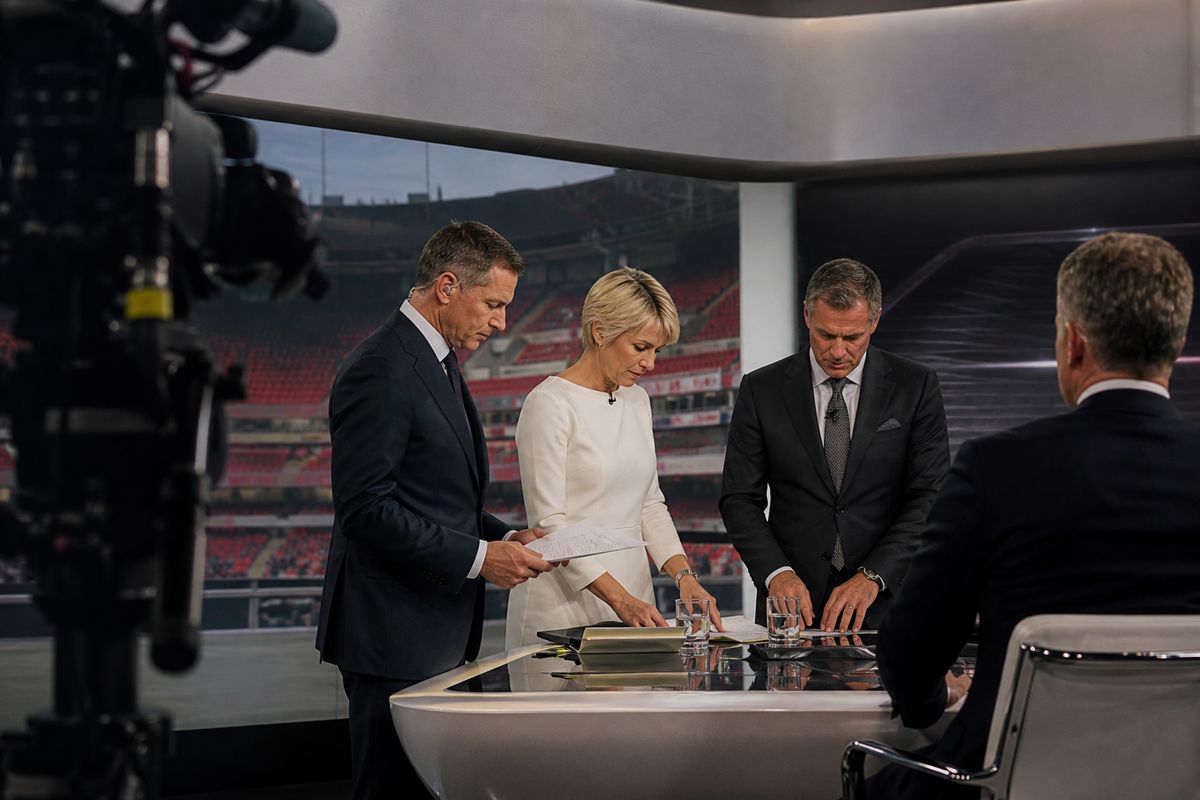
And there is a competitive logic too. Sports news is where narratives are built, where transfer talk gains momentum, where injury updates become storylines, and where fixture congestion turns into debate. If Sky controls the conversation, it strengthens the value of its live rights. It is not exactly subtle. But it is effective, and it is one reason Sky Sports News remains relevant even as social media tries to eat its lunch.
Carriage battles and platform shifts, the Virgin Media dispute as a warning shot
One of the most revealing episodes in Sky Sports News history is not about a presenter or a graphics refresh. It is about distribution power. On 1 March 2007, Virgin Media removes Sky’s basic channels, including Sky One, Sky Two, Sky News and Sky Sports News, after a dispute caused by the expiry of their carriage agreement and an inability to reach a new deal. At midnight, Sky Sports News disappears from Virgin’s platform, and its electronic programme guide slot is renamed “OLD SKY SPORTS SNOOZE”, a move later followed by a public apology from Richard Branson within hours.
The immediate consequence is competitive. Virgin Media and Setanta Sports launch Setanta Sports News on 30 November 2007 as a direct rival. Eventually, a deal is reached and Sky Sports News returns to cable on 13 November 2008 on channel 517. The episode reads like a period piece now, but the underlying lesson is modern, distribution is leverage. If a sports news channel is not available where audiences are, it becomes vulnerable, no matter how strong the brand is.
Sky Sports News also experiences a notable shift on digital terrestrial television. From 2002 it is available free-to-view on DTT, but it is removed from Freeview on 23 August 2010 and replaced with Sky3+1, a one-hour timeshift of Sky3. Ofcom approval is required for the change. The source material does not provide the full Ofcom wording beyond a partial sentence, but the key point is clear, platform strategy changes, and “free” availability can be temporary when commercial priorities shift.
In 2026, the echo of those disputes is felt in the streaming era. The battleground is no longer only cable EPG slots. It is app placement, bundle economics, and whether consumers see sports news as something they watch live or something they scroll past. Sky Sports News survives because it is embedded in multiple delivery routes, including Sky Go and Now, and because it still offers something social feeds struggle to replicate consistently, live, structured, edited coverage with accountability.
What Sky Sports News means for sports journalism in 2026
Sky Sports News helps define a particular British style of sports journalism, fast, presenter-led, and heavily driven by football, especially the Premier League. That is not a criticism, it is a reflection of audience demand and rights economics. But it has consequences. The channel’s constant appetite for updates encourages a market for incremental news, small developments treated as big moments, and a transfer culture where speculation becomes content. Viewers like it, clubs sometimes hate it, agents often understand how to use it. It is a big deal, whether anyone wants to admit it or not.
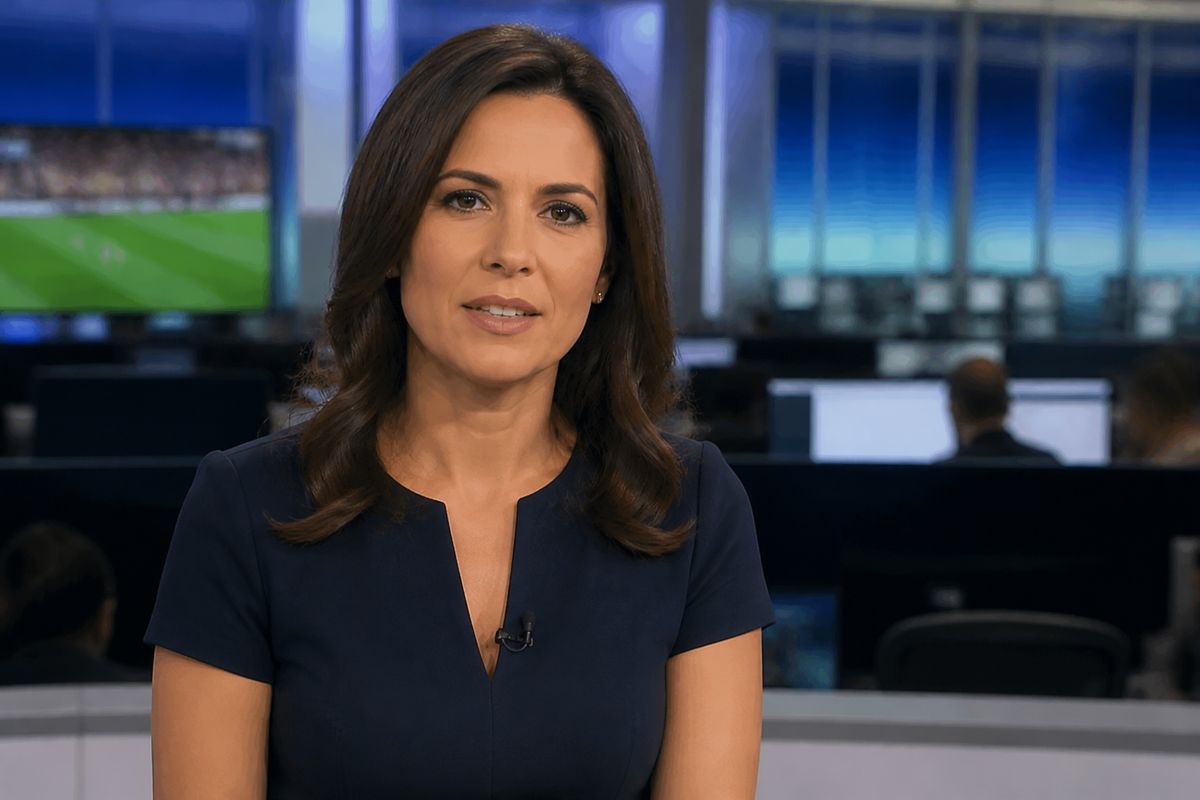
At the same time, the channel professionalises sports news. It creates a familiar format for live interviews, touchline hits, studio debates, and rolling tickers. It also creates a career ladder. Presenters and reporters learn how to handle live pressure, how to fill time without losing accuracy, and how to manage relationships with clubs and governing bodies. Kelly Cates’ trajectory, from Sky Sports News launch presenter to roles across Sky, ITV, ESPN and the BBC, is a neat illustration of that pipeline.
There is also a broader industry impact. Sky Sports, as a network, plays a major role in the commercialisation of British sport since 1991, and it sometimes induces organisational changes in the sports it broadcasts. The most famous example is the formation of the Premier League in 1992, encouraged by the promise of higher television payments. Sky Sports News sits downstream of that power. It does not negotiate the rights, but it amplifies the product, keeps the league in the daily conversation, and reinforces the idea that the sport never really stops.
In 2026, with audiences increasingly sceptical of hype, the challenge is credibility. Rolling news can drift into noise if it is not careful. The channel’s long-term value depends on maintaining standards, being quick but not reckless, and offering context rather than just volume. That is the tightrope, and it is not getting any easier.
What's Next
Sky Sports News enters its next phase with two pressures pulling in opposite directions. On one side, the economics of subscription sport still reward constant engagement, and a live news channel remains a powerful retention tool. On the other, younger audiences increasingly treat video as on-demand, not linear, and they expect clips to travel to them rather than going to a channel. The likely outcome is not the death of Sky Sports News, but a continued shift in how it is packaged and produced, more modular segments, more studio moments designed to be cut down, and more emphasis on presenters who can move between live TV and digital formats without changing their voice.
There is also a strategic question about what “sports news” should prioritise when football dominates attention. The channel has historically covered a wide range of sports, and Sky Sports as a whole carries major properties across football, cricket, golf, F1 and tennis. But the gravitational pull of Premier League narratives is relentless. The next step is probably not a radical reinvention, but a smarter balancing act, using the channel’s schedule to create predictable windows where non-football sports are treated as lead stories rather than sidebars. That is how you build habit beyond transfer season.
And then there is the talent question. Kelly Cates’ career shows how early Sky Sports News experience can translate into major roles elsewhere, including the BBC’s flagship highlights programme. In 2026, that matters because sports broadcasting is increasingly about trust and familiarity. Viewers do not just follow teams, they follow voices. Sky Sports News will likely keep investing in presenters and reporters who can become brands in their own right, while still fitting the network’s corporate identity. It sounds contradictory. But it is the modern formula.
Closing thoughts, a channel built for the future that keeps finding new futures
Sky Sports News begins as a digital-only experiment in 1998, and in 2026 it looks less like an experiment and more like infrastructure. It has weathered branding changes, platform removals, carriage disputes, and the rise of social media. It has also helped shape the tone of British sports conversation, for better and for worse, by making sport feel like a continuous story with constant updates.
The channel’s history is full of small moments that reveal bigger truths, the 2000 shift to Sky Sports.com TV as the web becomes central, the 2007 Virgin Media dispute that shows how distribution can be weaponised, the removal from Freeview in 2010 that signals a changing approach to “free” reach. And through it all, the human element remains central. The fact that Kelly Cates is there at the beginning, leaving university to join a nascent newsroom, and later becomes one of the BBC’s Match of the Day hosts, is a reminder that formats endure because people make them work.
At 28, Sky Sports News is not trying to be nostalgic. It is trying to stay useful. That is the real test, and the reason this anniversary lands as more than just a date on a timeline.