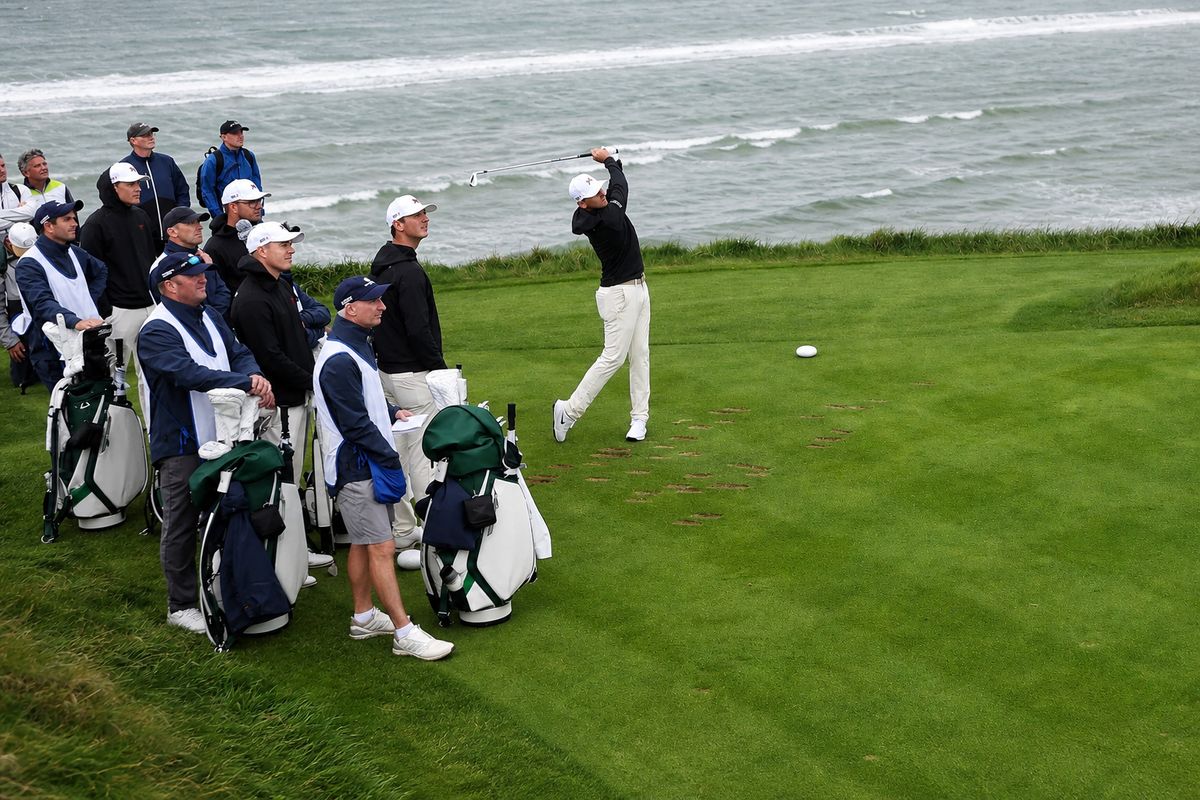
Walker Cup 2026 arrives at Lahinch, and the timing feels deliberate
The Walker Cup 2026 lands on the west coast of Ireland with a familiar promise and a slightly unusual twist. It is the 51st playing of amateur golf’s most storied team match, the United States against Great Britain and Ireland, staged this weekend at Lahinch Golf Club in County Clare on 5 and 6 September 2026. And it matters for reasons that go beyond who lifts a silver trophy on Sunday afternoon.
For one thing, the match is being played back to back after last year’s contest at Cypress Point Club. That is not the usual rhythm. The Walker Cup traditionally runs every other year, alternating between venues in the US and in Great Britain or Ireland. But after Cypress Point, the organisers make a scheduling adjustment specifically to get the competition back onto even numbered years. It is a small administrative detail on paper. In practice, it changes the feel of the cycle, the selection window, and the way players build their amateur careers around this event.
Then there is the location. Lahinch is not a corporate stadium course. It is a public links with history in its bones, a place where the wind and the ground game are not optional extras. GOLF.com notes it is ranked 34th on GOLF’s latest list of the Top 100 Courses in the World, and it is widely regarded as the top course in Ireland. That combination, public access plus global prestige, gives Walker Cup 2026 a particular edge. It is elite amateur golf, but it is also a showcase for what links golf really asks of players when the weather turns and the bounces get weird.

Walker Cup 2026 schedule, format, and how the points actually add up
The structure of the weekend is compact and intense, which is part of the charm. The opening ceremony takes place on Friday night, setting the stage for two days that pack in foursomes and singles with very little breathing room. Four foursomes matches, alternate shot, are played on Saturday morning and again on Sunday morning. Then the afternoons belong to singles, eight matches on Saturday and 10 on Sunday.

The scoring is straightforward but unforgiving. A win earns one point, a tie earns a half point to each side. The United States needs 13 points to retain the Cup. Great Britain and Ireland needs 13.5 points to win it outright. That half point difference is not a gimmick, it is a reminder of who holds the trophy coming in and how narrow the margins can be when the match is tight late on Sunday.
For viewers, the broadcast windows are early if you are watching from the US, because Lahinch sits on Irish time and the Golf Channel schedule follows Eastern Time. The telecast runs Saturday from 3:30 a.m. to 8 a.m. for foursomes, then 9 a.m. to 2 p.m. for singles. Sunday begins at 3 a.m. to 7:30 a.m. for foursomes, then 8:30 a.m. to 2 p.m. for singles. It is the kind of schedule that rewards the committed. And, honestly, that fits the Walker Cup vibe. This is not background viewing. It is a match you lean into.
Lahinch Golf Club, a links that refuses to be tamed
Lahinch opened in 1892 and was reshaped by Old Tom Morris in 1894. That is not just a heritage note for the programme. It tells you what sort of golf course this is: one built on natural terrain, then refined by one of the game’s foundational architects. Morris famously said Lahinch was “the finest natural course he had ever seen”, a line that gets repeated because it captures something true about the place. The land does a lot of the talking.
In practical terms, Lahinch is a test of imagination as much as execution. Links golf asks players to flight the ball, to use slopes, to accept that a perfectly struck shot can take a hard kick and run away. It also asks captains to think differently about pairings in foursomes. Alternate shot on a windy links is a different sport from alternate shot on a sheltered parkland course. One player’s preferred ball flight can either complement or clash with the demands of a particular hole, and those decisions can swing a match quickly.
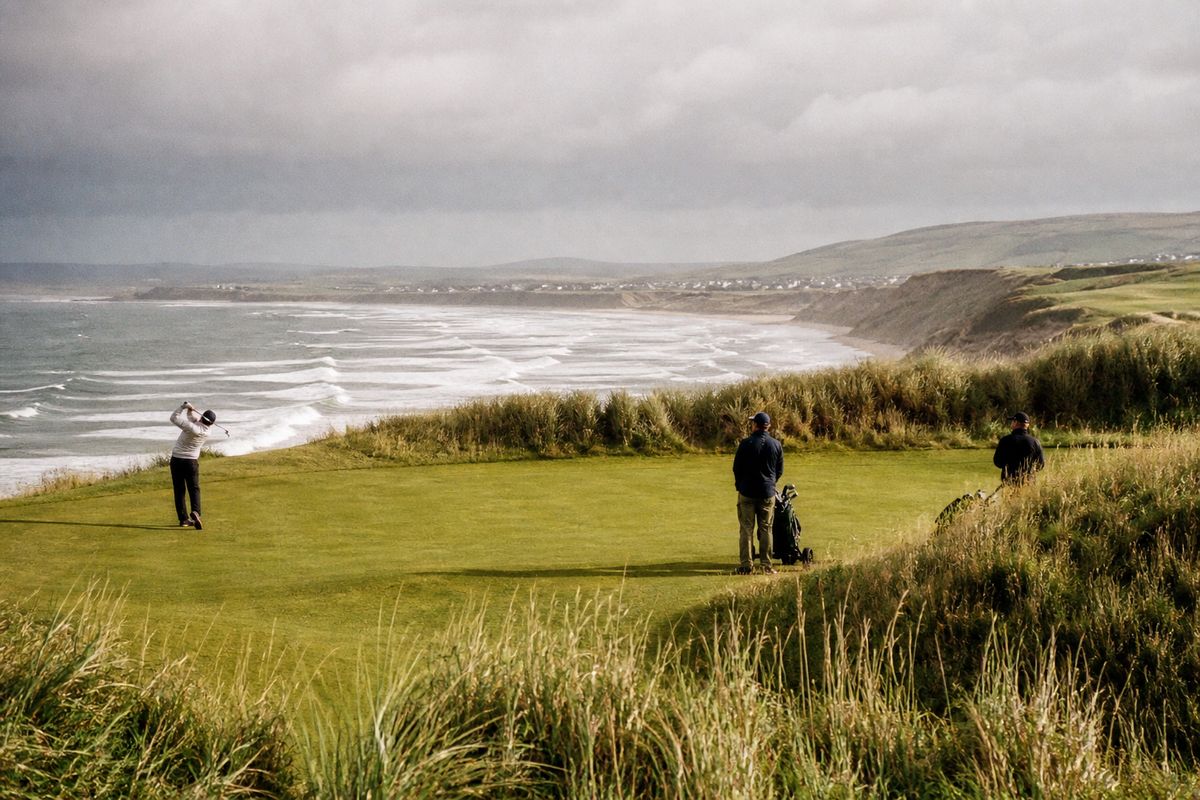
The venue also carries a cultural weight. In 2022, Jordan Spieth, Scottie Scheffler and Sam Burns visited Lahinch prior to that year’s Open Championship at the Old Course, and it became a major draw among locals. That detail matters because it hints at how Irish golf fans respond when elite players show up on their doorstep. The Walker Cup is amateur, yes, but it is not small. At Lahinch, it becomes a national event in miniature, with the added intimacy that comes from a course people can actually play themselves.
The teams at Walker Cup 2026, and why this is a rankings heavy showdown
The Walker Cup is always a meeting of future professionals and lifelong elite amateurs, but this year’s field is particularly loaded at the top. GOLF.com reports that nine of the top 10 amateurs in the world are competing at Lahinch this week. That is a serious concentration of talent for a match that only has 10 players per side. It also means the contest is not just about depth, it is about how the very best handle match play pressure on a links.
The US roster comes in stacked with highly ranked names: Preston Stout, the world number one and the 2026 NCAA Division I individual champion; Tyler Watts at number two; William Jennings at number four; and Miles Russell at number five. Ryder Cowan, listed at number six, arrives with a notable calling card as the 2026 US Open low amateur. The rest of the US team includes Josiah Gilbert (7), Ethan Fang (9), Kihei Akina (11), Jay Leng Jr. (12), and Stewart Hagestad (25).
Great Britain and Ireland counters with Tyler Weaver (3) and Luke Poulter (8) near the top of the world rankings, plus Eliot Baker (13) and Niall Sheils Donegan (18). The remaining roster is Connor Graham (26), Stuart Grehan (28), Jack Whaley (45), Sam Easterbrook (76), Ben Bolton (86), and Josh Hill (93). On paper, the US has the heavier top to bottom ranking profile. But match play is not a spreadsheet. And Lahinch has a way of making reputations feel a bit fragile.
Captains, continuity, and the unusual back to back edition
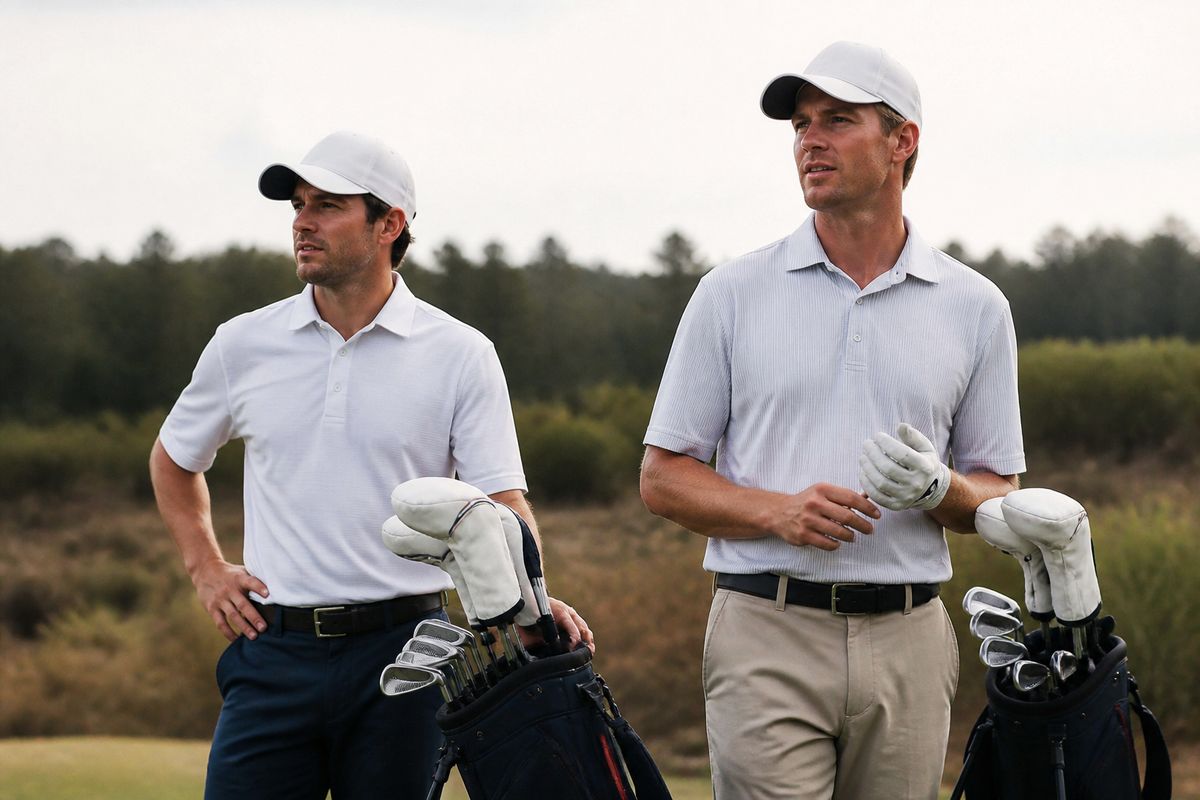
Continuity is one of the quiet themes of Walker Cup 2026. Nathan Smith, 48, returns as US captain after leading the team to victory at Cypress Point last year. Dean Robertson, 56, of Scotland, also returns for his second straight year in charge of Great Britain and Ireland. In a normal cycle, captains often have more time between matches to reset, to scout, to shape a narrative for their side. This time, it is more like a quick turnaround in a league season.
That matters because the Walker Cup is as much about preparation as it is about talent. Captains are managing personalities, pairing styles, and the emotional temperature of a team that includes players at very different stages of their amateur journey. Someone like Stewart Hagestad, competing in his sixth Walker Cup, brings a veteran steadiness that can calm a foursomes session that starts to wobble. At the other end, Miles Russell arrives as a 17 year old, and the USGA’s practice round photo set makes a point of noting he is the youngest player in the match. That is a lot to carry, even for a prodigy.
The back to back scheduling also changes the story of momentum. The United States has won the past five meetings, including last year’s match at Cypress Point where it won 17 9, described as its biggest victory during that span. Great Britain and Ireland last won in 2015 at Royal Lytham and St Annes. Those are not just historical markers, they shape how both teams walk onto the first tee. The US is defending a streak. GB and Ireland is trying to stop feeling like the supporting act in its own backyard.
Practice round signals, and what the photos hint at without giving too much away
The USGA’s coverage of Friday’s practice round at Lahinch is photo led rather than quote led, so it does not offer the usual soundbites about form or confidence. But images can still tell you something if you know what to look for. There are repeated shots of players working around Lahinch’s stone walls, and that is not accidental. Ethan Fang is pictured hitting an approach next to the stone wall at the 18th. That is a reminder that Lahinch is not a manicured resort course with endless run off. It has hard edges, literally, and those edges influence strategy.
There is also a clear emphasis on short game and putting. One photo shows the USA team working on putting on the fourth green. Again, not groundbreaking, but revealing. On links greens, speed and break can change with wind and moisture, and the ability to hole nervy five footers in match play is often the difference between winning a session and losing it. Foursomes, in particular, amplifies that pressure because one missed putt belongs to both players.
And then there is Russell. The USGA captions show him repeatedly, looking down fairways, playing approaches, and hitting into the 18th. The subtext is obvious: the youngest player is also one of the most watchable. But the deeper point is that the Walker Cup remains a stage where teenage talent and seasoned amateurs share the same pressure cooker. That mix is part of what makes the event feel like a bridge between eras, not just a match.
What Walker Cup 2026 reveals about the modern amateur pathway
It is tempting to treat the Walker Cup as a quaint tradition, a nice nod to history between the USGA and the R and A. But in 2026 it is also a snapshot of how elite amateur golf is organised, and how quickly the best players are expected to perform in different arenas. Look at the labels attached to the leading names: NCAA champion, US Open low amateur, US Amateur champion, US Amateur runner up. These are not casual achievements. They are milestones in a tightly packed calendar that pushes players to peak repeatedly.
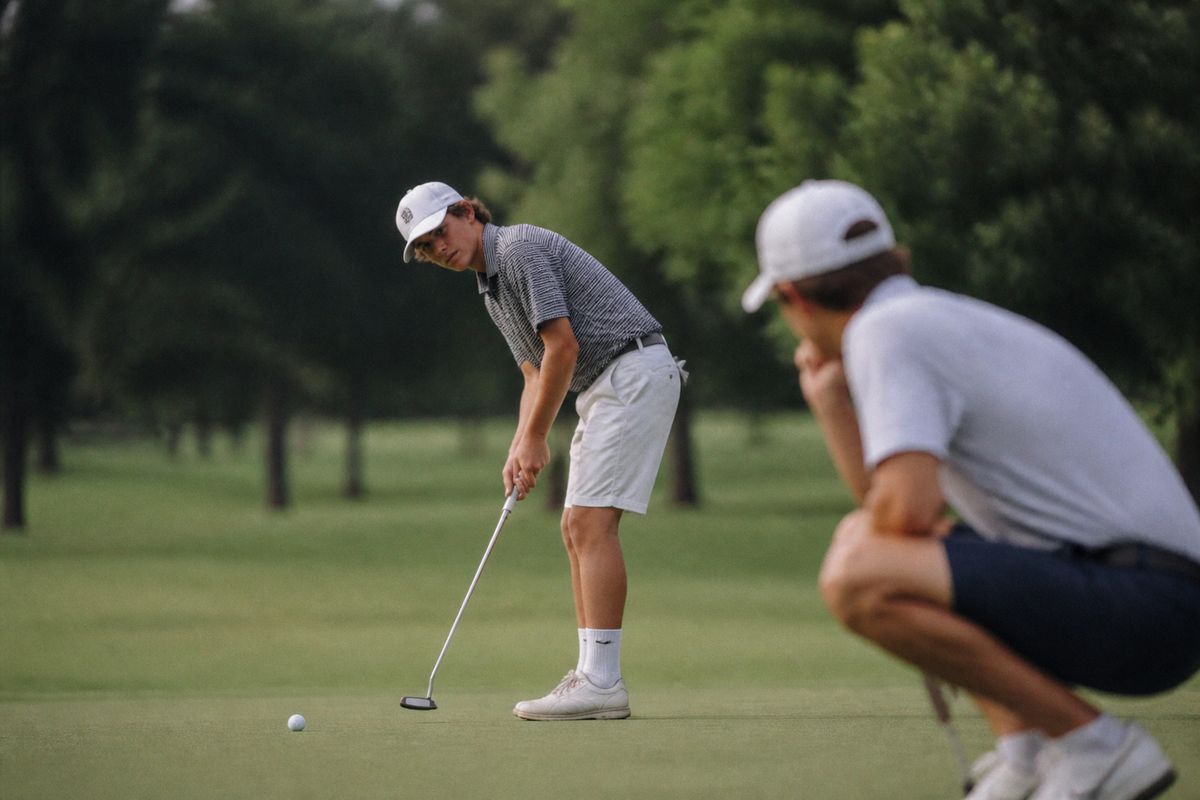
The presence of so many top ranked amateurs in one place also underlines how globalised and professionalised amateur golf has become, even before players take a pay cheque. Rankings matter. Selection matters. And performances in big amateur events now carry a kind of career signalling power that used to be reserved for professional tours. The Walker Cup sits right in the middle of that. A strong week can elevate a player’s profile instantly, not through marketing fluff, but through the credibility of beating other elite amateurs in a team environment.
There is another angle too, and it is slightly uncomfortable if you love the romantic idea of amateur golf. The US has dominated the series, leading 40 9 1 all time. That is not a recent blip, it is a structural trend. It raises questions about depth of development systems, competitive opportunities, and how early elite players are identified and supported. None of that is solved by one weekend at Lahinch. But this match, especially with nine of the world’s top 10 amateurs present, becomes a very visible audit of where each side stands right now.
Historical context, from a post war handshake to a modern rivalry
The Walker Cup begins in 1922 at the National Golf Links of America in Southampton, New York. It is created as a post World War I competition between the USGA and the R and A, designed to strengthen relationships between golf’s governing bodies. That origin story matters because it frames the match as diplomacy through sport, not just a trophy hunt. Even now, with all the intensity, the Walker Cup still carries a sense of shared stewardship over the game.
Over time, the match becomes a proving ground for players who often go on to professional careers, and a pinnacle for those who remain amateurs. The venues alone tell you how seriously it is taken. Recent editions are staged at places like Cypress Point, St Andrews, and Seminole. Lahinch fits that lineage, but with its own flavour: rugged, public, and deeply Irish. It is not a museum piece. It is alive, and it can bite.
The recent competitive arc is clear in the numbers provided. The United States leads the all time series 40 9 1 and has won the past five meetings. The last Great Britain and Ireland win comes in 2015 at Royal Lytham and St Annes. That gap has become part of the narrative weight GB and Ireland carries into every tee shot. And yet, match play has a habit of producing sharp turns. A couple of early points in foursomes can change the emotional geometry of the whole weekend.
The Lahinch factor, and why this weekend could feel closer than the rankings suggest
Rankings suggest the United States should be favoured. The historical record suggests the United States should be favoured too. But Lahinch introduces variables that do not care about reputations. Wind is the obvious one, but it is not just wind. It is the requirement to play along the ground, to accept awkward stances, to manage bounces that are not predictable in the way they are on softer inland courses. Players raised on different styles of golf can adapt, but adaptation under match play pressure is a different skill from adaptation in stroke play.
There is also the psychological texture of playing in Ireland. Great Britain and Ireland is not a single nation team, it is a composite of England, Ireland, Scotland and Wales. That can be a strength, a broader base of styles and experiences. At Lahinch, with Irish fans on site and a links that rewards local knowledge, the home side can feel a little more at ease. Not guaranteed, of course. But it is real. And if the match is tight late on Saturday, the atmosphere can start to do some work.
Finally, the back to back scheduling creates a subtle opportunity for disruption. The US arrives as the defending champion from Cypress Point and the winner of five straight. That brings confidence, but it can also bring a sense of expectation that is heavy if the early matches go sideways. GB and Ireland, meanwhile, has nothing to protect. It is chasing. That is often when match play gets dangerous, because the underdog can take bolder lines and treat pressure as something the other side owns.
Closing thoughts as Walker Cup 2026 tees off
Walker Cup 2026 is, on the surface, a neat package: two days, 10 players a side, foursomes and singles, a famous links, and a trophy with a century of history behind it. But it is also a live test of where amateur golf sits in 2026, how talent is developed, and how quickly young players are expected to handle big stages. When a 17 year old is not just present but central to the story, it tells you something about the sport’s acceleration.
And Lahinch is the perfect place for that test. It is beautiful, yes, but it is not polite. It demands creativity, patience, and a willingness to accept that the game will not always reward you instantly. Over two days, with alternate shot amplifying every decision, the match will likely come down to who embraces that chaos rather than fighting it.
The United States arrives with the streak, the rankings, and the recent history. Great Britain and Ireland arrives with home terrain, a point to prove, and the knowledge that match play can flip quickly when momentum catches. Either way, the Walker Cup does what it has always done since 1922. It turns amateur golf into something urgent.