World War III anxiety returns as flashpoints start to overlap
Talk of World War III is no longer confined to fringe speculation or late night social media doomscrolling. It is creeping back into mainstream conversation because several theatres of conflict are starting to look connected, not neatly separate. In recent reporting and commentary, the war in Ukraine, the fragile security picture in the Middle East, and the wider contest between major powers are increasingly discussed in the same breath. And that matters, because global wars rarely begin with a single dramatic declaration. They begin when leaders misread each other, when deterrence frays, and when one crisis makes another harder to manage.
The immediate spark for the latest round of anxiety is a set of warnings and scenario building that point to escalation risks on two fronts. In Ukraine, peace talks are described as stalled and escalation is openly contemplated, with Bloomberg reporting that the Kremlin believes negotiating frameworks have collapsed and that Moscow is weighing intensified conventional ballistic missile strikes on Kyiv and infrastructure targets in other cities. In the Middle East, a separate strand of coverage focuses on fears of US involvement and what a third world war might look like today, with ABC News featuring Barbara Perry, the J. Wilson Newman Professor in presidential studies, discussing how US decisions to enter wars are made and how a global conflict could unfold in the modern era.
Layered on top is a more provocative argument from The Jerusalem Post, where opinion writers suggest the risk of a world war may actually be decreasing because nuclear deterrence still works, even as tensions intensify and Iran raises concerns. That is a contrarian claim, fair enough, but it sits uneasily alongside the sense, reported elsewhere, that connections between conflicts are multiplying. The public mood is hardly calm either. A Jerusalem Post staff report from July 2024 cites a poll in which 44% of Britons say Western politicians are actively increasing the risk of a third world war, while only 6% think they are decreasing it.

Ukraine escalation scenarios and the Nato tripwire problem
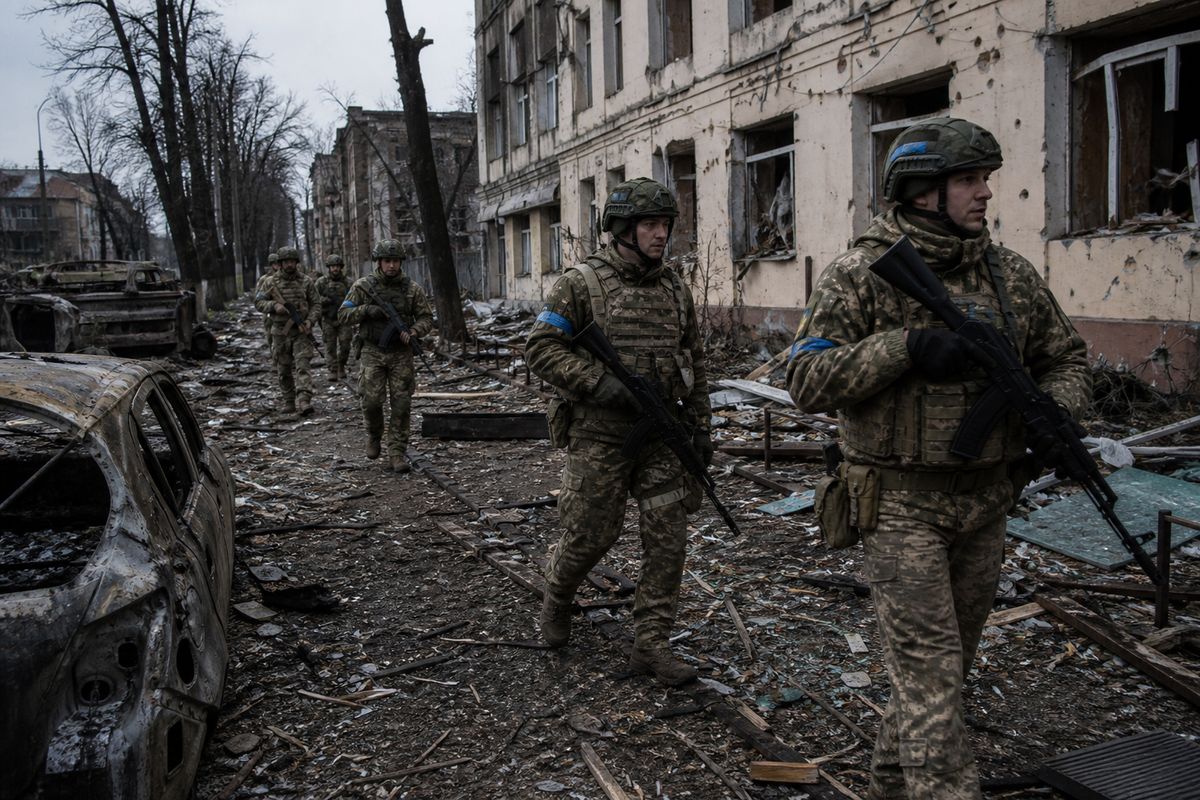
The most direct route to a wider war still runs through Europe. The Week’s reporting frames a bleak picture: peace talks over Ukraine are described as being at a dead end, and people close to the Kremlin tell Bloomberg that Moscow sees few alternatives to further escalation in pursuit of its war goals. The detail that stands out is not just the prospect of more strikes on Kyiv, but the logic behind them. Moscow increasingly views Ukraine’s strikes inside Russia as attacks by Nato countries, because alliance members provide Kyiv with weapons and intelligence. That framing is dangerous, because it shifts the target of retaliation in the Russian imagination from Ukraine alone to the broader Western alliance.
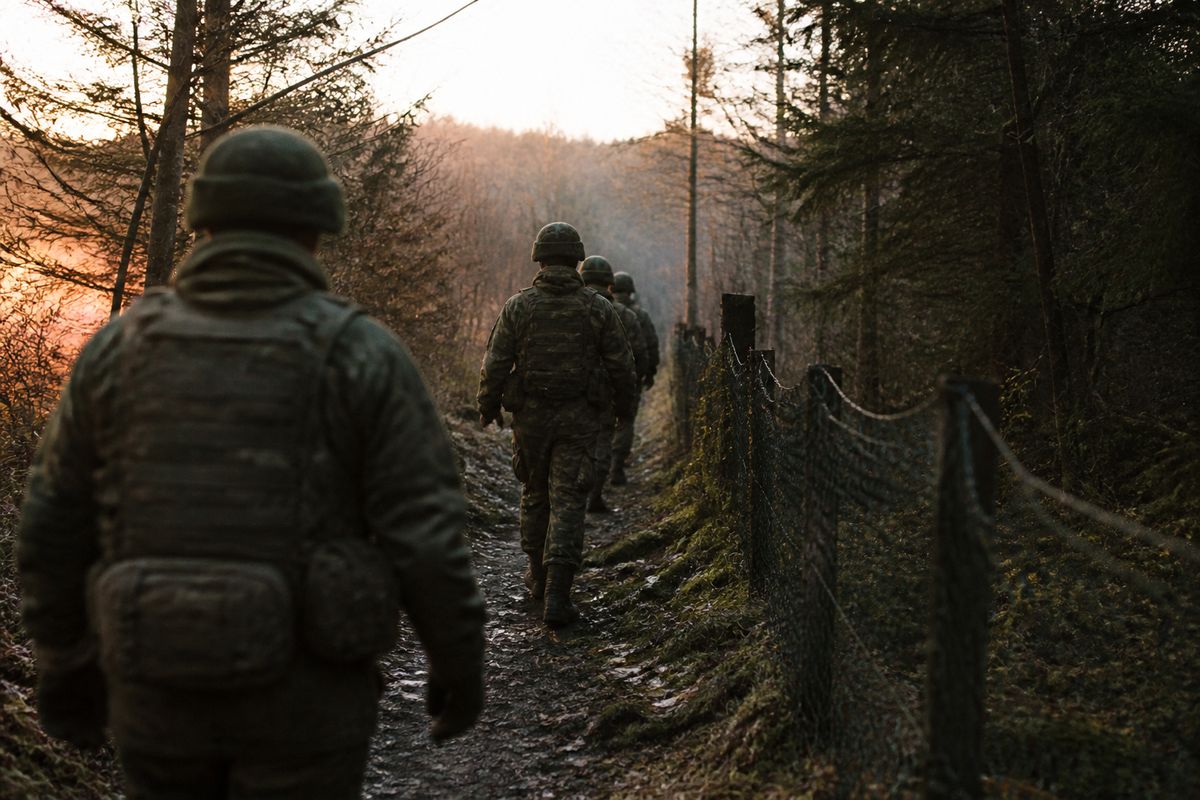
There is also a practical, geographical issue. Nato’s deterrence posture relies on clarity: an attack on one is an attack on all. But escalation rarely respects tidy legal lines. The Week notes concerns about provocation at pinch points, especially in the Baltic, the North Atlantic, and through the Balkans, and it describes a pattern of testing Nato defences and resolve with airspace incursions into Estonia, Romania, and Poland. It also reports that Finland requests Swedish help to monitor its border with Russia for incursions. None of these incidents, on their own, automatically triggers a full scale conflict. But they create a constant background hum of risk, where a miscalculation, a technical failure, or a political overreaction could spiral.
And then there is the grey zone, the messy bit that sits between peace and open war. The Week reports that Germany is expected to impose further sanctions for a drone attack at Leipzig airport in August, believed to have originated in Russia, while Slovakia foils an arson attack on a drone factory. These are not battlefield clashes, but they are the kind of actions that can harden public opinion and narrow leaders’ room for manoeuvre. When domestic politics starts demanding retaliation, the ladder of escalation gets climbed one rung at a time, often without anyone admitting that is what is happening.
Middle East escalation and the fear of US involvement
If Europe is the classic tripwire, the Middle East is the accelerant. ABC News captures the public anxiety plainly in its headline: fears of US involvement in the Middle East spark anxiety over possible world war. Barbara Perry’s contribution is not about predicting a specific battle plan, but about unpacking how the United States decides to enter a war and what a third world war would look like today. That focus is important because, historically, global conflicts expand when great powers feel compelled to defend credibility, alliances, or access to strategic routes and resources.
The Week’s account of the Middle East is more operational and, frankly, more alarming. It describes a fragile ceasefire between Iran and the US as effectively dead after both sides trade fire for the first time in a month. It reports that US Central Command launches air strikes on Iran after detecting Iranian efforts to deploy fresh mines in the Strait of Hormuz, and that Tehran responds by targeting US military bases in Jordan and the United Arab Emirates. Those details, if accurate as presented, point to a classic escalation cycle: action, retaliation, then a search for a new threshold to re establish deterrence.
The Strait of Hormuz sits at the centre of this. The Week notes that, before the war it describes, the strait accounted for a fifth of the world’s seaborne energy supply. That is not a trivial statistic. It is the kind of structural fact that turns a regional conflict into a global economic shock, and then into a political crisis in capitals far from the Gulf. Energy price spikes, shipping insurance costs, and supply chain disruption can quickly become domestic political emergencies. And once domestic politics is in play, leaders often make riskier choices, not calmer ones.
Iran, deterrence, and the argument that World War III risk is falling
Against that backdrop, The Jerusalem Post runs a strikingly different line in March 2026. In an opinion piece dated 22 March 2026, David Ben Basat argues that the risk of World War III is actually decreasing, suggesting that nuclear deterrence may be lowering the risk of world war even as global tensions intensify and Iran raises concerns. The key idea is that deterrence still imposes limits on what major powers are willing to do directly to each other. In other words, the fear of catastrophic escalation restrains decision making.
But Ben Basat also warns, in a separate opinion piece dated 21 March 2026, that the central challenge is no longer preventing war between superpowers, but containing attempts by radical regimes to breach the limits of deterrence. He frames the Islamic regime as aiming to breach nuclear deterrence, and suggests Israeli weapons might stop it. The language is pointed, and it reflects a long running Israeli strategic concern: that a regional actor could change the deterrence equation by acquiring or approaching nuclear capability, or by convincing itself that it can operate under a protective umbrella.
This is where the two narratives collide. Deterrence can reduce the chance of deliberate great power war, while simultaneously increasing the number of proxy conflicts, covert actions, and high risk brinkmanship episodes. It is not exactly comforting. It is more like a world in which the biggest catastrophe is less likely, but the number of near misses rises. And near misses have a habit of becoming history’s turning points when luck runs out.
Britain’s World War III debate, public polling, and the rearmament signal
In the UK, the World War III conversation is not just theoretical. It is tied to spending decisions and industrial policy, which is a polite way of saying rearmament. A Reuters report carried by The Jerusalem Post on 5 June 2025 says Britain will invest billions in defence spending following escalating fears and threats of World War III. The measures listed are concrete: the UK will build at least six new munitions plants, procure up to 7,000 British made long range weapons, and launch new communication systems for the battlefield.
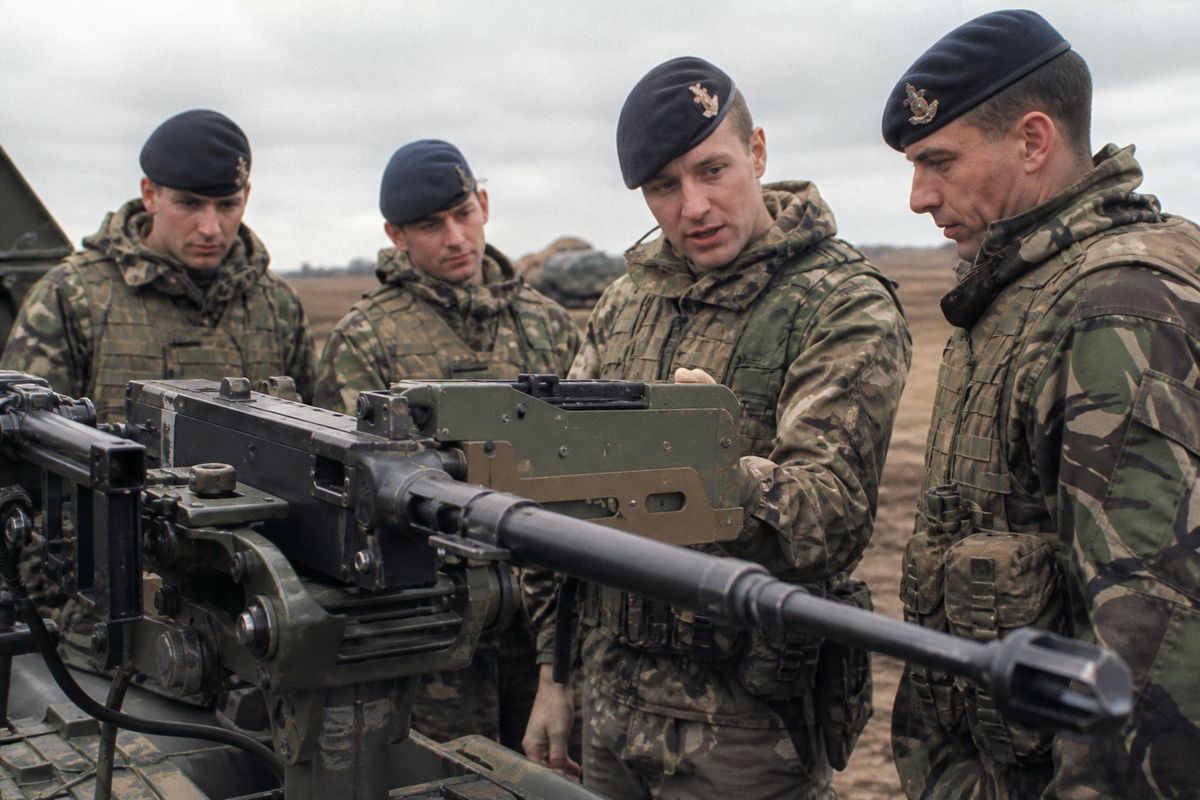
Those numbers do two things at once. First, they signal to adversaries that Britain expects a long period of heightened risk and wants deeper stockpiles and industrial capacity, not just shiny platforms. Second, they signal to allies that the UK intends to remain a serious military player, even as European security demands grow. Munitions plants are not glamorous, but they are the backbone of sustained conflict readiness. The war in Ukraine has already shown that consumption rates for artillery shells, missiles, and drones can be staggering, and that Western defence industries have struggled to scale quickly.
Public sentiment is part of the story too. The Jerusalem Post’s July 2024 staff report cites a poll where 44% of Britons think Western politicians increase the risk of a third world war, and only 6% think they decrease it. That is a grim vote of no confidence in political judgement. It also suggests that governments face a tricky communications problem: they need to prepare the public for higher defence spending and more risk, while also persuading voters that leaders are not sleepwalking into catastrophe. Not an easy balance, and it is one that can snap under pressure.
How a “post war order” frays, and why that matters for World War III risk
One reason World War III talk keeps resurfacing is that the old assumptions about global order look shakier. In a Jerusalem Post opinion piece dated 12 January 2026, Susan Hattis Rolef argues that the post WWII world order is collapsing under the weight of new US ambitions, with the US, Russia, and China challenging global rules and institutions. The specifics of those ambitions are not detailed in the source material provided, but the broad claim fits a wider pattern: institutions designed for a different era struggle when great powers stop treating them as binding.
This is not just academic. Rules and institutions are, in practice, a form of conflict management technology. They create predictable channels for signalling, negotiation, and de escalation. When they weaken, states fall back on raw power, ambiguous threats, and improvised coalitions. That is when misinterpretation thrives. And misinterpretation is the quiet engine of escalation, because leaders act on what they think the other side intends, not on what the other side actually intends.
Historical comparisons are uncomfortable but useful. The pre 1914 world also had trade ties, diplomacy, and a belief in rational restraint, right up until it did not. The Cold War, meanwhile, shows the opposite lesson: intense rivalry can be managed if red lines are understood and communication channels stay open. Today’s environment looks like a hybrid. There is deterrence, yes, but there is also fragmentation, faster information warfare, and more actors with the ability to trigger crises.
Unique perspective: the real World War III risk is “chain reaction politics”
The most revealing detail across these sources is not a single missile strike or a single airspace incursion. It is the repeated emphasis on perception. Moscow views strikes inside Russia as Nato attacks because of Western support. Western voters suspect their own politicians are raising the risk. Analysts warn that if the US is pulled into a ground war in the Middle East, China and Russia would exploit the distraction. This is the logic of chain reactions, where each actor’s move is justified as defensive, but interpreted as offensive by someone else.
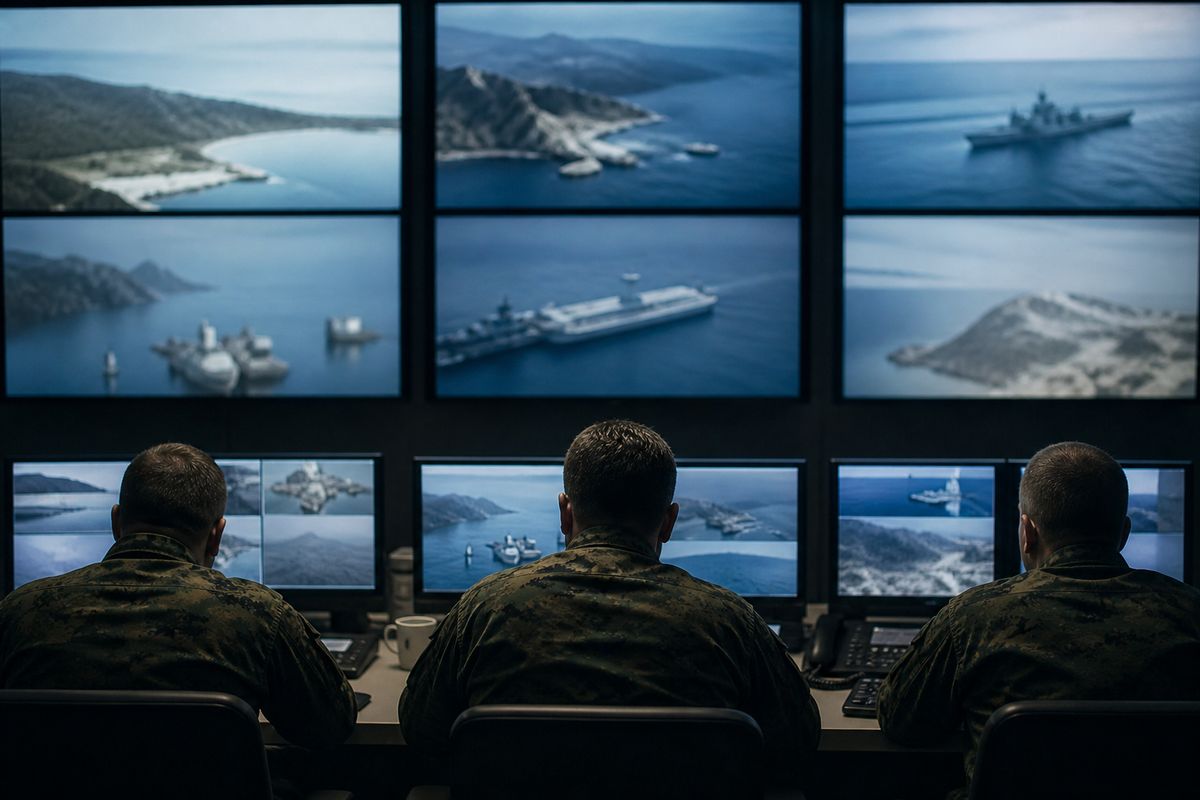
That is the modern escalation trap. It is less about one leader waking up and deciding to start World War III, and more about multiple leaders making politically rational choices in their own contexts. A government under domestic pressure retaliates to look strong. An alliance reinforces a border to reassure members. An adversary reads reinforcement as preparation for attack. Then comes the counter move. And so on. The ladder gets climbed, not because anyone wants Armageddon, but because nobody wants to look weak on the evening news (or in the internal party meeting, which is often the bigger fear).
Deterrence still matters, and it may well reduce the likelihood of deliberate great power war, as Ben Basat argues. But deterrence is not a force field. It is a relationship, and relationships can sour. The more conflicts overlap, the more leaders gamble that the other side will blink first. That is where the risk sits in 2026: not in a single planned global campaign, but in a series of linked crises that compress decision time and punish caution.
Where this leaves 2026: vigilance without fatalism
World War III fears are, in part, a reflection of genuine strategic stress. Ukraine remains a live conflict with escalation pathways that touch Nato’s borders and credibility. The Middle East, as described in The Week’s reporting, carries the additional risk of energy disruption and direct US Iran confrontation. And the broader international system appears less able to absorb shocks, with institutions and norms under strain.
But it is also true that the very horror of a global war still shapes behaviour. Nuclear deterrence, alliance structures, and the memory of past catastrophes all act as brakes, even if they squeal a bit under pressure. The problem is that brakes do not prevent accidents if the road is icy and the traffic is chaotic. In 2026, the task for policymakers is to keep communication channels open, clarify red lines, and reduce the number of situations where a local incident forces a global choice.
For the public, the challenge is different. It is to stay informed without becoming fatalistic. Polling shows many Britons already think politicians are increasing the risk of World War III. That scepticism can be healthy, but it can also curdle into cynicism, and cynicism is when democracies stop paying attention right when attention is most needed. The uncomfortable truth is that preventing a wider war is not a single decision. It is a thousand small ones, made under pressure, with imperfect information, by humans who get tired, angry, and stubborn. That is why the current moment feels so tense. And why it is, indeed, a big deal.