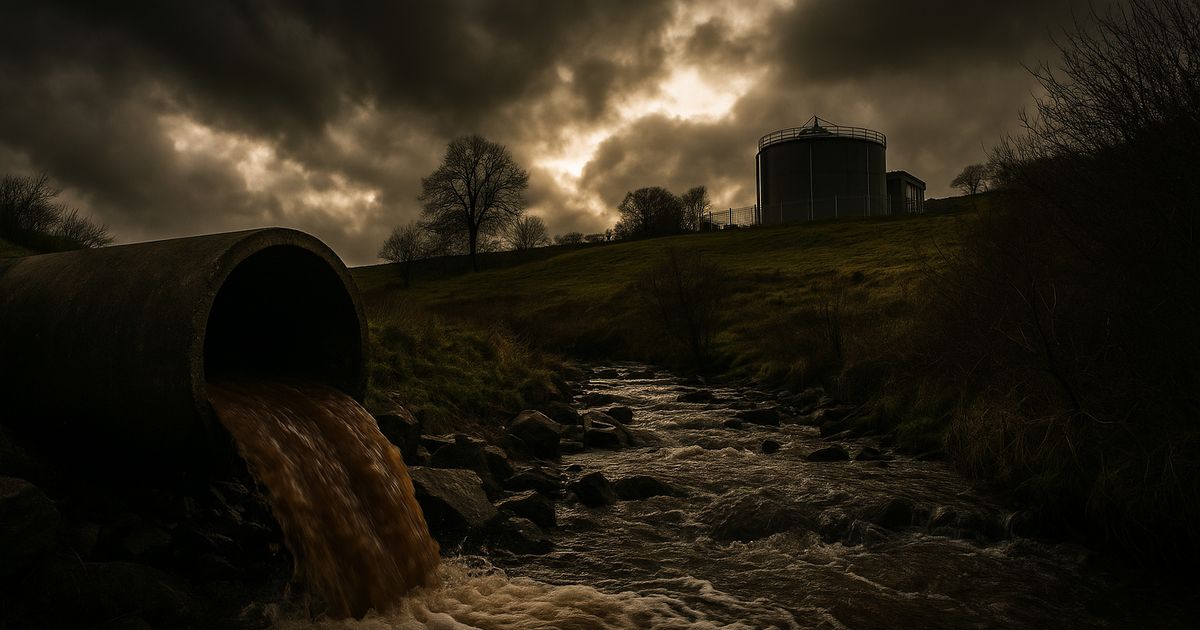
A Watershed Fine: Yorkshire Water Penalised for Serial Pollution
In a landmark ruling that underscores growing regulatory and public intolerance for environmental negligence, Yorkshire Water has been fined £733,333 for repeatedly polluting a stream in a Derbyshire country park with raw sewage. The sentence, handed down at Derby Crown Court in February 2026, follows the company pleading guilty to three separate pollution offences that occurred within a single year at Pools Brook in Poolsbrook Country Park near Chesterfield. The case, brought by the Environment Agency, represents a significant enforcement action against one of England's major water and sewerage companies and highlights systemic issues of infrastructure failure and operational lapses that have plagued the industry for years. The fine, while substantial, is set against a backdrop of record profits for water firms and ongoing national outrage over sewage discharges, making it a critical test of whether financial penalties can effectively deter pollution and force meaningful investment.
The three incidents, which took place between October 2018 and August 2019, collectively devastated a cherished local ecosystem. The first discharge killed fish including tench, pike, and roach, along with river insects, and affected water quality for over 600 metres. Subsequent leaks, caused by blockages and pipe failures, further degraded the stream for stretches of 700 and 600 metres. Crucially, the Environment Agency noted that Yorkshire Water failed to attend an interview for any of the three incidents during the investigation, a point that likely compounded the court's view of the company's response. This case is not an isolated event but a symptomatic example of a wider crisis, coming at a time when the Environment Agency, under leaders like Helen Wakeham, is publicly emphasising a tougher stance on water pollution across Yorkshire and the UK.

Anatomy of a Pollution Event: The Three Incidents at Pools Brook
The court heard a detailed chronology of failure that paints a picture of neglect and preventable disaster. The first incident on 1 October 2018 was caused by a catastrophic infrastructure failure. A rising main sewer pipe from the Pools Brook sewage pumping station burst due to what was described as "severe corrosion." This caused untreated sewage to spill from a manhole directly into the stream traversing the country park, with devastating ecological consequences.
Merely five months later, on 27 February 2019, a second pollution event occurred. This time, the cause was a blockage—primarily composed of wet wipes—in a plastic foul sewer pipe. The blockage created a pressure build-up that forced a leak from the foul sewer into a surface water pipe, which then carried the contamination into Pools Brook. While no fish kills were documented, the water quality was severely compromised for 700 metres. The third strike came on 7 August 2019, stemming from the same plastic foul sewer pipe. A failure of a joint coupling, in a different location, again led to sewage leaking into the surface water system and polluting the brook for more than 600 metres. The repetition of failures in the same system within a year formed the core of the Environment Agency's successful prosecution.
Key Players: The Enforcer, The Polluter, and The Political Backdrop
The Environment Agency and Alan Lovell
The prosecution was led by the Environment Agency (EA), the UK's principal environmental regulator. Its chair, Alan Lovell, was unequivocal in his statement following the sentencing, declaring: "Polluting the same stream three times in less than a year is unacceptable... We expect full compliance and are committed to taking robust enforcement action where we see serious breaches." This stance is part of a broader, more assertive regulatory posture. The related headline regarding Helen Wakeham, a senior EA official, taking action on water pollution in Yorkshire signals an organisation under pressure to demonstrate its effectiveness and resolve to a concerned public.
Yorkshire Water: A Company in the Spotlight
Yorkshire Water, owned by the Kelda Group, is one of ten major water and sewerage companies in England, serving millions of customers. In its response to the fine, a company spokesperson offered an apology, stating "No pollution incident is ever acceptable," and attributed the failures to an inadequate external protective coating on one sewer and wet wipe blockages in another. The company highlighted a £2.5 million investment to relocate the two problematic sewers post-incident and touted a broader £8.3 billion environmental investment programme planned before 2030. This defence is a common refrain in the industry, pointing to future investment while dealing with the consequences of past underinvestment.
Political Voices: The Secretary of State Weighs In
Adding political weight to the ruling, Environment Secretary Emma Reynolds condemned the "repeated pollution" as "appalling" and stated the fine sent a "strong message." This high-level political commentary reflects the acute sensitivity of sewage pollution as a national issue, crossing party lines and dominating local and national headlines. It places additional scrutiny on both the regulator's actions and the company's performance.
Analysis: Fines, Failures, and the Future of Water Regulation
The £733,333 fine against Yorkshire Water is significant, but its true deterrent value must be analysed in context. Water companies in England have faced intense criticism for paying out billions in dividends to shareholders over decades while failing to invest sufficiently in sewage infrastructure, leading to frequent overflows and pollution. When set against annual profits that can run into hundreds of millions, critics argue that even six-figure fines can be viewed as a cost of doing business rather than a transformative penalty. The key question is whether this and other recent fines mark a permanent shift towards more severe, profitability-impacting sanctions that fundamentally alter corporate calculus.
Furthermore, the technical causes of the Pools Brook incidents—corrosion, blockages from wet wipes, and joint failures—are microcosms of national problems. They speak to an ageing asset base suffering from decades of underinvestment and to public behaviour (like flushing wet wipes) that exacerbates system vulnerabilities. The company's defence, highlighting its £2.5m corrective investment, inadvertently underscores a reactive rather than proactive maintenance culture. The case also exposes a potential gap in regulatory oversight: three serious incidents occurred in quick succession before enforcement culminated in a court case years later. This timeline raises questions about the speed and efficacy of the regulatory response to serial offenders.
Historically, comparisons can be drawn with other sectors like energy or manufacturing, where sustained regulatory pressure and escalating penalties eventually forced systemic capital investment and operational overhauls. The water industry appears to be at a similar inflection point. The court's decision reinforces the principle that repeated negligence, especially when it evinces a pattern of disregard as seen with the missed interviews, will be met with escalating financial and reputational consequences.
Broken Pipes, Broken Trust: The National Sewage Crisis in Context
The Yorkshire Water case is a single thread in a much larger and deeply tangled tapestry of sewage pollution in the UK. Nationwide, water companies released raw sewage into rivers and seas via storm overflows hundreds of thousands of times in 2023 alone. Public awareness and anger have reached unprecedented levels, driven by campaigning groups, widespread media coverage, and data from the EA itself. This has created a potent political and social environment where every successful prosecution is scrutinised as a benchmark for justice.
The incident at Pools Brook Country Park is particularly symbolic because it affected a designated public green space—a place meant for recreation and wildlife, not industrial waste. This transforms the pollution from a technical breach into a visceral violation of community trust. The related actions by the Environment Agency in Yorkshire, as hinted in the other headlines, suggest the regulator is attempting to rebuild public confidence by being seen to act decisively across the region. The fine must therefore be understood not just as a legal penalty, but as a public signal intended to demonstrate that polluters will be held accountable, even in cases that are several years old.
What Comes Next: Investment, Innovation, and Intensified Scrutiny
For readers, regulators, and customers, several key developments warrant close attention in the wake of this ruling. First, the efficacy of Yorkshire Water's promised £8.3bn investment programme will be under a microscope. Will it prevent repeat incidents at locations like Pools Brook, and will it meaningfully reduce overall pollution events across its network? Tangible, verifiable results in river quality and discharge frequency will be the only true metric of success.
Second, regulatory behaviour will be critical. The Environment Agency has promised "robust enforcement action." Observers should watch for whether this translates into more frequent prosecutions, higher fines, and actions against company directors, as well as faster intervention when patterns of pollution emerge. The role of Ofwat, the economic regulator, in allowing sufficient investment in infrastructure through pricing reviews is equally pivotal.
Finally, technological and behavioural solutions will come to the fore. The case highlights the perennial issue of wet wipe blockages (despite many being marketed as "flushable"), pointing to a need for better public education and potentially stricter product standards. Investment in smarter network monitoring, faster leak detection, and more resilient materials for pipes and joints will be essential to move from a reactive to a predictive maintenance model. The future of England's waterways hinges on a triad of responsible corporate investment, relentless regulatory enforcement, and informed public cooperation.
A Turning Point or a Drop in the Ocean?
The £733,333 fine imposed on Yorkshire Water for the serial pollution of Pools Brook is a substantial and noteworthy judgment. It acknowledges the severity of repeated environmental harm and reflects a hardening regulatory attitude. The company's apology and cited investments are necessary steps, but they are merely the beginning of a long road to restoring degraded ecosystems and shattered public trust. This case serves as a stark reminder that the nation's Victorian-era sewage infrastructure, coupled with modern-day pressures and historical underinvestment, is failing. While financial penalties are a vital tool, they are ultimately a consequence of failure. The true measure of progress will be a future where such prosecutions are rare because the systems have been made resilient, the investments have been made upfront, and the protection of the environment is embedded as a non-negotiable operational priority. For now, the stream at Pools Brook, and countless others like it, await that future.
Sources & References
- The Guardian: Yorkshire Water fined over £700,000 for repeated sewage releases
- BBC News: Yorkshire Water fined more than £700k after polluting stream