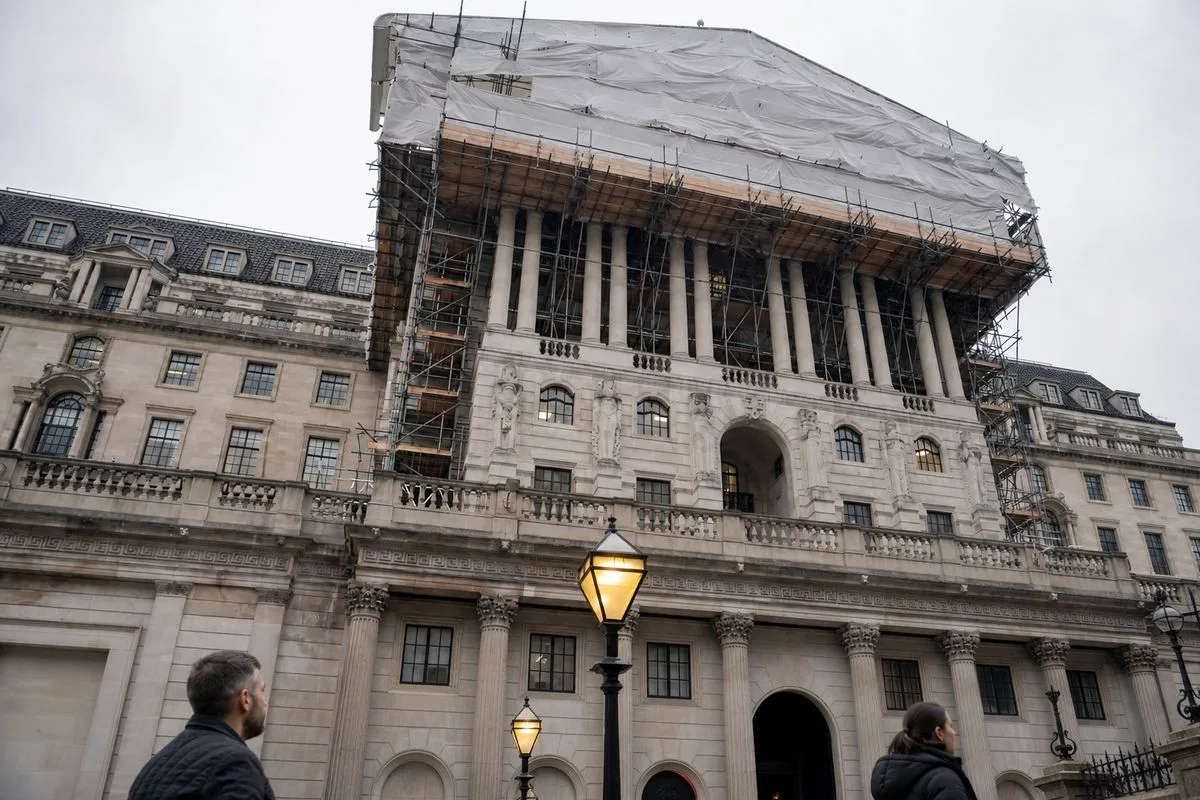
1. Bank of England base rate at 4%, the core signal to watch
The bank of england has just done something households and markets have been waiting to see: it lifts the base rate from 3.75% to 4%, and it does it with a pretty clear hint that another rise is on the table. This is not a technical footnote. It is the price of money in the UK, and it feeds into mortgages, business borrowing, savings rates, and the general mood music of the economy.
This guide compares the most important “signals” coming out of the Bank right now, and ranks them by what matters most to real world decisions. The criteria are simple: impact on household bills, impact on jobs, how likely it is to change in the next month or two, and how much it tells you about where policy is heading. It is not a list of products you can buy, obviously. But it is a practical buying guide in spirit: what should people pay attention to, and what can they safely ignore?

The immediate backdrop is messy. UK inflation sits at 3.5%, still well above the Bank’s 2% target. Energy prices have surged after the war involving Iran, and that shock is rippling into transport costs, household bills, and business input prices. The Bank is trying to stop that turning into something worse: inflation that sticks around because wages and prices start chasing each other in a loop.
- Key features: Base rate rises from 3.75% to 4%, the Bank signals another increase could follow, inflation is 3.5% versus a 2% target.
- Pricing or availability: The “price” is the base rate itself, now 4%, with markets treating the next meeting as genuinely uncertain.
- Verdict: If someone tracks only one Bank of England number this month, it is the 4% base rate, because everything else cascades from it.

2. The inflation problem, and why Niesr says the Bank of England is being too timid
The sharpest critique comes from the National Institute of Economic and Social Research, Niesr. Its argument is blunt: the Bank’s response to inflation risks leaving the UK with higher interest rates for longer. In other words, a cautious approach now could mean more pain later, because inflation becomes harder to kill once it is embedded in expectations and wage bargaining.
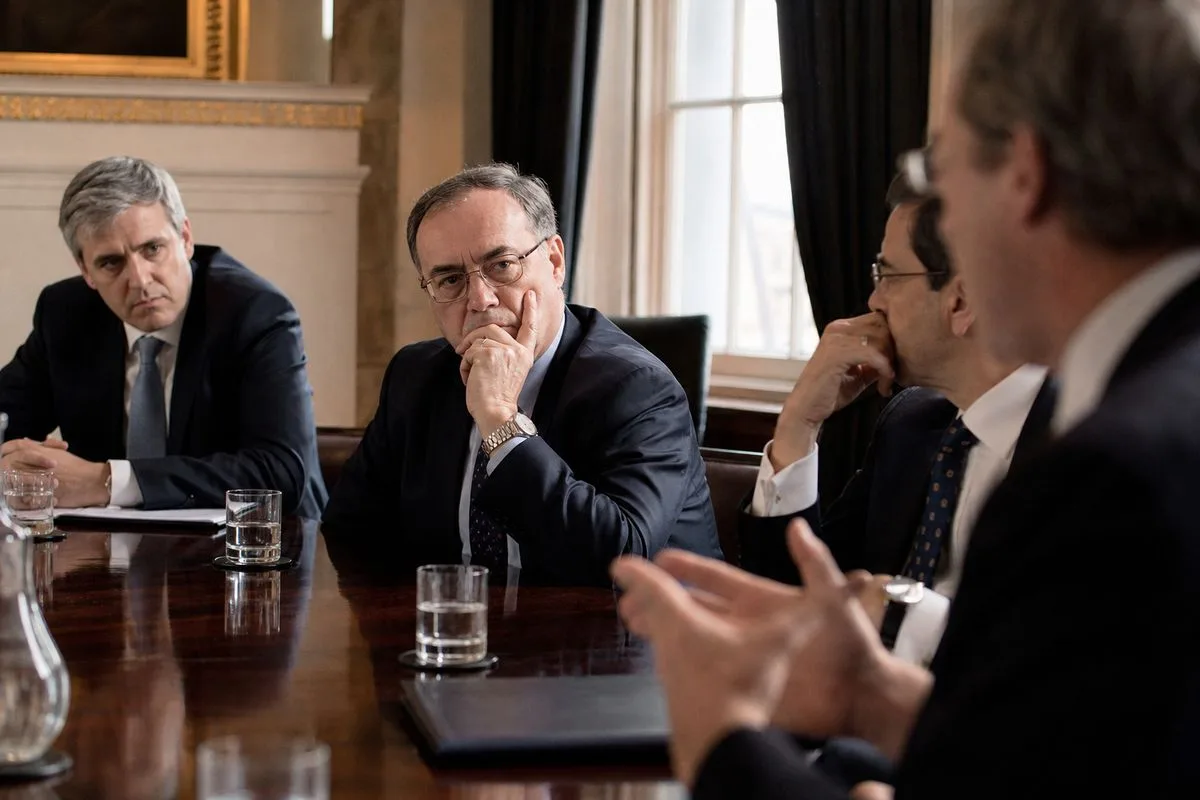
Niesr’s director, David Aikman, warns that the ingredients are in place for workers to push for inflation linked pay rises. And that is the nightmare scenario for a central bank. Not because higher pay is inherently bad, but because if firms respond by raising prices, and workers respond by demanding more pay again, inflation stops being a temporary shock and starts becoming a feature of the system.
Niesr goes further than a general warning. It says a “timid” move could mean inflation stays above target until at least 2030. That is a long time in economic policy terms, basically an entire political era. It is also worth noting what Niesr is implicitly saying about credibility: if the Bank looks hesitant, it may have to prove itself later with more aggressive tightening. That is the “higher for longer” trap in a nutshell.
- Key features: Niesr says inflation could stay above 2% until at least 2030, argues one more quarter point rise is unlikely to be enough, warns of wage price dynamics.
- Pricing or availability: No direct “price”, but the implied cost is prolonged tight monetary policy and the knock on hit to growth and borrowing.
- Verdict: Niesr’s critique matters because it frames the Bank’s next move as a credibility test, not just a routine meeting.
3. Energy shock from the Iran war, the Bank of England’s hardest input to control
The Bank can raise rates. It cannot pump oil. That is the awkward truth sitting behind this entire moment. The recent inflation pressure is heavily driven by energy, with oil and gas prices rising sharply since late February when the US and Israel launched their war on Iran. In the Guardian reporting, Brent crude trades above $100 a barrel in recent weeks, compared with about $70 before the war. At one point it dips below $90, but the overall picture remains volatile.
This matters because energy is not just another item in the basket. It is a cost that runs through everything. It hits household bills directly, then it hits transport and logistics, then it hits food prices, then it hits the cost base of almost every service. And when firms face higher costs, they either absorb them, cut investment, or pass them on. None of those options is great for growth.
Niesr says its growth forecasts assume oil at $105 a barrel, and it cautions that even if the headline price falls, difficulties in shipping and refining could mean consumer prices decline slowly. That is a key nuance people miss. The pump price does not always follow the crude price neatly, and the lag can be brutal. The Bank is responding to inflation that is already in the system, while trying to guess how persistent the energy shock will be.
- Key features: Oil price shock linked to the Iran conflict, Brent above $100 recently, Niesr uses $105 in forecasts, shipping and refining constraints slow the pass through.
- Pricing or availability: The “price” is global, not set in London, which is exactly why the Bank’s job gets harder.
- Verdict: Energy is the wild card, and it is the reason the Bank’s next decision is described as “live”.
4. A “low gear economy”, Clare Lombardelli’s warning on jobs and young people
While the inflation story grabs the headlines, the labour market story is where the politics and the social consequences bite. Clare Lombardelli, the Bank of England’s deputy governor for monetary policy, describes the UK as being in a “low gear economy”. Employers are holding on to staff, but freezing recruitment. Low hire, low fire. It sounds stable. It is not, at least not for people trying to get their first foothold.
Lombardelli says the cost is falling on young people, with a rapid rise in the number struggling to find jobs. The UK unemployment rate rises to 4.7% this year, and youth unemployment rises faster, reaching the highest levels outside the Covid pandemic since 2015. The source material does not provide the exact youth unemployment percentage, but the direction of travel is clear, and it is ugly.
She points to sectors that typically provide first jobs, especially hospitality and retail, where hiring has fallen off. And she adds another uncomfortable detail from the Bank’s own business contacts: some employers feel hiring a young person is a higher risk than it used to be. That is the kind of sentiment that can linger long after the immediate shock passes, leaving scarring effects on a cohort’s earnings and career progression.

- Key features: “Low gear economy” with low hiring, unemployment at 4.7%, youth unemployment at highest levels outside Covid since 2015, hiring weakness in hospitality and retail.
- Pricing or availability: The “cost” shows up as fewer entry level vacancies and slower wage progression for new labour market entrants.
- Verdict: Lombardelli’s labour market read is a warning that rate rises do not land evenly, and young people are taking the hit first.
5. December is “live”, what the Bank of England is really signalling about the next move
Central banks love to sound calm. This month, the Bank sounds alert. Lombardelli says the next decision is “live”, and she does not rule out a further quarter point rise as early as December 2026. Markets, she notes, are pricing it at roughly 50/50. That is not a prediction of what will happen, but it is a snapshot of uncertainty. And uncertainty is itself a tightening force, because firms and households delay decisions when they cannot see the path ahead.
What would tip the balance? In her telling, it depends on the conflict, energy prices, and the wider data. That is a fairly classic reaction function, but the emphasis matters. The Bank is watching whether the energy shock fades quickly or sticks, and whether domestic inflation pressures, like wages and services prices, start to behave as if 3% to 4% inflation is normal.
There is also a communications point here. By saying every meeting is live, the Bank keeps optionality. It avoids promising a path it may regret. But it also risks feeding the Niesr critique: if the Bank looks too cautious, inflation expectations can drift. The trick is to be flexible without looking hesitant. That is harder than it sounds, especially when geopolitics is driving the initial shock.
- Key features: December decision is “live”, another quarter point rise is plausible, markets price it around 50/50, drivers include energy prices and incoming data.
- Pricing or availability: No fixed timetable, which means borrowers should plan for both outcomes, not just the one they prefer.
- Verdict: The Bank’s message is simple, do not assume 4% is the peak, but do not assume a straight line up either.
6. Growth, borrowing, and the fiscal backdrop, why the Bank of England cannot do this alone
Monetary policy does not operate in a vacuum, and Niesr is explicit about that. It expects the UK economy to grow by 1.6% this year, then slow to 0.9% in 2028 as high inflation, high interest rates, and tight government spending weigh on confidence. Those are forecasts, not facts, and they will change. But they capture the central dilemma: tightening policy to crush inflation can also crush momentum.
Niesr also criticises the chancellor, John Healey, for deferring difficult decisions in the budget, warning of a £30bn hole in the public finances if the pattern of the last decade repeats. Again, the source material does not provide a full breakdown of that figure, so it should be treated as the institute’s headline assessment rather than a detailed audit. Still, the point is clear enough. If markets believe fiscal policy is drifting, they can demand a higher risk premium to lend to the UK, pushing up borrowing costs independently of what the Bank does.
Aikman calls it a “double whammy” of higher energy prices and rising global borrowing costs. That phrase matters because it underlines a reality many people would rather ignore: some pressures are global and unavoidable. The domestic choice is how quickly and how credibly policy responds. If fiscal policy looks loose while monetary policy tightens, the Bank can end up doing more of the heavy lifting, which is rarely a comfortable place for a central bank to be.
- Key features: Niesr forecasts 1.6% growth this year and 0.9% in 2028, warns of a £30bn fiscal hole, highlights risk of markets raising UK borrowing costs.
- Pricing or availability: The “price” is paid through gilt yields, loan pricing, and ultimately mortgage and business rates, even if the base rate stays still.
- Verdict: The Bank can steer demand, but it cannot single handedly offset an energy shock plus fiscal uncertainty.
7. Practical takeaways, what to do with Bank of England signals right now
This is the part readers actually need. Not the theory, the decisions. The Bank of England is telling the public that inflation is not beaten, and that policy may tighten again. At the same time, it is acknowledging a labour market that is cooling in a very specific way, with young people squeezed by hiring freezes rather than mass redundancies. That combination should shape how households and firms think about risk.
For borrowers, the key is to stop treating “4%” as a nice round number that must be the top. It might be. It might not. Lombardelli’s “every meeting is live” line is basically a warning label. For savers, higher rates can be a rare bit of good news, but only if inflation falls. If inflation stays around 3% to 4%, the real return can still be thin. And for employers, the message is that the Bank is watching wage dynamics closely, which means aggressive pay settlements could feed into tighter policy later.
And then there is the human side. A low hire economy can look calm on the surface, but it quietly locks people out. That is why youth unemployment trends matter so much. Once a cohort misses out on early experience, the damage can compound. The Bank is not a jobs agency, fair enough. But it is signalling that the labour market is part of the trade off, not an afterthought.
- Key features: Do not assume 4% is the peak, watch December pricing and energy headlines, treat youth labour market weakness as an early warning indicator.
- Pricing or availability: The relevant “pricing” is mortgage and loan pricing that can move ahead of base rate changes as markets reprice expectations.
- Verdict: The smart move is planning for a range of outcomes, because the Bank is explicitly keeping its options open.
Final Verdict: Choosing the one Bank of England signal that matters most
If everything above feels like a lot, it is because it is. The Bank is juggling an energy driven inflation shock, a credibility debate about whether it is moving fast enough, and a labour market that is cooling in a way that punishes new entrants. That is not exactly a comfortable policy mix. But it does make the hierarchy of signals clearer.
The single most useful “buying guide” choice is this: prioritise the Bank’s reaction function over the headline rate. Yes, the base rate is 4%. But the more actionable information is that December is “live”, markets see it as roughly 50/50, and the Bank is watching energy prices and wage dynamics like a hawk. In practice, that means anyone making a borrowing, hiring, or pricing decision should stress test it against at least one more quarter point rise, and against the possibility that rates stay elevated for longer if inflation proves sticky.
And one last point that is easy to miss. A low hire economy can flip quickly if confidence breaks, because firms that stop hiring today can start cutting tomorrow. That is why Lombardelli’s comments matter beyond the Bank’s internal debates. They are a snapshot of fragility. The Bank of England is not panicking, but it is not relaxed either. People should take the hint.