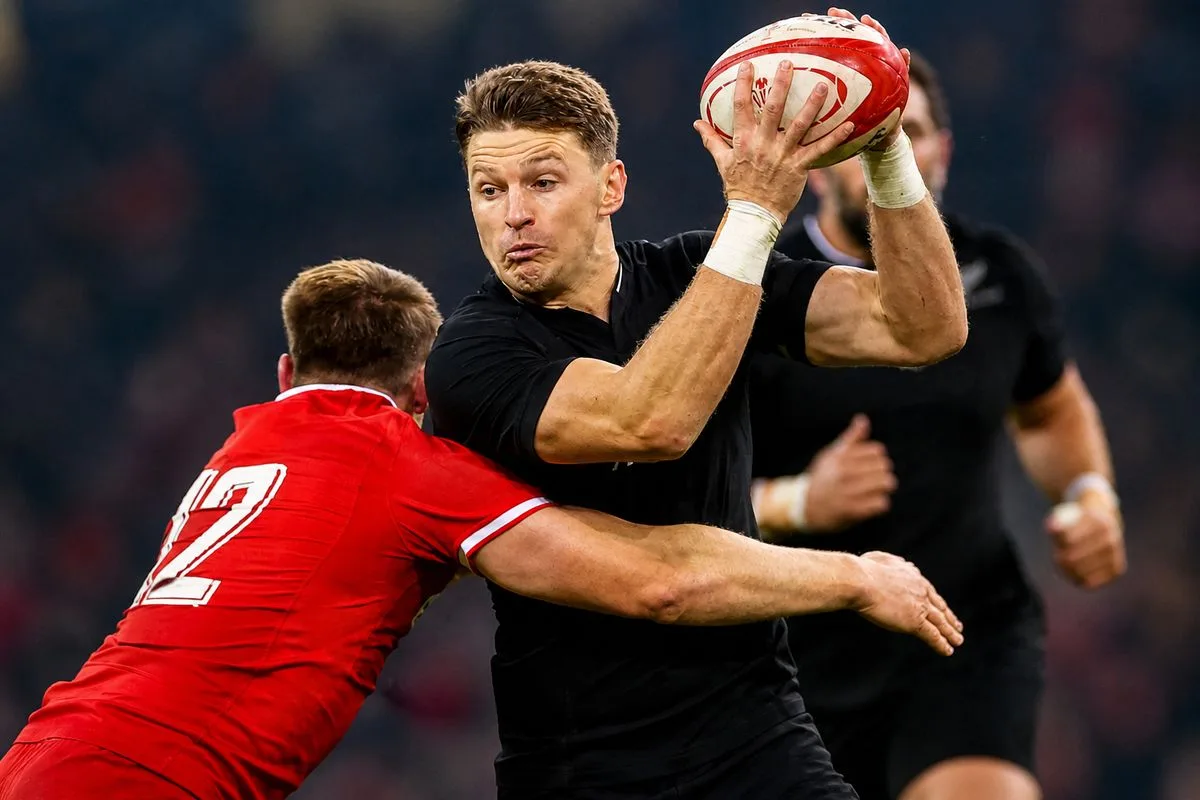
Beauden Barrett steps into the captaincy spotlight in Cardiff
Beauden Barrett does not need any more milestones to justify his place in New Zealand rugby history, but he gets another one anyway. On Saturday, 14 November 2026, the 35 year old full back captains the All Blacks for the first time when they face Wales at Principality Stadium in Cardiff, a Nations Championship fixture with plenty riding on it for both teams.
It is a big moment, and not just because of the armband. This is Barrett’s 149th international, and it comes in a match week where New Zealand head coach Dave Rennie tears up the template from the previous weekend. After beating Scotland 43 to 21 at Murrayfield, Rennie makes eight starting changes and 10 alterations across the match day 23. That is not tinkering at the edges, it is a statement about depth, selection pressure, and what this Nations Championship run is supposed to build.
Rennie frames Barrett’s appointment in simple terms: experience, respect, and the weight of the honour. He says Barrett is “massively respected” and that captaining the All Blacks in a Test is something he “doesn’t take lightly”, adding that it will be a proud day for Barrett and his whanau, his family. The language matters. The All Blacks captaincy is not treated as a rotating admin job, it is treated as a cultural role as much as a tactical one.
And there is a neat symmetry to the scene in Cardiff. Barrett is part of the 2015 World Cup winning side, he is now the senior figure in a revamped selection, and he leads a team that has not lost to Wales in a very long time. New Zealand have won the past 34 Tests against Wales, a run stretching back to 1953. That streak is both a psychological edge and a trap, because every year it becomes less about the rugby and more about the story everyone brings into the stadium.
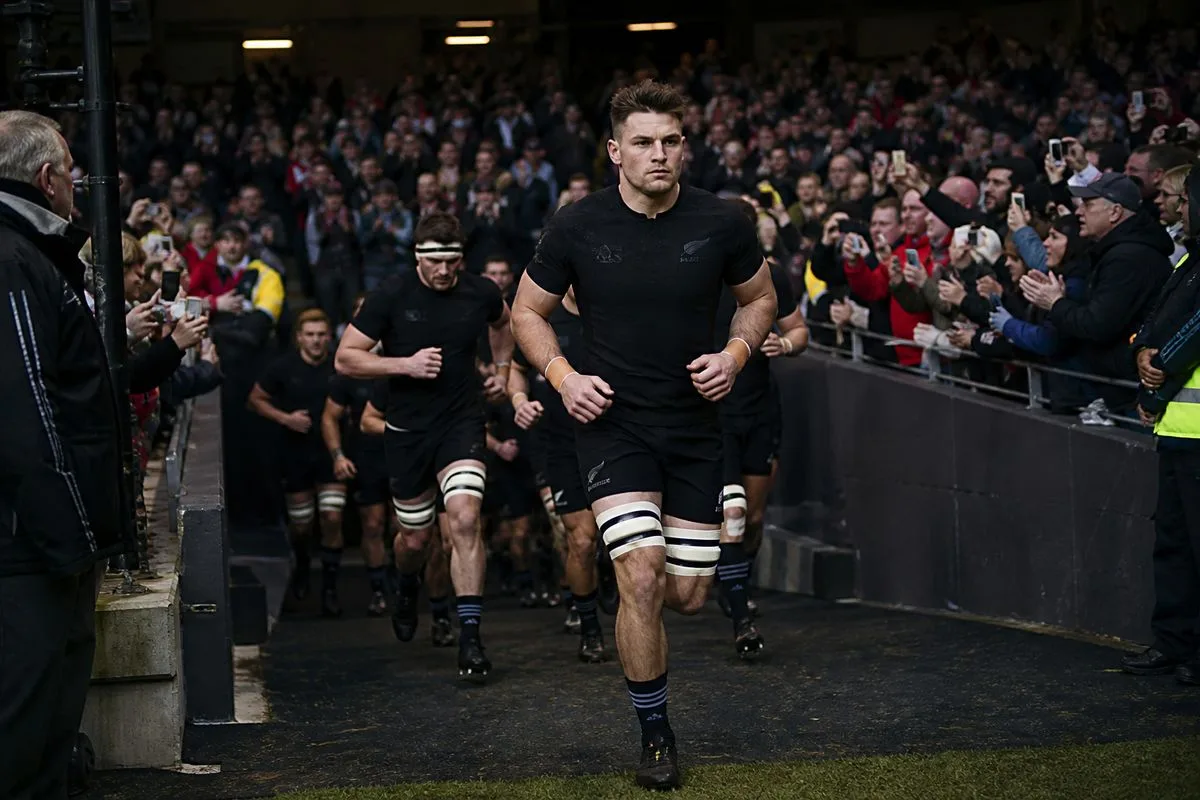

What the Wales match tells us about Beauden Barrett’s role in 2026
Barrett captains from full back, not fly half, and that detail is doing a lot of work. The starting 10 is Richie Mo’unga, with Cortez Ratima at scrum half. In other words, the All Blacks are not asking Barrett to run the game in the traditional sense. They are asking him to lead, to manage moments, and to provide calm from the backfield while others steer the attack.
That choice fits the shape of the selection. The back three includes Fehi Fineanganofo on the wing, making his first Test start, and Corey Moorby on the other wing. In midfield, Anton Lienert Brown starts at centre, with Quinn Tupaea also named. It is a blend of established Test quality and players still building their international identity. A captain at full back can be a stabiliser in that kind of mix, because he sees the whole field and can organise without needing to dominate every touch.
It is also, bluntly, a week where New Zealand need leadership because the squad is being stretched. Will Jordan, the record try scoring wing, is out with a hamstring injury. Jordie Barrett is absent too after picking up a facial injury against Scotland. Those are not minor omissions. They remove finishing power and a big chunk of tactical flexibility, and they force the All Blacks to prove that their system travels even when the headline names do not.
Rennie leans into that point, saying the group has created “good depth” and that there is “a lot of competition for places”. He also underlines the scale of experience still present by noting the selected squad carries 783 caps. That is a useful number because it cuts through the idea that this is an experimental side. It is changed, yes. But it is not green.
Inside Dave Rennie’s selection: a revamped All Blacks, and why it matters
The pack is where the reshuffle really shows. Anton Segner starts at flanker for his first Test start, and George Bower, Asafo Aumua, and Ratima all move from the bench into the starting XV. Josh Lord comes into the second row, and Scott Barrett, Beauden’s brother, is named at lock. That sibling detail is not just a nice headline. It matters because leadership groups often lean on familiar relationships, and because Scott Barrett brings his own authority in the tight five.
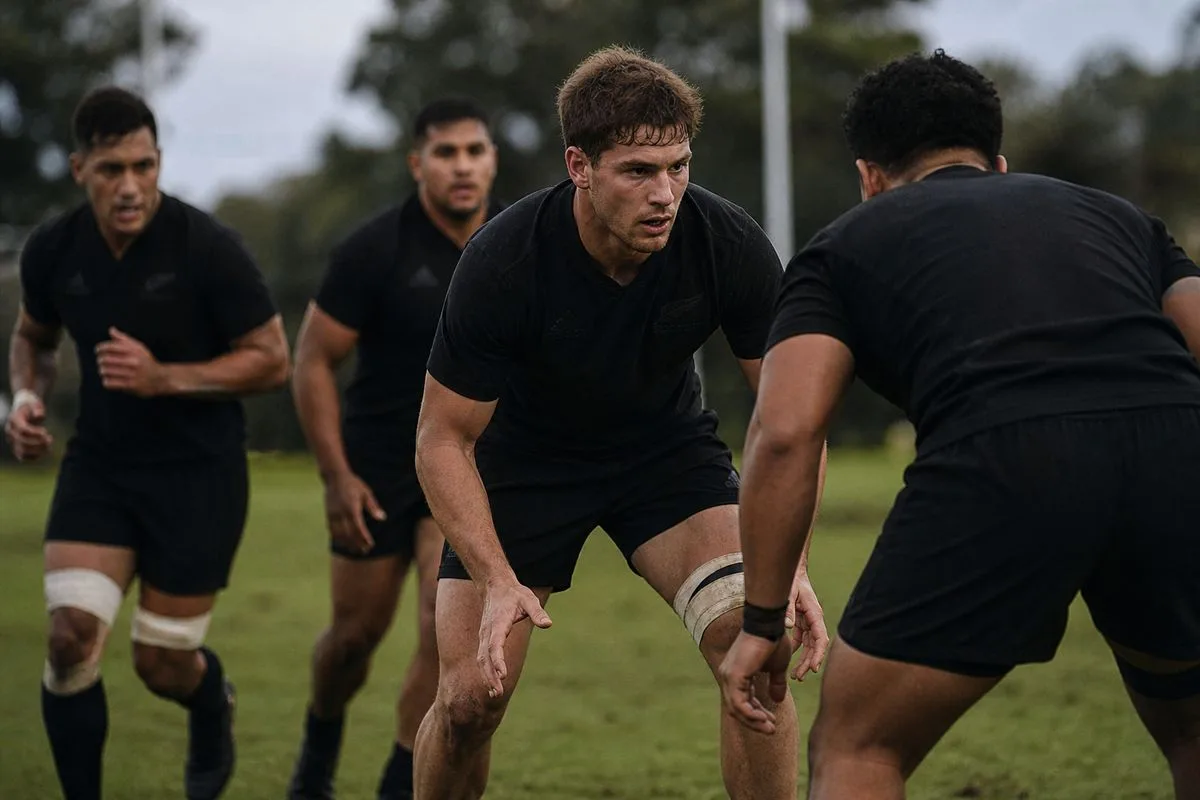
New Zealand’s starting front row is Bower, Aumua, and Tyrel Lomax Newell, with Lord and Scott Barrett behind them. The back row includes Segner, Samipeni Lakai, and Wallace Sititi. It is a selection that suggests Rennie wants mobility and work rate, not just set piece weight. Against Wales in Cardiff, where the crowd is loud and the game can become a scrap quickly, that balance is always a gamble. Too light, and a team gets squeezed. Too heavy, and it cannot keep up when the match breaks open.
On the bench, there is further evidence of a coach trying to cover every scenario. The replacements include Ofa Tu’ungafasi Tosi, Luke Hannah, Ethan Blackadder, and Rieko Ioane, with Cam Preston as the reserve scrum half. It is not a list that screams “hold on and survive”. It is a list that suggests New Zealand expect to play, and to keep playing late.
And then there is the broader table context. New Zealand and South Africa are currently unbeaten in the southern hemisphere table, and they are battling for top spot before the play off weekend at the end of the month. That matters because it turns this Wales match into more than a one off tour stop. It becomes part of a points race, and it raises the cost of a slip. When a coach makes 10 changes in that environment, it is either supreme confidence or a calculated risk. Probably both.
Beauden Barrett’s career context: experience, expectations, and the captaincy question
Barrett is not a new face being handed a ceremonial honour. He is 35, he is on 149 caps, and he has lived through multiple All Blacks eras. The BBC notes he was part of the 2015 World Cup winning side, which is a useful anchor point because it reminds readers how long he has been at the top. A player does not reach this stage without being trusted in big games, in hostile stadiums, and in weeks where the team is under pressure.
So why is this his first time captaining the All Blacks in a Test? The source material does not spell out the internal leadership history, and it would be wrong to pretend it does. But the timing still tells a story. This is a week of heavy rotation, injuries to senior backs, and a tour schedule that demands management of minutes and bodies. In those conditions, coaches often look for a captain who can keep standards high even when combinations are unfamiliar. Barrett fits that brief, and he does it without needing to change his playing style dramatically.
There is also a positional angle. Captains at full back are less common than captains in the forwards or at scrum half, but they can be extremely effective when the player has the voice and the authority. Full backs are involved in kick receipt, counter attack decisions, and defensive organisation. They are also, crucially, slightly removed from the chaos of the breakdown, which can help a captain keep a clear head when refereeing interpretations start to bite.
And it is worth saying plainly: the All Blacks captaincy is not just about being the best player. It is about being the right leader for the week, the opponent, and the squad mix. Rennie’s quote about Barrett being “massively respected” is the key. Respect is currency in a team with 783 caps in the match day group. Without it, the armband is just fabric.
Wales v New Zealand: the weight of history, and the danger of assuming it continues
The headline statistic is brutal for Wales. New Zealand have won the past 34 Tests between the sides, a run that goes back to 1953. That is not a streak, it is a sporting inheritance. Every Welsh player grows up hearing it, and every All Black knows it is mentioned because it is supposed to intimidate.
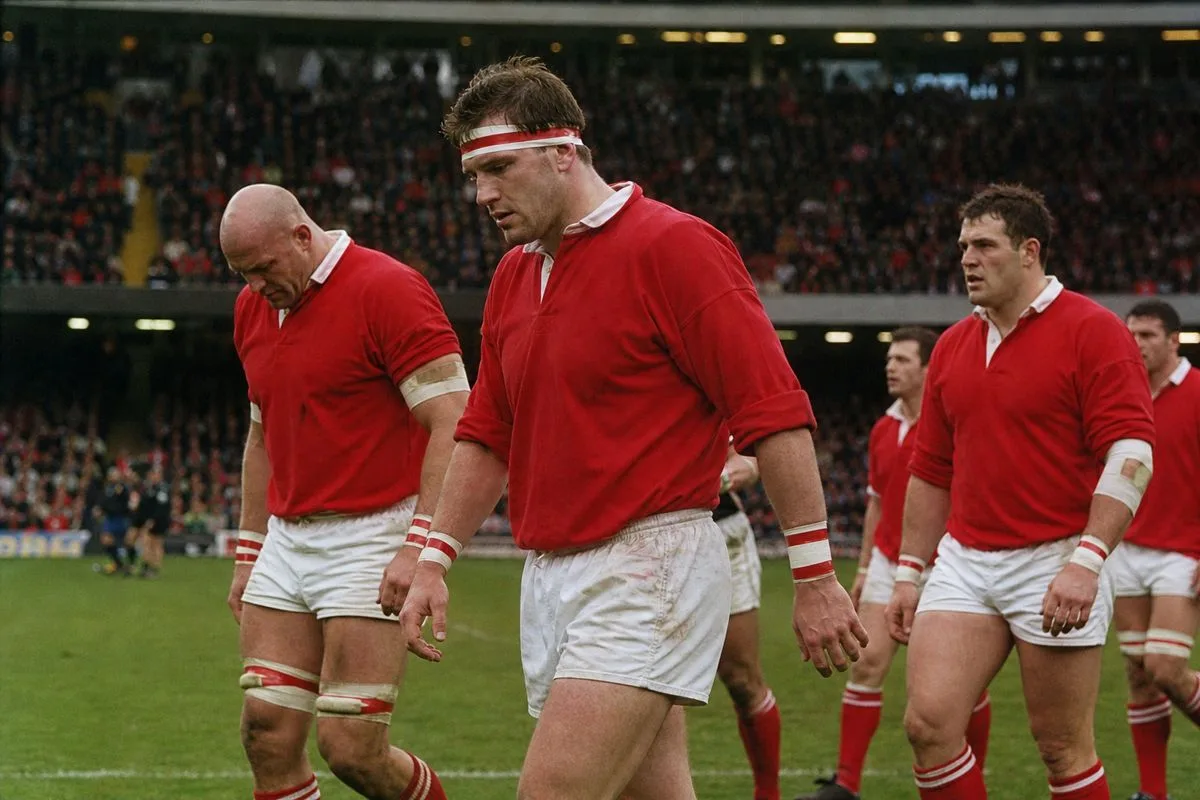
But history does not tackle anyone. It does not catch kicks. It does not make lineout calls under pressure. What it does do is shape the emotional temperature of the match. For New Zealand, there is the risk of playing as if the win is inevitable, especially with a rotated side. For Wales, there is the risk of trying too hard to “break the curse” and losing shape early. Cardiff can be an amplifier for both impulses, because Principality Stadium is loud, close, and relentless when Wales get momentum.
Rennie acknowledges that reality by calling Wales a “proud rugby nation” and saying they are “building nicely” under Steve Tandy. The source material does not go into Tandy’s tactical approach, and it does not need to for one point to land: New Zealand are not treating this as a ceremonial fixture. They are talking about threat and challenge, and specifically about the difficulty of playing in front of a passionate crowd in Cardiff.
For Barrett, that environment is familiar. The question is not whether he can handle it, he has handled worse. The question is whether his captaincy can keep the All Blacks emotionally level if Wales start fast, or if the match becomes messy. That is where captaincy shows up, not in the team photo, but in the five minute stretch where discipline wobbles and someone has to pull it back.
What Beauden Barrett’s first Test as captain signals for the All Blacks, and for elite rugby
At one level, this is a simple story: a senior player gets his turn with the armband. But at another level, it is a window into how top teams manage transition. New Zealand are missing Jordan and Jordie Barrett, they are starting two debutants in terms of first Test starts, and they are still confident enough to make sweeping changes while chasing table position against South Africa. That is a high wire act, and it only works if the leadership spine is strong.
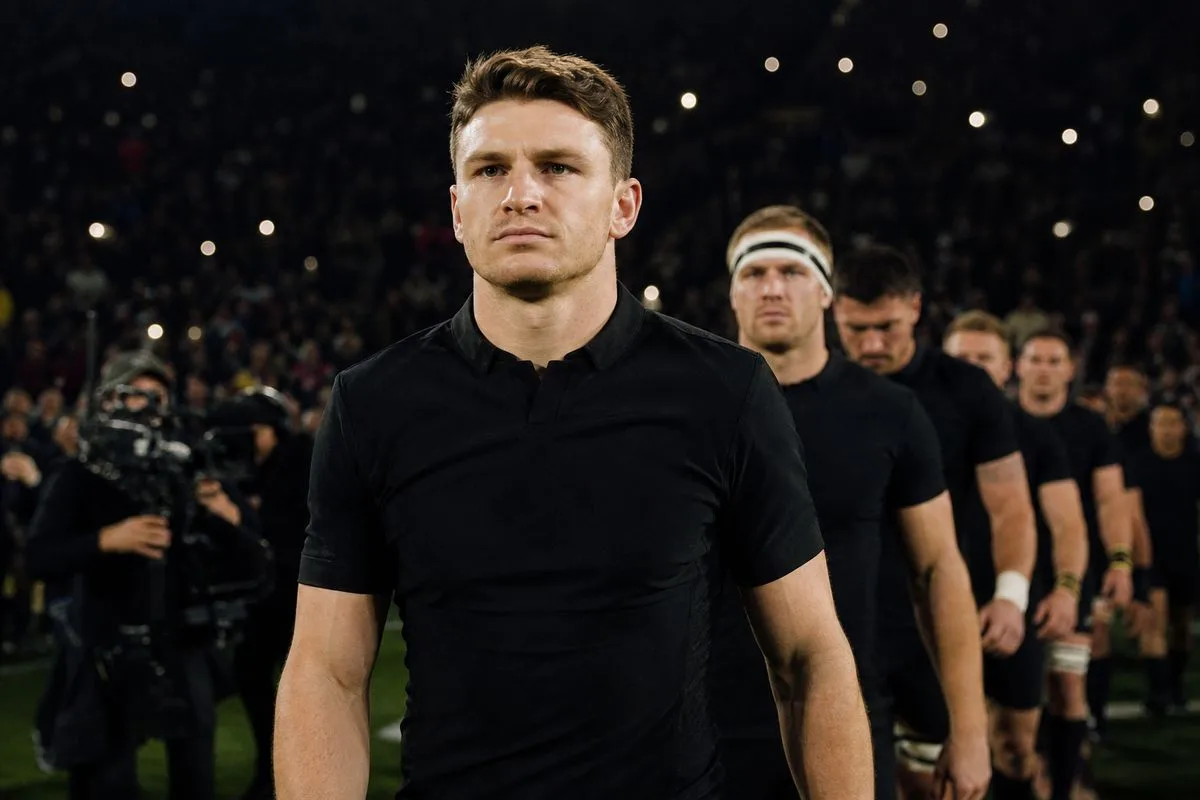
Barrett’s captaincy also highlights a broader trend in elite rugby: leadership is increasingly distributed. Teams talk about “leadership groups” and shared responsibility because the game is too fast and too complex for one voice to control everything. In that context, a captain like Barrett can be selected for his ability to connect the parts, rather than for being the loudest person on the pitch. Scott Barrett at lock, Mo’unga at fly half, and experienced figures in the pack can all carry pieces of the load.
There is also a selection message embedded here. When a coach says there is “a lot of competition for places”, and then changes 10 players in the 23, he is reinforcing that message with action. Nobody is untouchable, and everyone needs to perform. Giving the captaincy to a player on 149 caps does not contradict that. It supports it. It says the standard is still the standard, and the team expects its most experienced players to set it.
And for the wider rugby world, this match is another reminder that international squads are being managed like long campaigns, not like isolated Tests. Injuries, rotation, and table formats push coaches towards strategic selection. Fans sometimes hate it, because they want the best XV every week. But the reality is that the best XV in November is often the healthiest, sharpest XV, not necessarily the most famous one.
What’s Next
For Beauden Barrett, the immediate next step is brutally straightforward: captain well, and play well, in Cardiff. If New Zealand win with a rotated side, the narrative becomes one of depth and control, and Barrett’s captaincy looks like a smart, calm choice. If they struggle, the conversation shifts quickly towards whether too many changes were made, and whether the captain can impose order when combinations are unfamiliar. That is the job. It is not fair, but it is the job.
Beyond this weekend, the bigger question is what this captaincy means for the rest of the Nations Championship window and the play off weekend at the end of the month. The source material makes clear that New Zealand and South Africa are unbeaten and battling for top spot. That suggests New Zealand cannot afford a wobble, and it also suggests Rennie is trying to arrive at the play offs with a squad that has genuine match hardened options across the 23. Barrett’s leadership in this kind of rotated Test becomes part of that preparation, because it sets the tone for players who are trying to force their way into the strongest team.
There is also a longer view, and it is about succession. Barrett is 35. He is still good enough to be central, but the All Blacks are always planning the next leadership cycle, whether they admit it publicly or not. A one off captaincy can be a reward, but it can also be a bridge, a way to keep standards steady while other leaders grow into bigger roles. If Barrett’s week as captain is smooth, it gives the coaching group more flexibility later. If it is turbulent, it may accelerate the search for a different on field voice. Either way, it is information, and coaches love information.
Closing thoughts: a milestone, and a test of control
Beauden Barrett captaining the All Blacks for the first time should feel like a celebration, and it is. A player does not reach 149 caps without doing a lot right for a very long time. But it is also a match that asks real questions, because it comes with heavy rotation, key injuries, and a hostile away stadium where Wales will be desperate to turn history into fuel.
Rennie’s selection tells the story of a coach who believes his squad has depth, and who is willing to prove it in public. The 783 caps in the chosen group suggest this is not reckless. Still, the All Blacks are not playing Wales in a vacuum. They are playing with South Africa unbeaten too, with a play off weekend looming, and with the pressure that always follows New Zealand when they step onto a field.
And that is why this captaincy matters. Not because it changes who Barrett is, but because it changes what the week demands of him. He has to be the calm centre while the team around him shifts. He has to lead a revamped side through the noise of Cardiff. And he has to do it in a way that looks, from the outside, effortless. That is the All Blacks standard. Fair enough, then. Let’s see what happens.