I am helen review: a domestic drama that turns the volume up on fear
This i am helen review lands in a week when plenty of viewers may feel they have already had their fill of grim headlines. And yet Dominic Savage’s latest instalment in the I Am... anthology makes a persuasive case for sitting with discomfort rather than dodging it. The Guardian’s verdict is blunt: Nicola Coughlan is “absolutely superb” in a film that is “terrifying” and, crucially, a “must watch”. That is not casual praise, it is a warning label.
I Am Helen is divided into two parts and runs for roughly 90 minutes in total, according to the Guardian review. The drama is devised with Coughlan, continuing the series’ established method of building each story in close collaboration with its central actor. The result is a piece of television that is less about plot twists and more about the slow, sickening realisation that a relationship can turn dangerous in the space between “starting” and “stopping”.
For anyone searching for an I Am Helen review because they want to know whether it is worth their time, the clearest answer from the available source material is yes, but with caveats. It is harrowing. It is precise. And it is designed to leave a mark.

What happens in I Am Helen, and why the opening scene matters
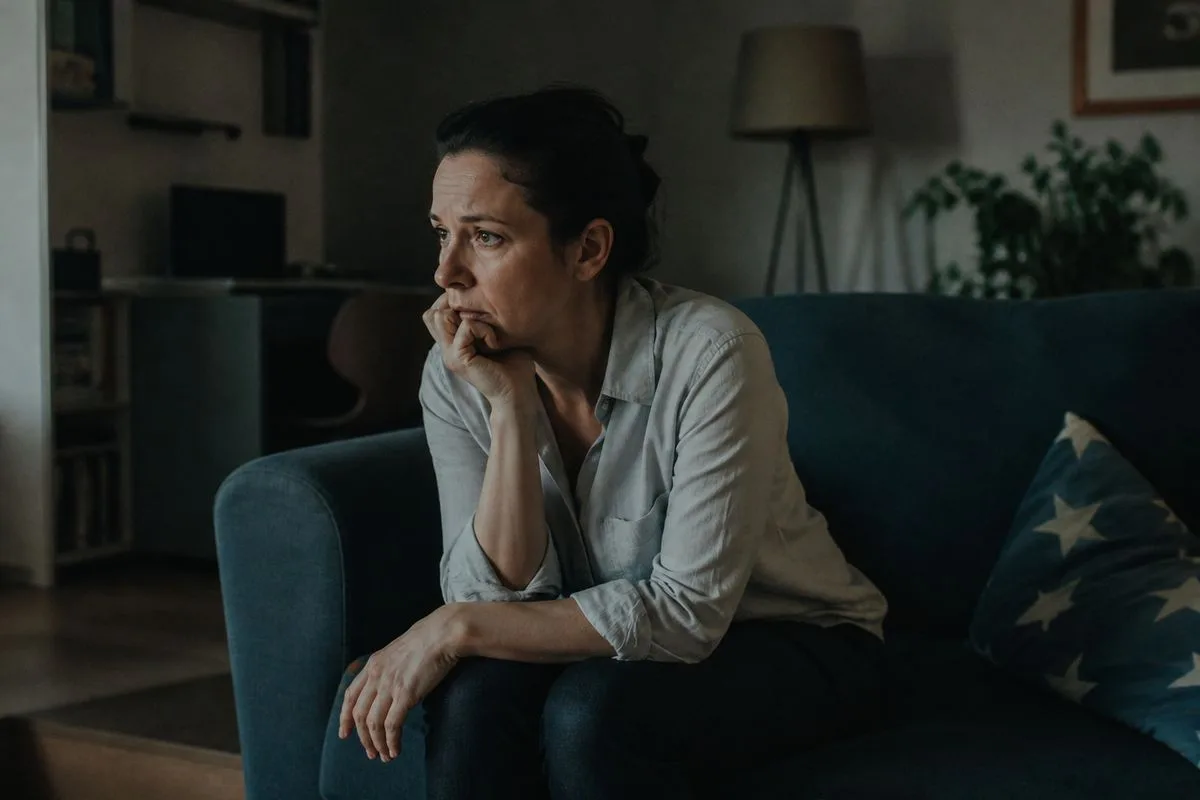
The premise is deceptively ordinary. Helen, played by Coughlan, is five years into a relationship with Steve, played by Joe Cole. They are engaged. They are “happy enough”, as the Guardian puts it, which in Savage’s world is often as close to bliss as anyone gets. The drama opens with the couple going to bed and beginning to have sex, something routine, familiar, unremarkable. Then it isn’t.
Steve begins to choke Helen and does not stop as soon as she struggles and says no. The Guardian review argues that the entire drama lives in those few moments, in the gap between initiation and consent, between fantasy and reality, between what one partner thinks is “play” and what the other experiences as threat. And that is the point: I Am Helen is not interested in sensationalism, it is interested in the aftermath. What does it mean when a boundary is crossed and one person treats it as a misunderstanding while the other feels their safety has been rewritten?
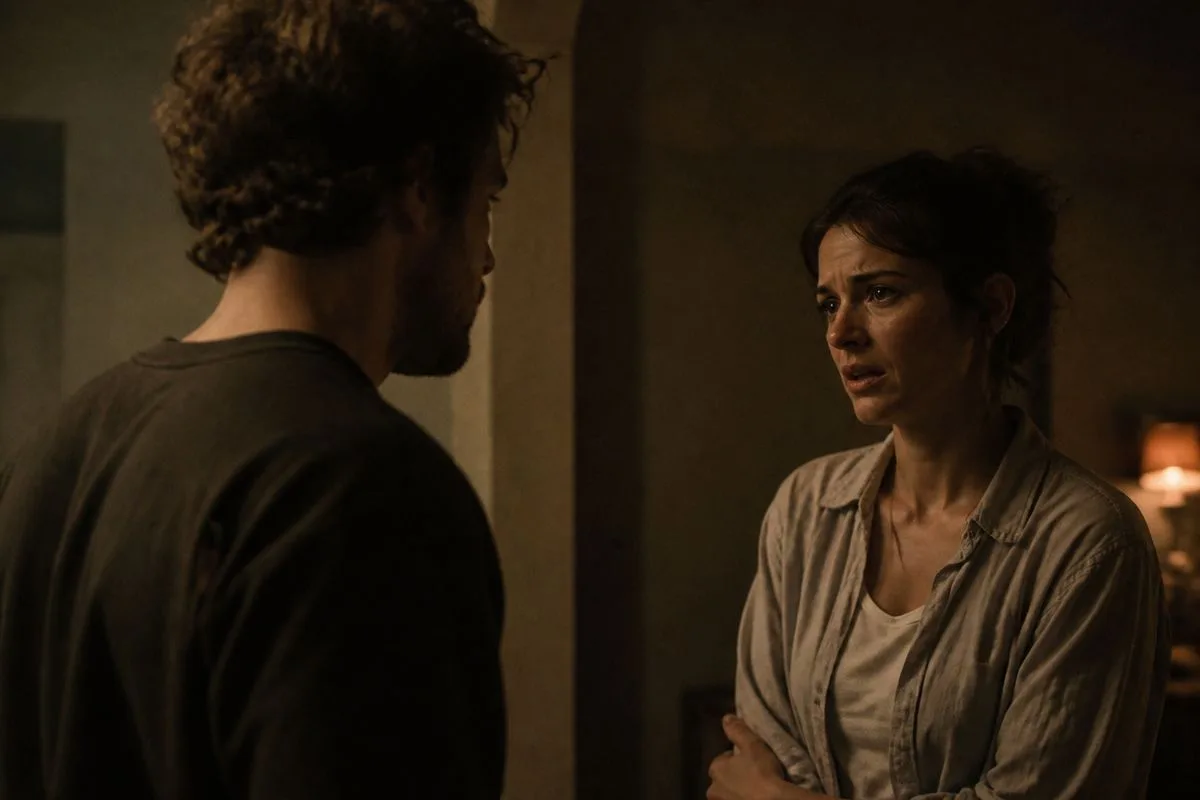
From there, the story becomes an extended examination of what that incident does to Helen, to Steve, and to the relationship itself. Helen is distraught. Steve is baffled and defensive, insisting they were “having fun” and “trying a few new things”. The Guardian review asks the obvious question that hangs in the air: if Steve is genuinely confused, why is he not simply apologetic? That tension, between innocence claimed and harm done, powers the rest of the film.
I am helen review: Nicola Coughlan and Joe Cole in a pressure cooker
Coughlan’s performance is described by the Guardian as “a superb everywoman performance”, which is a telling phrase. Helen is not framed as a symbol or a case study, she is a person trying to make sense of something that has knocked her off balance. The terror is not only in the act itself, it is in the recalibration afterwards: the second guessing, the bargaining, the attempt to explain something that should not need explaining.
Joe Cole’s Steve is written and played as a man who can plausibly exist in the real world, which makes him more unsettling than a straightforward villain. He is not introduced as a monster. He is introduced as a fiancé. And then the film watches him reach for justifications, for grievance, for the language that turns a woman’s “no” into an obstacle to be negotiated. The Guardian notes that Steve shifts arguments towards feeling like “less of a man” because of Helen’s independence, her lack of desire for children, and her ambition to start her own business. That is a familiar pattern in coercive dynamics: the conversation stops being about harm and becomes about his wounded identity.
The supporting cast, at least as described in the Guardian piece, is used with sharp intent. Nick Preston plays Martin, a colleague whose influence is “subtly nasty and compelling”. Martin is not just a mate at work, he is a conduit for the “spirit of the manosphere”, the review says, and he feeds Steve a set of excuses that sound like banter until they do not. There is a line Martin offers about “pushing” a girlfriend into bondage, and another about violence framed as something men were “allowed” to do decades ago. Steve’s response, laughing while showing an “awful, hungry glint”, is the kind of detail that makes a viewer’s stomach drop because it feels observed rather than invented.

Dominic Savage’s I Am... series, and how Helen fits the pattern
To understand why I Am Helen is being received as such a gut punch, it helps to place it inside the broader I Am... project. The Guardian describes the anthology as examining different aspects of women’s lives with “merciless precision” and “pitiless detail”. That is the brand, for better or worse. It is not comfort TV. It is not designed for background viewing while scrolling a phone.
The series begins in 2019 with I Am Nicola, starring Vicky McClure, focused on coercive control. Over time it brings in actors including Samantha Morton, Suranne Jones, Lesley Manville, and Kate Winslet, often pairing established names with younger performers to explore generational concerns. The key creative method, as the Guardian notes, is that each story is worked out with the central female actor. That approach matters because it tends to produce drama that feels lived in, not plotted.
I Am Helen continues that tradition while shifting the emphasis towards the ways online sexual culture and the “toxic manosphere” can seep into intimate relationships. It is not presented as a detached “state of the world” essay. It is presented as a relationship story where the outside world, porn habits, workplace talk, and online rabbit holes become part of the air the couple breathes. And once that air turns poisonous, it is hard to pretend nothing has changed.
The toxic manosphere angle, and why the film feels ripped from real life
The Guardian review is explicit that the drama makes “manifest the entire spirit of the manosphere” through Steve’s interactions at work. There is a scene where Steve watches porn at his desk while colleagues, some amused and some not, try to ignore it. That detail is doing more than showing bad behaviour. It sketches a workplace culture where boundaries are porous, where women’s bodies are treated as content, and where the line between private fantasy and public entitlement gets blurred.
Then Martin escalates things, showing Steve “much stronger stuff” online and offering a worldview where male “needs” justify pressure, coercion, and eventually violence. The Guardian highlights the way jokes operate in this environment, always with plausible deniability. “I can’t tell if you’re joking or not,” Steve says, laughing. That is the mechanism: say something horrific, wrap it in humour, and see whether the room gives permission.
There is also a careful point here about how the film handles porn and sexual experimentation. The Guardian’s description suggests I Am Helen is not arguing that trying new things is inherently wrong. It is arguing that consent is not a vibe, it is a boundary. Steve frames choking as “playing”, but Helen experiences it as fear and loss of control. The drama lives in the mismatch, and in the way Steve’s defensiveness suggests he is more invested in protecting his self image than in hearing what happened to the person he claims to love.
The review does note a potential weakness: some domestic scenes become repetitive, with Steve “shouting about not being heard” without always moving the drama forward. And there are moments that feel “ripped from the headlines”. But the Guardian calls those moments fleeting, implying the overall effect remains powerful. In a way, that “headlines” feeling may be part of why it hits so hard. It is not exactly groundbreaking to say misogyny exists. The big deal is showing how it can be normalised, one conversation at a time, inside a home.
I am helen review: atmosphere, threat, and the realism that makes it sting
If there is one craft element the Guardian keeps returning to, it is atmosphere. “Atmosphere is everything,” the review says, and it is not hard to see why. Savage’s drama, at least as described, builds threat in layers. Not with jump scares, but with accumulation. A look held too long. A justification that turns into an accusation. A conversation that keeps circling the same drain until the viewer realises the circle is the trap.
That sense of threat is heightened by the show’s commitment to realism. Helen and Steve are not living in a heightened thriller universe. They are engaged, working, talking about the future. That ordinariness is what makes the shift so frightening. The Guardian describes the toxicity arriving “by degrees” until Helen, with help from a friend and a women’s health centre, has to admit the situation is untenable. The mention of the women’s health centre is important because it signals the story is not only about private suffering. It is also about the systems people turn to, and the moment when someone stops minimising what happened to them.
There is a broader cultural point here too. The drama is framed as an exploration of gaps: between sexes, between communication and miscommunication, between consent and compliance, between reality and fantasy, between needs and wants, between love and service. That is a long list, but it captures the argument that the danger is not only in one man’s actions. It is in the narratives that teach men to treat women’s discomfort as negotiable, and teach women to treat fear as something to manage quietly.
What it means for British TV drama, and why Channel 4 keeps making work like this
I Am Helen also says something about where British television drama is in 2026. There is still an appetite, and a commissioning space, for intimate, actor led storytelling that does not soften its edges. Channel 4 has long positioned itself as a home for riskier work, and Savage’s anthology fits that tradition: small scale in setting, big in implication.
It is also a reminder that “issue drama” does not have to be didactic to be political. The Guardian review suggests the film does not lecture. Instead, it watches. It listens. It lets a relationship argument reveal the power dynamics underneath. That is often more persuasive than a speech, because it mirrors how these situations actually unfold. People do not announce themselves as dangerous. They rationalise. They deflect. They demand sympathy. And sometimes they recruit a mate like Martin to back them up.
For performers, the series remains a showcase precisely because it is so stripped back. Coughlan, best known to many viewers for work that leans comic or romantic, is being praised here for something colder and more exposed. The Guardian’s language, “absolutely superb”, “brilliantly powerful”, “harrowing”, signals a performance that is likely to be discussed beyond the show’s immediate broadcast window. And in an industry crowded with content, that kind of cultural stickiness is not easy to achieve.
What's Next
The immediate next step for I Am Helen is conversation, and not the polite kind. If the Guardian review is any guide, the drama is built to provoke arguments about consent, sexual scripts, and the influence of online misogyny on offline relationships. In practical terms, that means viewers are likely to debate whether Steve is “confused” or knowingly coercive, and whether the show’s depiction of workplace porn use and laddish banter reflects a widespread reality or an extreme case. Either way, the point is that the debate itself becomes part of the impact.
For the I Am... anthology, Helen sets a direction of travel. Earlier instalments tackle coercive control, poverty, and midlife pressure, as the Guardian summarises. This one pulls the camera towards the digital pipeline that can take insecurity and turn it into entitlement. If Savage continues, it would not be surprising to see future films explore adjacent spaces: the way algorithms feed resentment, the way “therapy speak” can be weaponised in relationships, or how young people negotiate intimacy when porn is a default reference point. None of that is guaranteed, but Helen makes the case that the series is still evolving rather than repeating itself.
And there is a wider industry implication. British drama has sometimes struggled to depict online radicalisation without making it feel like a separate genre, all message boards and sinister music. I Am Helen, at least as described, keeps it domestic. That approach may influence other writers and commissioners, because it shows a way to dramatise the internet’s impact without ever leaving the kitchen, the bedroom, or the workplace. The horror is not “out there”. It is in the room. That is the trick, and it is why it lingers.
Closing thoughts: who should watch, and who might need to wait
This i am helen review cannot pretend the film is an easy recommendation. The Guardian explicitly acknowledges that, after a heavy week in the news, some viewers may not feel ready. That is fair enough. The opening incident, and the emotional fallout, are likely to be triggering for some people, particularly those with personal experience of sexual violence or coercive relationships.
But the same review insists it is worth making time for, calling it “brilliantly powerful” and praising Coughlan’s work as essential viewing. The strongest takeaway from the available source material is that I Am Helen succeeds because it refuses to let the audience hide behind comforting categories. It is not a story about a stranger in the shadows. It is about a fiancé. A colleague. A conversation that turns. A joke that is not a joke. And a woman realising, with growing clarity, that love is not supposed to feel like fear.
In the end, I Am Helen sounds like the kind of drama that does what the best television can do: it makes the private political without turning people into slogans. It watches a relationship fracture, then asks the viewer to consider what, exactly, helped crack it in the first place.