Riemann hypothesis news in 2026, another proof claim hits the internet
The riemann hypothesis has a habit of resurfacing in the news cycle whenever someone, somewhere, says they have finally cracked it. And in November 2026, that pattern repeats. A fresh online post claims a proof has been found, reportedly developed “working with Claude”, and the author suggests the method “extends much further”. It is the kind of line that makes mathematicians sit up, then immediately reach for the red pen.
This is not a peer reviewed announcement, and the source material available here does not include an accepted journal publication, an institutional press release, or an endorsement from a recognised verification body. That matters, because the riemann hypothesis is not the sort of conjecture that becomes true because it sounds plausible on a blog or because an AI assistant helped tidy up the argument. It becomes true only when the proof survives hostile reading by experts who know every trapdoor in the subject.

Still, the fact that these claims keep coming is itself a story. It says something about the cultural status of the problem, the way AI tools are changing how people write and explore mathematics, and the gap between public excitement and professional validation. And it raises the question readers actually care about: what is the riemann hypothesis, why is it so hard, and how should anyone evaluate “proof” claims in 2026?

What the riemann hypothesis actually says, and why primes are at the centre of it
At its core, the riemann hypothesis is a statement about the zeros of a particular function, the Riemann zeta function. The most common plain English version goes like this: all non trivial zeros of the zeta function have real part equal to one half. That “one half” is not a random flourish, it is the critical line in the complex plane that seems to organise the zeta function’s deepest behaviour.
Why should anyone outside a number theory seminar care? Because the zeta function is tightly linked to prime numbers. The primes look chaotic when listed out, but they are not arbitrary. Over the last two centuries, mathematicians have built a bridge between primes and analysis, showing that questions about how primes are distributed can be translated into questions about the zeta function. Community explanations in 2026 put it bluntly: the riemann hypothesis would tell mathematicians that the zeros lie on a vertical line, and that has consequences for the distribution of primes.
It is worth being precise about what “consequences” means here. The source material does not provide specific numerical error bounds or named theorems, so this article will not invent them. But the broad relationship is well known: the location of zeros controls how accurately one can predict the number of primes up to a given size. If the zeros behave in the neat way the riemann hypothesis predicts, then prime counting estimates behave in a correspondingly controlled way. That is the big deal.
Why the riemann hypothesis is so hard, and why “obvious” proofs usually fail
The riemann hypothesis is one of the seven Millennium Prize Problems, a status that signals both difficulty and importance. The arXiv source material included here notes that it is attracting a great deal of attention and explicitly places it in that Millennium context. That label also creates a kind of gravitational pull: it attracts serious researchers, but it also attracts enthusiastic outsiders, and sometimes cranks. Fair enough, it is a famous mountain, people want to climb it.
But the difficulty is not just that the statement is technical. It is that the zeta function sits at a crossroads of complex analysis, analytic number theory, and spectral ideas that connect to other parts of mathematics. Many approaches that look promising at first run into subtle issues: hidden assumptions about convergence, steps that only work in a region where the function behaves nicely, or arguments that accidentally rephrase the hypothesis rather than prove it. In online discussions throughout 2026, people repeatedly ask why it is difficult when “so many zeros have been checked”. The answer is that verifying many cases is not the same as proving all cases, especially when “all” means infinitely many zeros stretching out without limit.
And then there is the modern twist: AI assisted exploration. The 2026 claim explicitly mentions working with Claude. Tools like that can be useful for checking algebraic manipulations, summarising known lemmas, or helping someone organise a long draft. But they can also produce confident sounding text that glosses over the exact point where a proof needs a rigorous justification. In other words, AI can make an argument look cleaner than it really is. That is not a moral judgement, it is just the reality of how these systems work.

The 2026 “proof” claim, what is known from the available material, and what is not
Based on the source snippets provided, the current 2026 development is an online post asserting: “I believe I have, working with Claude, discovered a proof of the Riemann Hypothesis.” The author adds that the method “easily extends much further”. Those are the only concrete details available in the supplied material. There is no named journal, no conference presentation, no institutional affiliation, and no indication that independent experts have verified the argument.
That absence does not automatically mean the claim is wrong. It does mean the claim is unconfirmed. In mathematics, confirmation is not a vibe, it is a process. A proof has to be written in a way that other mathematicians can check line by line. It has to survive attempts to break it. And for a problem as famous as the riemann hypothesis, the scrutiny is intense. The first serious question experts ask is not “is it elegant?” but “where is the fragile step?”
It is also telling that the arXiv ecosystem is mentioned in the source material as a place where work on the riemann hypothesis appears. That is a common path: researchers post preprints, the community reads them, errors are found or the work gains traction, and eventually something may reach a journal. But the existence of a preprint, or an online post, is not the same thing as acceptance. Readers should keep that distinction front and centre, especially in 2026 when viral claims can outrun verification by weeks or months.
Riemann hypothesis history, from Riemann’s conjecture to today’s verification culture
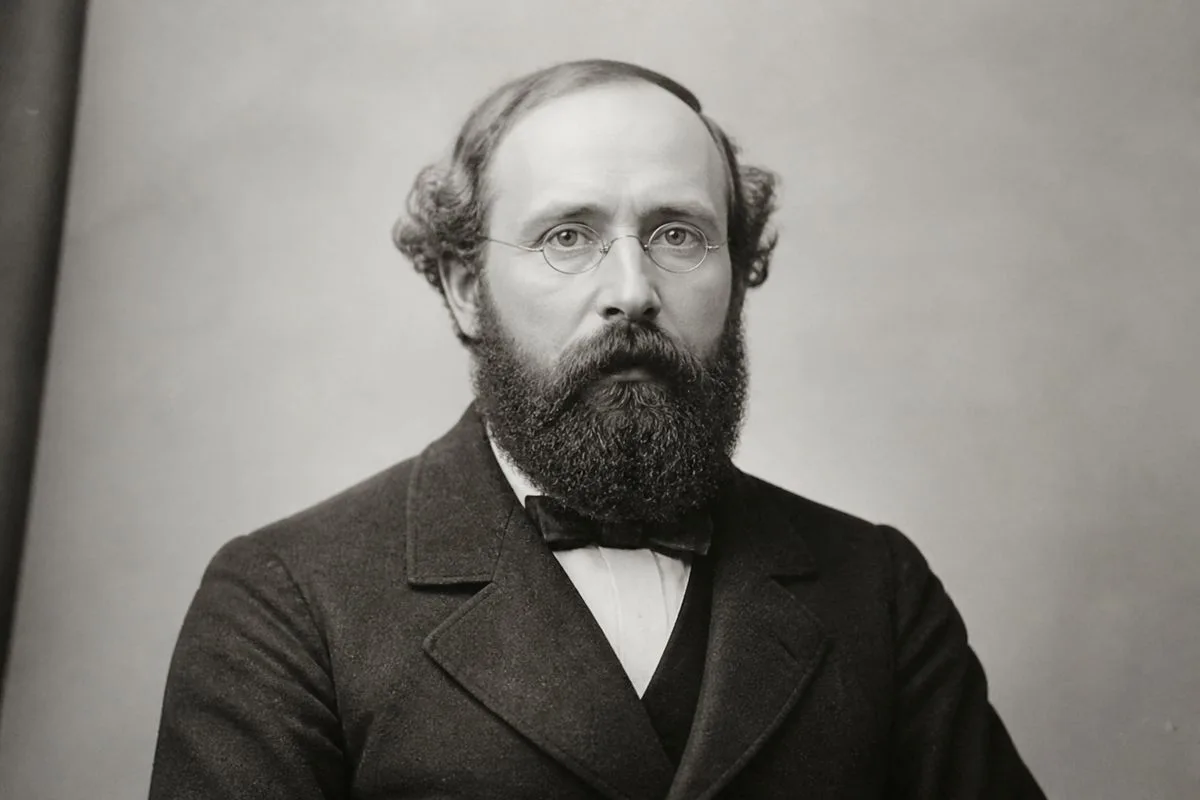
The riemann hypothesis is named after Bernhard Riemann, and the source material summarises the central conjecture about the location of zeros. Over time, the hypothesis becomes a kind of organising principle in analytic number theory. It is not just a single question, it is a hub. Results are proved “assuming RH”, techniques are developed in the attempt to prove it, and entire subfields grow around related ideas.
One reason the hypothesis stays in the public eye is that it is easy to state in a sentence, even if it is hard to understand fully. Another reason is the prize problem framing. The Millennium Prize label turns it into a cultural artefact, a badge of ultimate difficulty. That has upsides, it draws attention and talent. But it also has downsides, it encourages a steady stream of premature victory laps.
There is also a modern cultural layer. Community discussions in 2026 show a constant demand for accessible explanations: “Can someone explain to me Riemann Hypothesis?” and “Why is it so difficult to answer?” That matters because it shapes how proof claims are received. When the public mostly encounters the hypothesis as a mysterious headline, it is easier for a confident sounding “proof” to feel plausible. The professional community, by contrast, is trained to distrust plausibility. It wants airtight reasoning, not narrative momentum.
How mathematicians evaluate proof claims in 2026, and where AI fits in
When a proof claim appears, experts typically look for a few things. First, does the author clearly state the definitions and the exact theorem being proved? Second, does the argument rely on known results, and if so, are they cited correctly and applied within their conditions? Third, are there steps that move between infinite sums, integrals, or analytic continuations without justification? Those are classic failure points in zeta function work.
In 2026, there is an extra layer: AI assisted drafting. An AI tool can help produce a more readable exposition, but readability is not validity. In fact, a polished write up can make it harder for non experts to spot that a key lemma is missing. The right way to think about AI here is as a calculator for language and structure, not a guarantor of truth. If a claim leans on “the AI checked it”, that is not evidence in the mathematical sense.
There is also the question of where the claim lands. A personal post is one thing. A preprint on a recognised server is another. A seminar talk where experts ask questions in real time is another again. And a peer reviewed journal publication is the highest bar, though even that is not infallible. For the riemann hypothesis, the community expects a long period of checking and re checking. That is not gatekeeping, it is just what the problem demands.
What a proof would change, and what it would not
If the riemann hypothesis were proved, it would not suddenly make primes “predictable” in a simple, everyday sense. It would not hand the world a magic formula for generating primes on demand. It would, however, tighten the theoretical understanding of how primes are distributed, and it would likely sharpen many results that currently depend on assuming RH. In practice, that means cleaner theorems, stronger bounds, and fewer conditional statements in parts of number theory.
It is also common for people to jump straight to cryptography. The source material provided does not discuss cryptographic impacts, so this article will not claim specific consequences. Broadly, modern cryptography relies on computational hardness assumptions, not on the riemann hypothesis being true or false. A proof could influence some theoretical analyses, but it is not automatically a doomsday event for encryption. Anyone telling readers otherwise, without very specific technical backing, is probably overselling it.
And there is a subtler point. Even without a proof, the attempt to prove RH has already generated tools, techniques, and cross connections that matter. Mathematics often works like that: the journey produces value even when the destination remains out of reach. So the constant churn of claims, preprints, and discussions is not entirely noise. Some of it is the field feeling its way forward.
What This Means For You
For readers who are not professional mathematicians, the practical takeaway is simple: treat any 2026 headline claiming “proof of the riemann hypothesis” as unverified until there is clear evidence of expert validation. That evidence usually looks like sustained commentary from recognised number theorists, detailed public notes identifying and resolving objections, and eventually a stable, citable write up that survives months of scrutiny. If the claim is only circulating as a personal post, it is entertainment, not settled mathematics.
For students and technically curious readers, this moment is still useful. It is a prompt to learn the basics properly: what the zeta function is, what “zeros” mean in the complex plane, and why the “real part one half” line is special. Community explanations in 2026 repeatedly return to the same core idea, zeros on a vertical line imply stronger control over prime distribution. That is a good starting map. And if someone wants to follow proof claims, the best habit is to look for the exact point where the argument uses a deep theorem, swaps limits, or asserts analyticity. Those are the places where real proofs either shine or collapse.
And for anyone using AI tools to explore maths, there is a healthy mindset shift to make. Use AI to clarify, to organise, to check small steps. Do not use it as a substitute for rigorous verification. In 2026, the temptation is to treat a fluent explanation as a correct one. But mathematics does not care about fluency. It cares about whether every step is justified, even the boring ones.
Closing thoughts, the riemann hypothesis remains unsolved until it is not
The riemann hypothesis sits in that rare category of problems that are both technically deep and culturally famous. That combination guarantees a steady stream of announcements, especially now that AI tools make it easier for people to draft long arguments and share them instantly. Some of those arguments will be interesting. A few might even contain new ideas. Most will not prove the thing they claim to prove.
As of 20 November 2026, based on the source material provided here, the latest “proof” claim is just that, a claim. There is no documented independent verification in the supplied information, and no indication of formal acceptance. That does not make the story pointless. It makes it a reminder of how mathematical truth is established: slowly, publicly, and with relentless checking.
And if a genuine proof does arrive, the world will not need to guess. The confirmation will be loud, detailed, and impossible to miss. Until then, the riemann hypothesis remains what it has long been, a beautifully simple statement with a stubbornly complicated heart.