
Blackburn Rovers transfer news, Curwood’s defence and a window that leaves questions
Blackburn Rovers transfer news rarely lands with quite this much edge. On 4 September 2026, new chief executive Steve Curwood goes on BBC Radio Lancashire and does not pretend everything is rosy. He admits “everyone is frustrated” after a summer window that brings only four signings, seven departures, and three deals collapsing on deadline day.
That combination is what has supporters riled. Four in, seven out is a net reduction, and it comes at a time when Tony Mowbray is back in the dugout and trying to put his stamp on the squad. Curwood’s message is basically this: the club tries, the money is there, but the final steps go wrong. And in modern football, those final steps are where windows are won or lost.

Curwood also introduces a phrase that will stick with fans for a while: Blackburn are “gazumped” at the last minute on a couple of deals. He frames it as a moral issue as much as a practical one, hinting that agreements mean less than they used to. It is not exactly comforting, but it is at least an explanation, and it gives shape to what otherwise looks like a club simply failing to execute.
There is a second thread running through this: timing. Curwood argues the window is “chaotic” partly because Mowbray is appointed on 5 June 2026, later than ideal for planning. He says the best-case scenario is having a manager in by the start of May. Blackburn do not have that, and the knock-on effects show up in recruitment, injuries, and the club’s willingness to wait for “target number one” rather than settling early.

What actually happened in the summer 2026 window, and which deals fell through
Curwood confirms the broad outline: Blackburn complete four signings before the window closes on Tuesday, but three deadline-day moves collapse. He says deals are “on the table” and “agreed with players and clubs”, yet still fail at the last hurdle. That is the key detail. This is not a case of Blackburn failing to identify targets, or refusing to pay, at least not in Curwood’s telling. It is a case of deals unravelling late, for reasons that can include rival bids, agents shifting terms, or players changing their minds when a bigger club appears.
BBC Radio Lancashire understands two of the failed deals involve Reo Hatate, who joins Burnley, and Brian De Keersmaecker, who goes to Bristol City. Curwood also references one deal being “a foreign one” that takes longer than anticipated, without naming the player or club. That matters because it suggests Blackburn are shopping beyond the domestic market, but perhaps without the established pathways, contacts, or time buffers needed to land those moves smoothly.
Curwood insists “the investment has been there” and says there is no reluctance from the board. He describes “collaboration throughout the process”, but concedes the club cannot get deals “over the line”. That phrase is doing a lot of work. It points to process, negotiation, and execution rather than ambition. And for supporters, that is a different kind of worry: it implies the club’s recruitment machine is not yet sharp enough, even when targets are identified and budgets exist.
He also defends the decision to let seven players leave, arguing the squad list is “top-heavy” and some players need game-time, citing George Pratt’s move to Bradford as an example. At the same time, BBC Radio Lancashire understands Blackburn turn down offers for Ryoya Morishita, Sean McLoughlin, Balasz Toth, Yuki Ohashi and Ryan Alebiosu. So the club is not simply selling anything that moves. It is choosing, and that makes the lack of incoming bodies feel even more deliberate, and therefore more open to scrutiny.
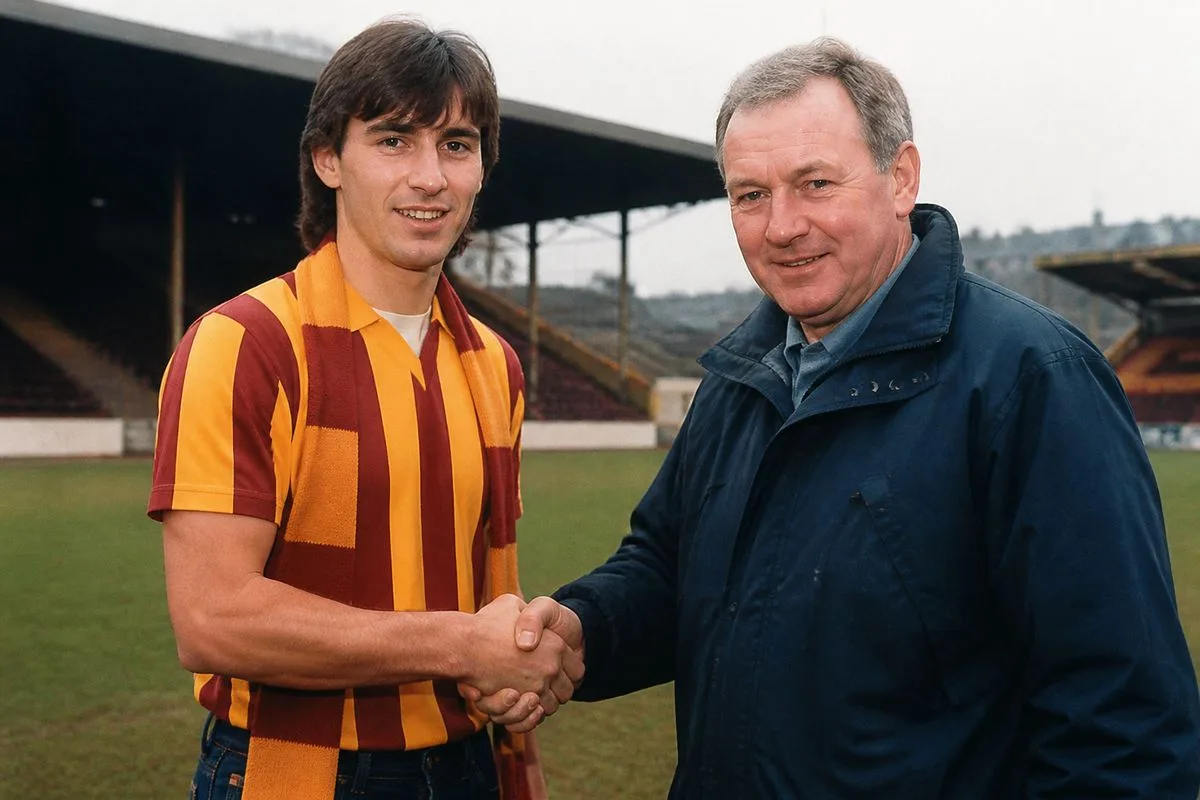
Tony Mowbray’s return, the O’Neill interlude, and why timing dominates this Blackburn Rovers transfer news
To understand why Blackburn end up in this position, the club’s managerial timeline matters. Michael O’Neill keeps Blackburn in the Championship last season while juggling his Northern Ireland role, but turns down the permanent job in mid-May 2026. Blackburn then reappoint Mowbray on 5 June 2026 for a second spell. That is not late in the calendar year, but in recruitment terms it is late enough to compress planning, scouting, and negotiation.
Curwood is blunt about that. He says ideally the manager is in by the start of May to decide “where are we going for next year”. Without that runway, the club faces a choice: do deals early for players who are available quickly, or wait for preferred targets and accept the risk. Curwood uses Jayden Fevrier as the example of a player Blackburn can “cement… in the building” because they know they can get him. That is a revealing admission. It suggests Blackburn’s recruitment is balancing certainty against quality, and sometimes certainty wins because the calendar forces it.
Mowbray’s influence also comes through in Curwood’s comments about personality and commitment. He says the head coach wants to make sure “the people here want to be here and play for him”. That is a reasonable standard, but it can narrow the pool and slow negotiations, especially in a market where players and agents are waiting for late opportunities. Curwood even asks the uncomfortable question out loud: was it wrong to push for the specific players Mowbray wanted? He does not answer directly, but the implication is that specificity increases the chance of missing out.
And then there is the human reality of a club in transition. Curwood joins from Fleetwood Town two months before his BBC interview, and he describes a whirlwind that includes “an administrator going to another club” and “a senior physiotherapist leaving”. Those are not glamorous headlines, but they affect day-to-day operations. Recruitment is not just a list of targets, it is a chain of people doing work at speed. When staffing is in flux, the chain is easier to break.
Inside Curwood’s explanation: gazumping, “morals”, and the mechanics of failed deals
Curwood’s most striking line is the one about morals in football, and the suggestion that there are not many left. He is describing a familiar modern pattern: a club believes it has an agreement, only for another bidder to arrive late with better terms. Sometimes it is higher wages for the player, sometimes a bigger fee for the selling club, sometimes both. The result is the same, the original club looks slow or weak, even if it has done much of the groundwork.
In Blackburn’s case, the Hatate and De Keersmaecker outcomes underline the point. Both end up at Championship rivals, Burnley and Bristol City. That is not a Premier League swoop that nobody can compete with. It is competition within the same market, where margins are thin and persuasion matters. If Blackburn are being beaten late by clubs in the same division, it raises questions about their selling proposition, whether that is wages, playing time, style of football, or perceived stability.
Curwood also points to the extra complexity of at least one overseas deal. Cross-border transfers can be slower for mundane reasons: documentation, international clearances, time zones, and the simple fact that negotiations involve more intermediaries. None of that is an excuse, but it is context. If Blackburn are leaving key business to deadline day, any additional friction becomes dangerous. A small delay becomes a deal-killer.
There is also a deeper point in Curwood’s insistence that nobody wants to “bring in just players to add bodies in the building”. That is a philosophical stance, and fans can respect it in principle. But it is also a gamble. Championship seasons are long, injuries are inevitable, and squad depth is not optional. When a club chooses quality and fit over numbers, it has to land the quality. If it does not, the squad can look light, and the manager ends up firefighting with what he has.

What this means for Blackburn’s squad, and the immediate pressure on results
Transfer windows are judged in the league table, not in boardroom explanations. And Blackburn’s on-pitch context is already tense. In early November 2026, Blackburn sit 14th in the Championship and come into a high-profile fixture against West Ham United having lost their last two matches, including a 4-0 defeat to Swansea City. That is not sourced as a long-term trend, but it is enough to sharpen the mood around recruitment. When results dip, every missed signing feels louder.
The Goal.com match guide for Blackburn vs West Ham on 7 November 2026 is not a transfer story, but it does show the environment Blackburn are operating in. West Ham are in the Championship, they have just changed manager, and they arrive with the kind of squad profile that underlines how competitive the division is. Blackburn are not shopping in a quiet market. They are trying to improve in a league where big names, big budgets, and constant churn are normal.
Curwood’s comments about turning down offers for Morishita, McLoughlin, Toth, Ohashi and Alebiosu also matter here. It suggests Blackburn believe they have assets worth keeping, and they are not forced sellers in every case. But it also means the club is committing to the current core, at least until the next window. If performances wobble, supporters will ask whether the club should have been more aggressive in adding quality, rather than simply protecting what it already has.
Curwood tries to buy time by talking about his “first 90 days” and the need to improve processes. That is sensible, and it is probably true. But football does not often grant grace periods. The Championship calendar is relentless, and the next window always feels both far away and uncomfortably close.
Blackburn Rovers transfer news: how the club’s strategy compares with the wider Championship market
Blackburn’s summer can be read as a case study in how Championship recruitment has changed. The division is no longer a straightforward ladder between League One and the Premier League. It is a battleground where relegated clubs arrive with parachute payments, ambitious clubs gamble on promotion, and mid-table sides try to stay competitive without overreaching. In that context, being “gazumped” is not rare, it is practically a feature of the system.
Curwood’s emphasis on waiting for “target number one” reflects a modern recruitment trend: clubs increasingly build profiles and shortlists, then try to land specific fits rather than simply signing the best available name. That approach can work brilliantly when the infrastructure is strong and the timelines are controlled. But when managerial appointments are late, staffing changes are happening behind the scenes, and injuries are mounting, it becomes harder to execute. The strategy does not change, but the margin for error disappears.
There is also the question of perception. Blackburn are a historic club with a proud fanbase and a Premier League title in living memory, but players make decisions based on the present. They look at stability, recent results, coaching, and the likelihood of playing. If Burnley and Bristol City are winning late races for the same targets, Blackburn have to ask what those clubs are offering that Blackburn are not, whether it is money, clarity, or simply a smoother process.
And then there is the reality that Blackburn are in a rebuild phase. Mowbray is reappointed in June 2026, Curwood arrives from Fleetwood Town two months before September, and the club is clearly adjusting. Rebuilds can be exciting, but they are messy. The best-run clubs still miss targets. The difference is how quickly they learn, and whether the next window looks sharper than the last.

Why It Matters
Curwood’s interview is more than a defence of one summer. It is a signal that Blackburn are trying to reset how they talk about recruitment. Instead of hiding behind vague lines about “the market”, he describes specific failure points: late gazumping, overseas complexity, and a compressed timeline caused by managerial uncertainty. That openness is risky, because it invites scrutiny. But it also sets a benchmark. If the club says it will be “in a very different position moving into the next window”, supporters will measure them against that promise.
The bigger issue is structural. Blackburn’s story shows how fragile transfer planning becomes when leadership changes stack up. A caretaker or interim period, a manager arriving in June, a new CEO arriving in the middle of the window, and backroom departures, all of it adds friction. Each individual change might be manageable. Together, they create a club that is negotiating while still organising itself. In a market where deals are decided by hours, that is a serious disadvantage.
And there is a cultural point too. Curwood’s “morals” comment hints at a club trying to do business in good faith, then discovering that good faith is not a currency everyone values. The lesson for Blackburn, and for similar clubs, is not to become cynical. It is to become faster and more resilient. Build deeper shortlists, progress parallel negotiations, and avoid leaving critical moves to deadline day where possible. That is not glamorous, but it is how clubs stop being the ones who feel hard done by every August and September.
What happens next: January planning, fan patience, and the test of Curwood’s first 90 days
Curwood asks supporters for time, and frames his early period as a chance to reflect and improve processes. He says the club will be in a different position for the next window. The immediate question is what “different” means in practice. It could mean earlier identification of targets, quicker decision-making, stronger negotiation, or simply more internal stability so that recruitment does not feel like a scramble.
January windows are notoriously awkward, and Blackburn will not have the luxury of a clean slate. Any business will be shaped by league position, injuries, and whether the squad looks short in key areas. Curwood’s insistence that the board is willing to invest suggests the club will try again. But the lesson of summer 2026 is that willingness is not enough. Execution is everything, and execution is built months in advance.
For Mowbray, the challenge is to keep results steady while the club regroups. Curwood says the head coach wants players who want to be at Blackburn, and that is fair enough. But the Championship does not wait for perfect alignment. If performances dip, the pressure will not just be on the manager, it will land on the recruitment team and the boardroom too.
Blackburn Rovers transfer news will keep circling back to the same question until the next window opens: was summer 2026 a one-off mess caused by timing and transition, or is it a sign of deeper recruitment issues? Curwood has put his argument on the record. Now the club has to prove it, the hard way, with better deals, earlier deals, and fewer stories about what might have been.