Iraq business news turns on two big levers, gas and money
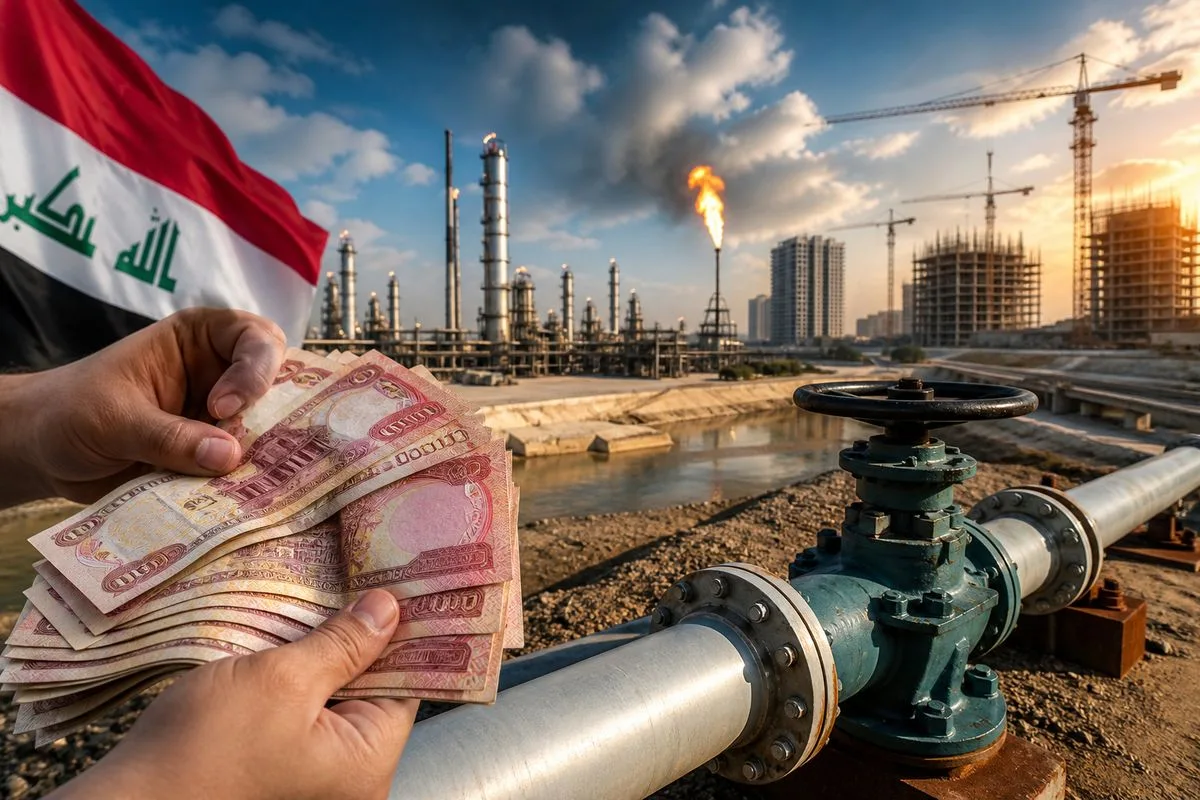
Iraq business news in early November 2026 is dominated by a familiar pairing, the oil and gas machine that funds the state, and the currency and financing decisions that shape everything else. On one side, international contractors and Iraqi operators are moving ahead with gas capture and field development work in Basra and Maysan, with new engineering and drilling activity tied to some of the country’s most strategically important assets. On the other, Baghdad is still dealing with the political and economic aftershocks of a sharp dinar devaluation in October, alongside fresh signals about dollar liquidity, reserves, and the government’s fiscal stance.
Look closely and a pattern emerges. Iraq is trying to do several difficult things at once: reduce flaring by building out gas infrastructure, keep oil output and processing stable, attract non oil investment, and maintain social stability while the exchange rate shifts. None of that is neat. But it is real movement, not just talk, and it is happening across ministries, state owned firms, and private sector channels.
The latest developments also show how Iraq’s economic story is becoming more multi track. There is the hydrocarbons track, still the heavyweight. There is the financial system track, where the Central Bank of Iraq and the Ministry of Finance are trying to manage confidence and flows. And there is the investment and trade track, where Baghdad is courting companies at forums and through the National Investment Commission while also seeking project finance for basic services like water and sewage.

Iraq business news on energy: KBR wins West Qurna 1 gas capture design work
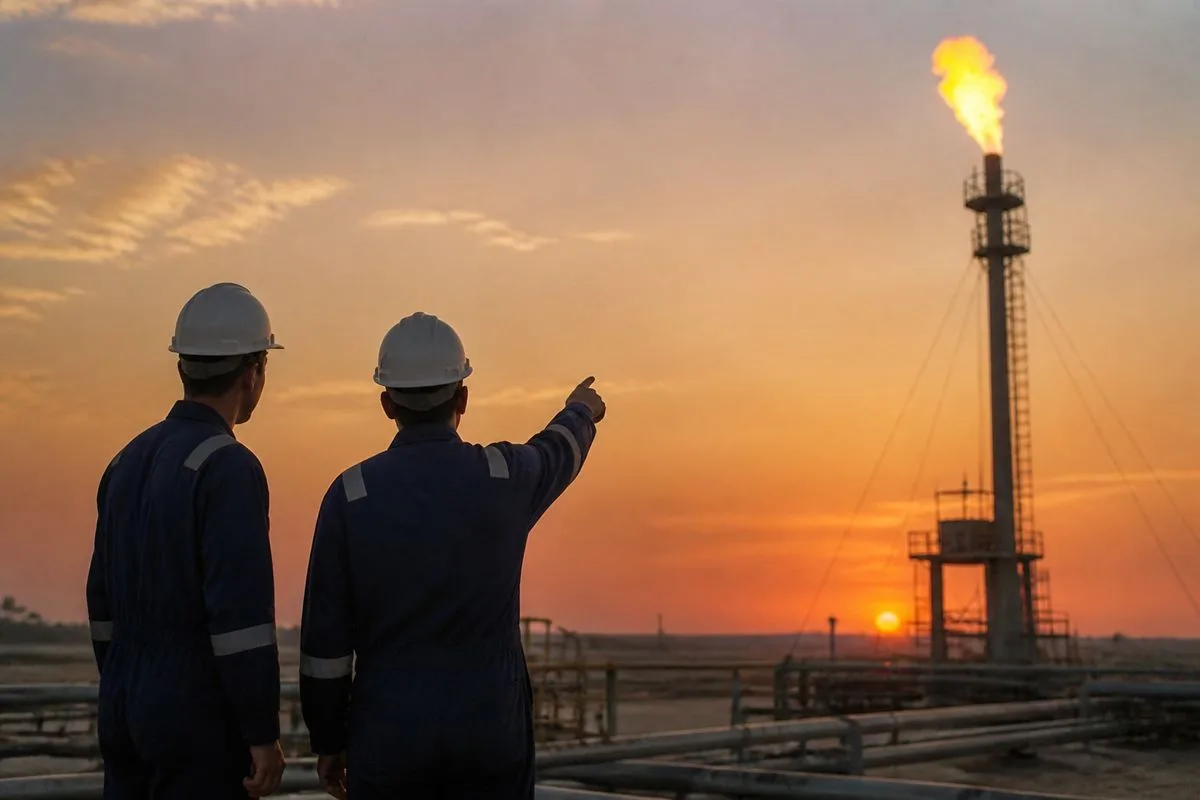
KBR has been awarded a contract by AKT Oil Services Company, also identified as Abraj Al Kut Oil Services Company, to provide detailed engineering design services for the West Qurna 1 Low Pressure Gas Capture Project in Iraq. The work sits inside Basra Gas Company’s broader programme to expand gas capture infrastructure and reduce flaring. That matters because flaring is not just an environmental issue, it is a straight economic leak. Every cubic metre burned off is fuel and feedstock not monetised, and in Iraq’s case it also feeds public frustration about electricity shortages and wasted national wealth.
Detailed engineering design is not the glamorous bit, but it is the bit that tends to decide whether projects are deliverable on time and within budget. It locks in technical choices, procurement pathways, and practical sequencing. In a place like Basra, where multiple operators, pipelines, and processing facilities overlap, design work is also about integration and risk reduction. And in Iraq, risk reduction is not a buzzword, it is the difference between a project that runs and one that stalls.
West Qurna 1 is one of Iraq’s flagship fields, and any incremental improvement in associated gas handling has knock on effects. Better capture supports domestic power generation, reduces the need for imports, and can create a more reliable supply of dry gas and liquids for industry. It also signals something else: even when politics is noisy, the engineering pipeline keeps moving because the economics are too big to ignore.
From separation stations to new wells: field level activity accelerates in the south
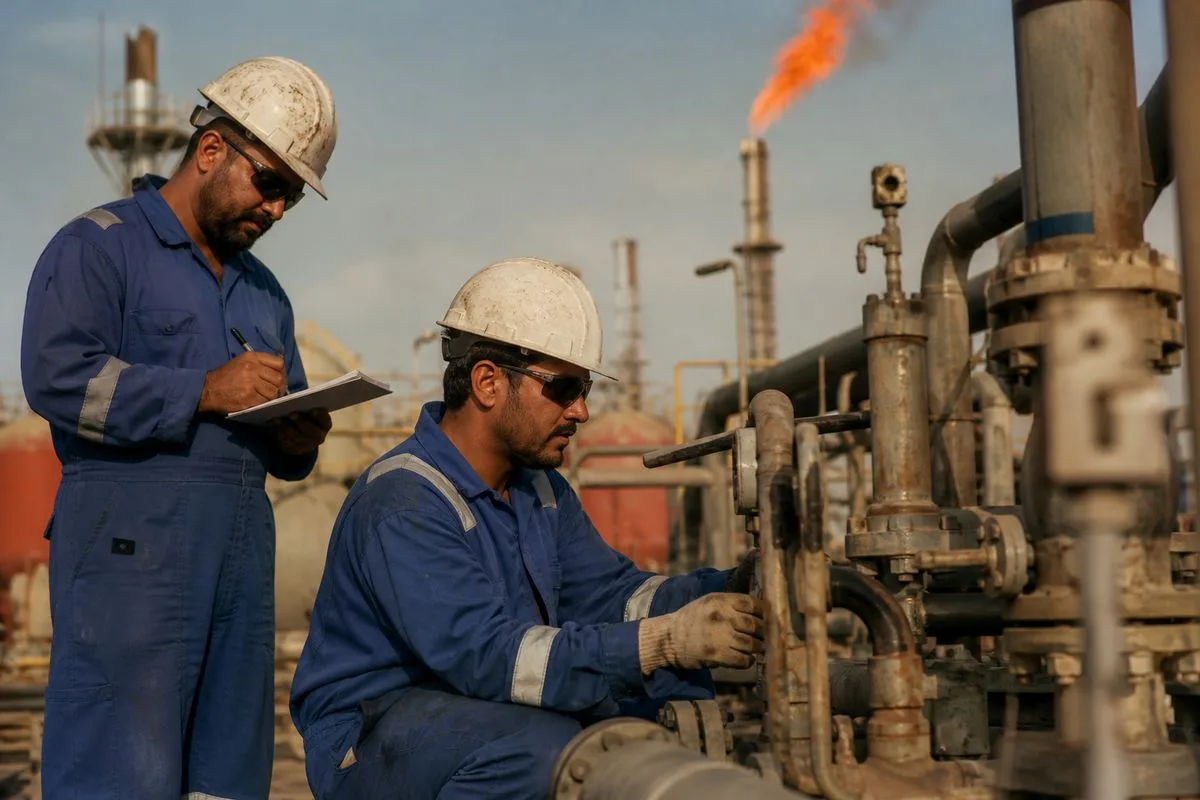
Operational updates from the south underline that Iraq’s upstream and midstream work programme is not sitting still. Trial production has begun at the Amara Gas Separation Station, operated by Maysan Oil Company, at an initial rate of 3,000 barrels per day. The company’s Director General, Hussein Kazem La’ibi, describes a phased plan to increase output progressively, with a target of reaching 30,000 bpd. That is a tenfold ramp up ambition, and while the source material does not give a timetable, the intent is clear: build capacity step by step and prove systems before pushing harder.
Gas separation stations are often misunderstood outside the industry. They are not just another plant on the map. They are the interface between messy wellstream reality and the cleaner flows that refineries, power plants, and petrochemical units need. When they work well, they stabilise production and improve product quality. When they do not, they create bottlenecks that ripple across an entire region’s output.
In Basra, the Iraqi Drilling Company has begun drilling operations at well RT 80 in the Artawi oil field, on behalf of TotalEnergies. The Ministry of Oil frames this as part of the drilling company’s ongoing programme across the country’s oil fields, and the Director General of IDC, Mohammed Hantoush, confirms the operation. The detail that matters here is the client: TotalEnergies. It points to continued reliance on international operators and service ecosystems for field development, even as Iraq seeks more local value and capability.
At the contract level, Iraq’s Ministry of Oil says agreements have been reached on a contract for the West Qurna 2 oil field, with a signing expected before the end of 2026. Discussions continue on a development contract for the Nasiriyah oil field and four exploration blocks. The ministry notes that Oil Minister Basim Muhammad Khudhair al Abadi is involved in these talks. The message is that the state wants to keep the pipeline of deals alive, and to do it on a schedule that investors can actually plan around.
Iraq business news on finance: dinar devaluation, dollar shipments and reserve messaging
The most politically charged strand of Iraq business news this autumn is the currency. Iraq has raised its official exchange rate from 1,310 to 1,500 Iraqi dinars per US dollar, with the Ministry of Finance confirming the change on 7 October 2026 and stating it follows a cabinet resolution issued on 6 October 2026. Separate reporting and commentary in the source material describes the move as an approximately 15 percent devaluation, and one analysis piece frames it as a 13.3 percent devaluation. The precise percentage depends on the baseline used, but the direction is unambiguous: the dinar is weaker at the official rate.
The Central Bank of Iraq says the new rate is intended to support domestic industry, improve the competitiveness of Iraqi goods against imports, attract investment to non oil productive sectors, and create jobs. Those are standard objectives for a devaluation, fair enough. The harder question is whether the supporting policies exist to make those objectives real. Competitiveness does not appear just because the exchange rate changes. It needs reliable power, logistics, finance, and predictable rules. Without that, devaluation can simply raise the local currency cost of imports, which in Iraq’s consumption heavy economy can feed inflation and public anger.
Prime Minister Ali al Zaidi has addressed parliament to explain the government’s decision to change the exchange rate and outline steps to protect living standards and maintain regular payments of salaries and essential expenditure. That detail is telling. When a prime minister is personally explaining an exchange rate move, it is because the political stakes are high. Iraq’s public sector wage bill and social transfers are central to stability, and any perception that purchasing power is being eroded can quickly become a crisis.
Alongside the devaluation, the Central Bank states that foreign reserves are sufficient to meet all demand for foreign currency, including trade financing, bank card settlements, and travellers’ cash requests at the official exchange rate. And there is another important thread: a report attributed to Arabian Gulf Business Insight says the US has agreed to increase shipments of physical dollars to Iraq, according to the prime minister. In Iraq’s cash heavy economy, physical dollars are not a footnote. They are part of how the market clears, how traders price goods, and how confidence is maintained when people get nervous.
Debt, bonds and the cost of capital: Pearl Petroleum raises US$500 million
While Baghdad debates borrowing and exchange rates, the private and semi private energy ecosystem is also tapping international capital markets. Dana Gas and Crescent Petroleum, joint operators of the Pearl Petroleum Consortium, announce the successful placement of a US$500 million senior secured bond by Pearl Petroleum Company Limited, with a fixed coupon of 10.375 percent per annum. That is a chunky cost of money by any standard, and it reflects how investors price risk, including regional risk, commodity exposure, and project execution risk.
Still, the fact the bond is placed at all is meaningful. It suggests there is appetite for Iraq linked energy credit when the structure is right and the security package is acceptable. It also shows a route for financing that does not rely on Iraqi public budgets. That matters because Iraq’s state finances are often pulled in too many directions at once, salaries, subsidies, capital projects, and the constant need to maintain oil capacity.
There is also a political subtext. One piece of commentary in the source material notes that a reported IMF loan request complicates Prime Minister al Zaidi’s no borrowing pledge. The source material does not provide figures or terms for any IMF facility, so it cannot be treated as a confirmed deal. But the tension is real: Iraq wants to project strength and sovereignty, yet it also needs financing and technical support to modernise systems and fund infrastructure. In that context, market based borrowing by energy operators sits alongside, and sometimes in competition with, sovereign level narratives.
For businesses watching Iraq, the takeaway is not simply that money is expensive. It is that the cost of capital is becoming a key filter. Projects with clear revenue lines, credible operators, and enforceable structures can still raise funds. Projects that rely on vague promises or slow public payment cycles will struggle, especially in a devaluation environment where currency risk becomes harder to ignore.
Trade, investment and the slow grind of diversification
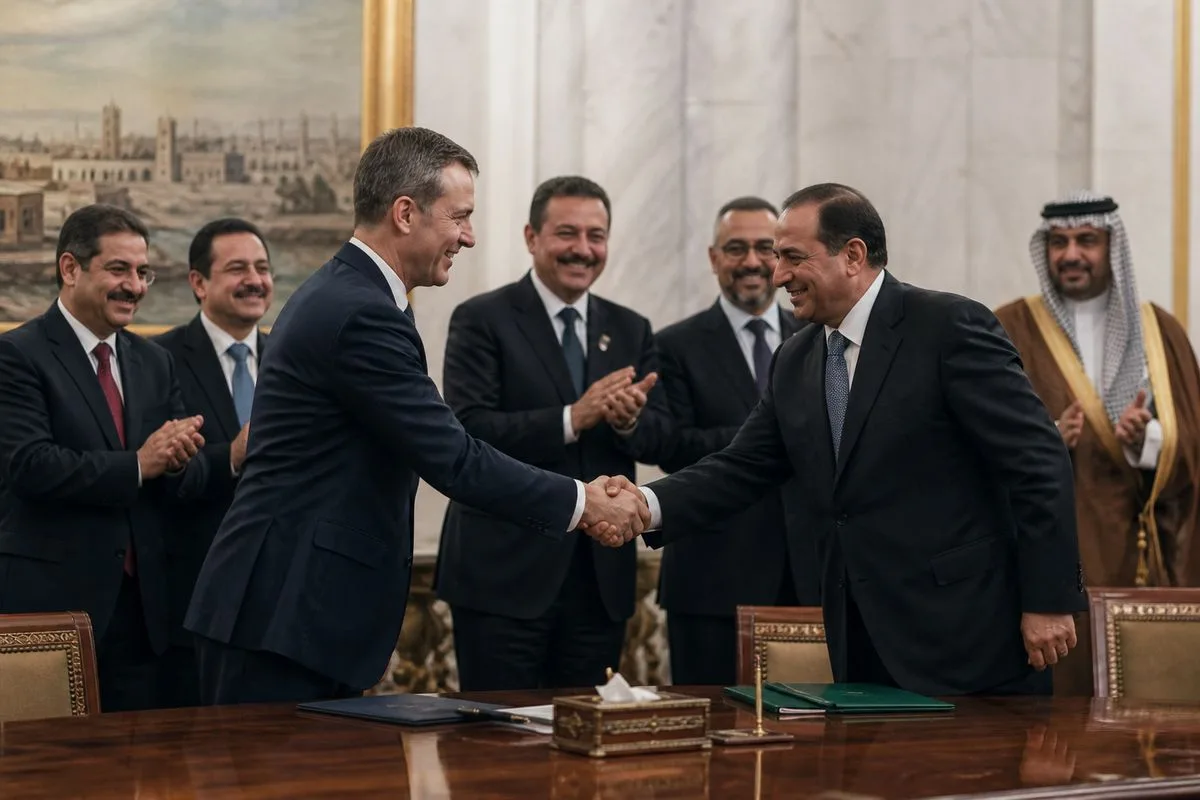
Baghdad is also pushing the investment story more aggressively. More than 400 companies, including around 50 from the European Union, gather for the two day Iraq National Trade and Investment Forum 2026, held on 28 to 29 October 2026 at the Babylon Rotana Hotel. The event attracts more than 750 registrations from businesses, government institutions, chambers of commerce, financial institutions and others. Those numbers do not prove investment will land, but they do show interest, and they show that Iraq is trying to organise a pipeline rather than relying on one off deals.
The National Investment Commission holds a preliminary meeting with a delegation from Ecolog International, described by the commission as a German company headquartered in the Netherlands, to discuss potential investment cooperation. The source material does not specify sectors or project sizes, so it is not possible to say what is on the table. But the pattern is familiar: early stage engagement, relationship building, and then the hard part, turning that into bankable projects with land, permits, and payment mechanisms that work.
There is also a strong signal from within the prime minister’s advisory orbit. Yousif Al Dunainawi, Chairman of the Advisory Commission of the Prime Minister, argues that Iraq’s future economy should be measured not by oil production volumes but by added value, job creation, and regional and global integration. That is a deliberate reframing. It suggests the government knows the old metric, more barrels, is not enough to absorb a young population or to protect the economy from oil price cycles.
But diversification is slow, and it is rarely linear. Iraq’s non oil sectors face structural constraints, from electricity reliability to customs friction and access to finance. Devaluation can help at the margin by making imports more expensive and local production more attractive. Yet without industrial policy that actually delivers infrastructure and credit, the benefit can be swallowed by higher input costs and uncertainty.
Iraq business news beyond oil: cars, water projects and the everyday economy
Not all the movement is in hydrocarbons. Dogus Otomotiv signs a letter of intent to establish sales and after sales service operations for Skoda branded passenger cars in Iraq. The agreement is disclosed via the Turkish public disclosure platform, and it would see the Turkish distributor take on the Iraqi dealership under terms to be defined in a formal contract. This is the kind of development that can look minor next to billion dollar energy projects, but it is a useful indicator of consumer market expectations and service sector maturation.
After sales service is the key phrase. Iraq’s market has long been characterised by import flows without robust service networks, which pushes costs onto consumers and undermines brand trust. A more formalised dealership and service model suggests a bet on sustained demand and on the ability to operate within Iraq’s regulatory and logistics environment. It also hints at a broader trend: regional firms, particularly Turkish ones, continuing to see Iraq as a growth market even when the currency is volatile.
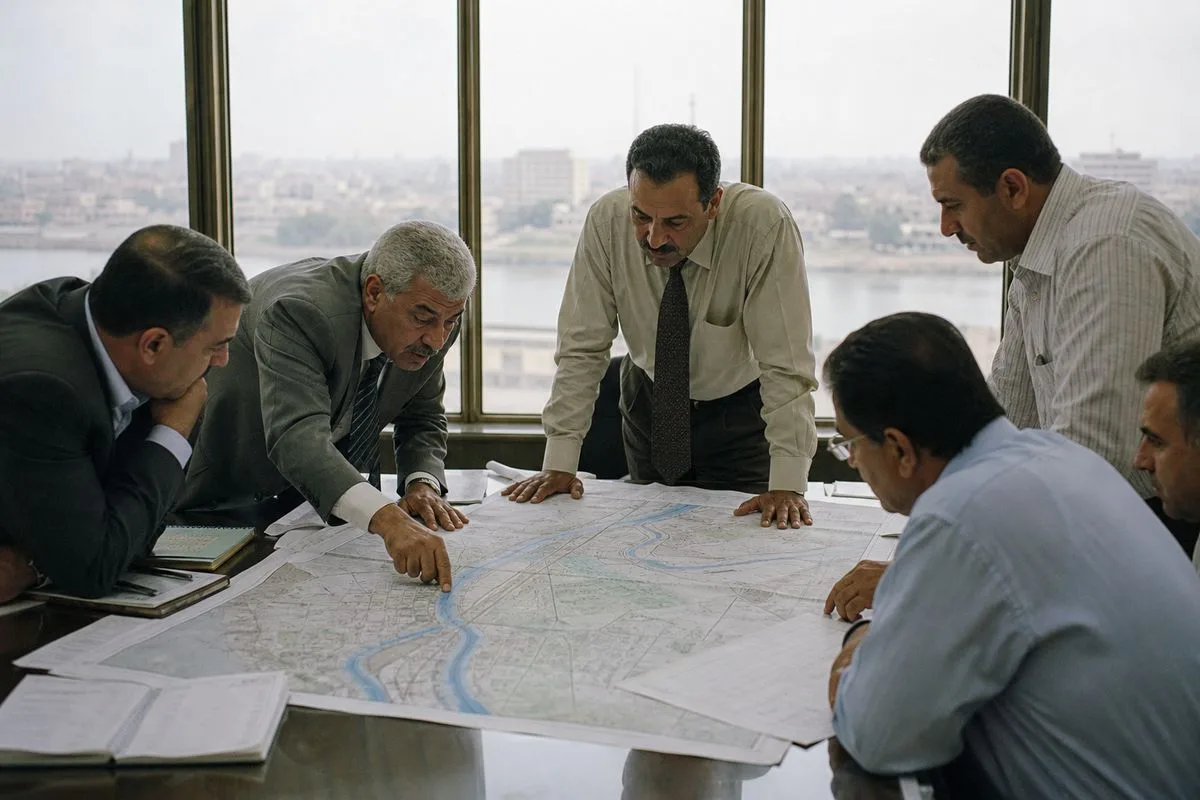
Meanwhile, Iraq’s Ministry of Planning holds talks with the World Bank on a financing proposal for water and sewage projects in Baghdad. The meeting is chaired by Undersecretary for Technical Affairs Dr Maher Hammad Johan, and it includes the Technical Undersecretary of the Secretariat of Baghdad. They discuss financing options, implementation mechanisms, and timelines, though the source material does not provide project values or specific districts. Still, the direction is important. Water and sewage are not glamorous, but they are foundational for public health, urban productivity, and investor confidence. Companies do not invest in cities where basic services are failing.
There is also a small but telling note on financial system modernisation. The Central Bank introduces a new electronic system for replacing damaged banknotes, allowing citizens to submit replacement requests online through the Ur portal. It is not exactly groundbreaking in global terms, but in Iraq’s context it is part of a gradual shift towards more digital interfaces with the state. And that matters if the country is serious about reducing cash hoarding and bringing more activity into the formal banking system.
Market signals from the Iraq Stock Exchange, and what they suggest about sentiment
Equity markets are not always the best real time barometer in Iraq, given liquidity constraints and the structure of listed sectors. But they do offer a window into sentiment. Rabee Securities’ Iraq Stock Exchange market report for the trading week ending 5 November 2026 shows the IQD denominated RSISX index closing at 2,373.8, down 3.81 percent week on week and down 7.15 percent year to date. The USD denominated RSISX index closes at 2,027.0, also down 3.81 percent on the week and down 19.37 percent year to date.
The gap between the IQD and USD year to date performance is a reminder of what devaluation does to dollar based returns. Even if local prices hold up, foreign investors measure outcomes in hard currency. A weaker dinar can therefore dampen international appetite for Iraqi equities unless earnings growth or valuation changes compensate. And in a market where many investors are domestic and risk averse, currency moves can push people towards cash, dollars, or real assets rather than listed shares.
It is also worth noting that the report provides index levels and percentage changes, but not sector breakdowns or turnover figures in the provided excerpt. That limits how far analysis can go. Still, a weekly drop of nearly 4 percent in both indices, in the wake of an October devaluation, fits a story of caution. Investors are waiting to see whether policy stabilises, whether inflation is contained, and whether the government can keep payments regular.
For corporate decision makers, the practical implication is that financing conditions inside Iraq may tighten at the margin. When markets wobble and currency risk rises, banks and investors tend to become more selective. That makes project structuring, cash flow planning, and currency hedging, where possible, more important than usual.
A late 2026 readout: Iraq is building capacity, but the policy mix is still fragile
Put all of this together and the late 2026 picture is one of momentum with caveats. On the ground, engineering contracts are being awarded, wells are being drilled, and processing facilities are moving into trial production. Those are tangible steps, and they align with Iraq’s long stated goal of capturing more gas and reducing flaring. If Basra Gas Company’s expansion programme delivers, it could ease chronic energy constraints and keep more value inside the country.
But the macro backdrop is jumpy. The dinar devaluation, the political management of that decision, and the emphasis on dollar shipments and reserve adequacy all point to a system that is still highly sensitive to confidence. Iraq can talk about boosting domestic industry, and it should. Yet devaluation is a blunt tool if it is not paired with reforms that make it easier to produce, move, and sell Iraqi made goods.
And then there is the investment narrative. Forums with hundreds of companies and dozens from the EU are useful, but they are only the start. Investors will watch for follow through: bankable project pipelines, credible dispute resolution, and procurement that does not get trapped in bureaucracy. The National Investment Commission’s meetings and the Ministry of Planning’s talks with the World Bank show intent. The test is execution.
For readers tracking Iraq business news, the most honest conclusion is also the simplest. Iraq is not standing still. It is trying to modernise and diversify while keeping the oil engine running. The opportunity is big, and so are the constraints. Anyone doing business there in 2026 has to hold both truths at the same time.