Why this lifestyle questionnaire is suddenly in the spotlight
A lifestyle questionnaire might sound like the sort of thing that lives at the bottom of a clipboard, ticked off in a waiting room and promptly forgotten. But a newly validated Spanish instrument, the Healthy Lifestyles Questionnaire (CEVS-II), puts the spotlight back where it belongs, on measurement. Because if clinicians, researchers and public health teams cannot measure lifestyle reliably, they cannot diagnose patterns properly, track change over time, or judge whether an intervention actually works.
The development is straightforward but important: researchers validate the CEVS-II in a Spanish population sample of 1,132 people aged 18 to 89 years, with a mean age of 42.43 (SD 18.69). The stated aim is practical, to create an affordable and easy to apply tool that captures the main components of a healthy lifestyle in one place, rather than scattering assessment across multiple single behaviour checklists.
And there is a bigger story underneath. Lifestyle medicine, preventive care, and behaviour change programmes keep expanding, but they often run into the same snag: lifestyle is multi dimensional. Diet, sleep, tobacco, alcohol, drugs, exercise, even the simple question of whether someone respects meal times, all interact. A tool that treats these as a connected system, and does so with solid psychometrics, is not exactly flashy. But it is a big deal.


The 2026 validation of the CEVS-II lifestyle questionnaire, what the study shows
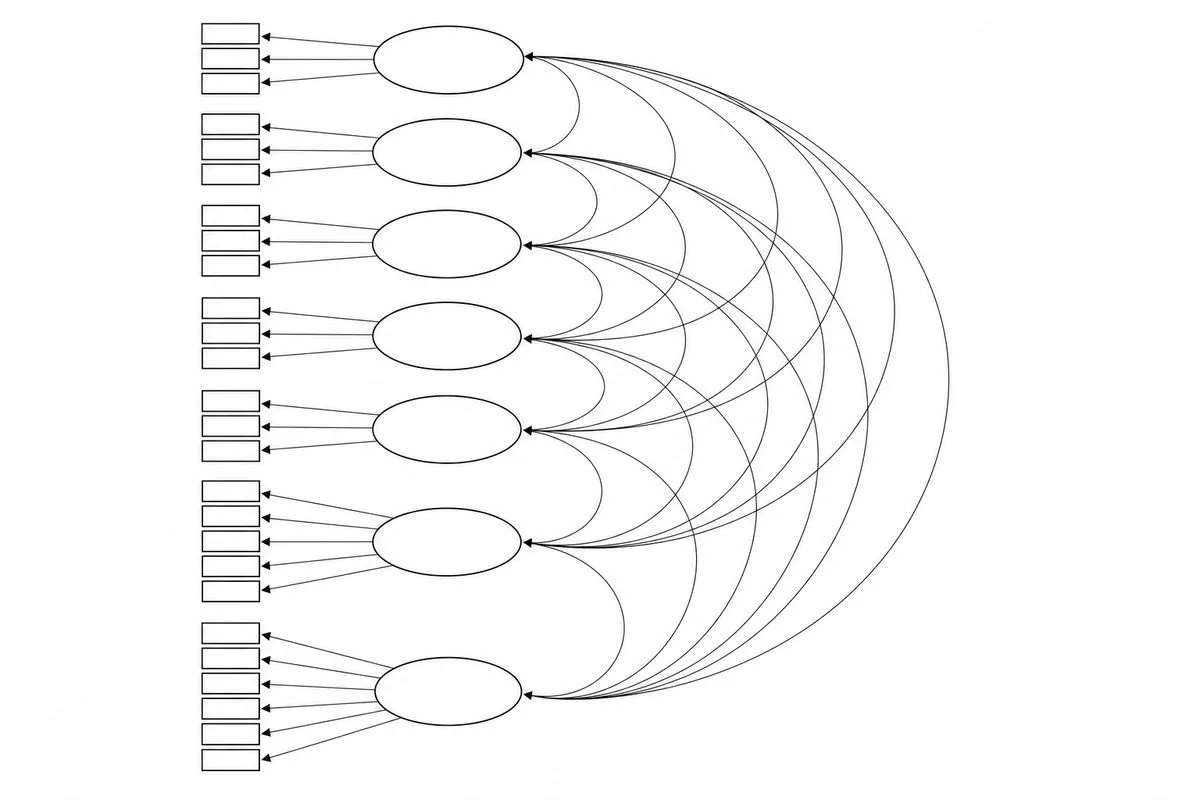
The validation study focuses on whether the CEVS-II measures what it claims to measure, consistently, across respondents. The questionnaire is designed to capture seven factors that together represent “healthy lifestyles” as defined by the authors: balanced diet, respect for meal schedules, tobacco consumption, rest habits, alcohol consumption, other drug use, and physical activity. That breadth matters, because many tools lean heavily on exercise and diet while treating sleep and substance use as afterthoughts.
In statistical terms, the study reports that a seven factor model tested via Confirmatory Factor Analysis shows an acceptable fit. The reported indices are specific: SRMR = 0.059, CFI = 0.973, RMSEA = 0.049 with a 90% confidence interval of 0.046 to 0.052, and χ²/df = 3.76. Those numbers are not just decoration. They are the technical basis for saying the structure holds together, meaning the questionnaire items align with the seven intended lifestyle dimensions rather than collapsing into a muddle.
The authors also state the instrument shows good reliability and concurrent validity. The source material does not provide every reliability coefficient in the abstract text provided here, but it does explicitly claim the indices are good and that concurrent validity is supported. It also notes correlations were examined between CEVS-II factors and measures labelled BREQ-3 and MIBPA, which suggests the team checks whether lifestyle scores relate sensibly to constructs such as motivation and intention to be physically active.
The conclusion is clear: the results “proved the validity and reliability” of the CEVS-II for a Spanish population, and the tool is presented as an adequate instrument for diagnosing healthy lifestyles in Spain. That word “diagnosis” is doing a lot of work here. It does not mean diagnosing disease. It means identifying lifestyle patterns with enough precision to tailor support, whether that is individual counselling, group programmes, or population level initiatives.
What a lifestyle questionnaire is really measuring, and why seven factors matter
People often treat lifestyle as a single trait, as if someone is either “healthy” or “not healthy”. Real life is messier. Someone can train three times a week and still sleep badly. Another person can eat well but drink too much. A third might do everything “right” except they smoke. A good lifestyle questionnaire has to reflect that reality, otherwise it turns into moral scoring rather than useful assessment.
The CEVS-II’s seven factor structure is interesting because it separates balanced diet from respect for meal schedules. That might sound fussy, but it is not. Meal timing and regularity can be a behavioural marker in its own right, tied to work patterns, family routines, and sometimes disordered eating behaviours. By isolating it, the questionnaire can detect a person who eats nutritious food but does so erratically, which may matter for energy levels, adherence to exercise plans, and sleep quality.
It also treats rest habits as a core factor rather than a footnote. That aligns with the study’s framing that healthy lifestyle includes “optimal rest” and that unhealthy patterns include “lack of rest”. In practice, sleep and rest are often the first thing to collapse under stress, shift work, caring responsibilities, or financial pressure. If a tool cannot pick that up, it misses a major lever for change.

And then there is substance use. The CEVS-II explicitly includes tobacco, alcohol, and other drug use as separate factors. That matters because these behaviours do not always move together. Someone may quit smoking but increase alcohol intake. Another may avoid alcohol but use other substances. A single “substance use” score can hide those shifts, which is exactly what clinicians and programme designers do not want.
Background, who needs a validated lifestyle questionnaire and why Spain is a useful test case
The study’s rationale is rooted in a practical need: different “health promoters” such as doctors, physiotherapists, physical activity professionals, and social agents increasingly need tools to measure healthy lifestyles. The source material frames this as an “increasingly incipient” requirement, reflecting how prevention and behaviour change are moving beyond specialist clinics into community settings, workplaces, and local programmes.
Spain is a useful context for this kind of validation work for two reasons. First, the sample spans a wide age range, 18 to 89, which forces the questionnaire to perform across very different life stages. Lifestyle in an 18 year old and lifestyle in an 89 year old are not comparable in a simplistic way, but the underlying constructs, diet patterns, rest, substance use, activity, still need to be measurable. Second, the study notes that several questionnaires exist in Spain to measure specific behaviours, but implies there has been a gap at the national level for a single instrument that captures the broader concept of healthy lifestyle.
The source text also places the work in the wider evidence base: healthy lifestyle habits are linked to long term disease risk, including obesity, type II diabetes, hypercholesterol, and cancer. It also notes evidence that combinations of positive behaviours reduce all cause mortality risk, and that behaviours cluster, physical activity is associated with better diet and rest habits, for example. The article does not provide new mortality statistics, and it does not need to. Its contribution is measurement, not epidemiology.
There is also an implicit organisational point here. When health systems and community programmes scale up, they need standardised instruments. Otherwise every clinic, council programme, or research team ends up using a different checklist, making results hard to compare. A validated lifestyle questionnaire becomes a kind of shared language, which is boring until it is missing.
What this means for healthcare, research, and lifestyle programmes
For healthcare delivery, the immediate value of a validated lifestyle questionnaire is triage and tailoring. A clinician or allied health professional can identify which domains are most problematic, then focus limited appointment time where it counts. If a patient’s biggest issue is rest habits, pushing harder on exercise adherence may backfire. If alcohol consumption is the main driver, a generic “eat better and move more” plan is not going to land.

For research, the implications are even broader. Lifestyle interventions often fail to replicate because the inputs and outcomes are measured inconsistently. A programme might claim it improves “healthy lifestyle” but only measure steps per day. Another might measure diet quality but ignore sleep. With a multi factor instrument like the CEVS-II, researchers can report changes across domains, test which domains mediate outcomes, and compare interventions more fairly. The study’s report of acceptable model fit and concurrent validity is the foundation for that kind of work.
And for public health, the point is population diagnosis. The source material explicitly argues that affordable, easy to apply instruments enable problems to be diagnosed and then used to create individualised or collective programmes. That is a subtle but important shift. It suggests the questionnaire is not just for academic studies, but for real world planning, where teams need to identify patterns, for example whether a community struggles more with sedentary behaviour, irregular meals, or substance use, and then design interventions accordingly.
There is also a cautionary angle. A lifestyle questionnaire is only as useful as the way it is deployed. If it becomes a blunt scoring tool used to judge individuals, it will fail ethically and practically. But if it is used as a structured conversation starter, a way to identify barriers and priorities, it can support more humane, realistic care. The validation work does not solve that cultural problem, but it makes better practice possible.
How the CEVS-II fits into the wider world of lifestyle questionnaires
Outside this study, “lifestyle questionnaire” is a catch all phrase. It can refer to clinical intake forms, wellness app assessments, workplace health risk appraisals, or sport and fitness screening documents. Many of these tools are quick and convenient, but they are not always validated, and they often mix medical history with lifestyle behaviours in a way that blurs purpose. The CEVS-II is more focused: it is explicitly about lifestyle factors and how they cluster into a broader construct.
That focus matters because validation is not a box ticking exercise. It is what allows a score to mean something beyond the room it was collected in. The CEVS-II’s reported fit indices, and the claim of good reliability and concurrent validity, are the kinds of details that separate a research instrument from a generic form template. And yes, that can feel academic. But when programmes are funded, scaled, and evaluated, those details become the difference between learning and guessing.
There is also a historical context worth noting. Lifestyle measurement has often moved in waves, first focusing on single behaviours like smoking, then adding diet, then physical activity, then sleep, and more recently looking at behaviour clusters and systems. The CEVS-II sits firmly in that newer tradition. It treats lifestyle as a set of interacting domains, which aligns with the study’s own framing that healthy behaviours tend to co occur.

Still, the study is careful in its claims. It validates the instrument in a Spanish population sample. It does not claim universal applicability across cultures or languages. That is the right level of caution. Lifestyle behaviours are culturally shaped, meal timing norms vary, and substance use patterns differ. Validation is not a one off event, it is an ongoing process of testing and adaptation.
What's Next
The next step for the CEVS-II, if it is to become a widely used lifestyle questionnaire, is less about statistics and more about implementation. Tools like this succeed when they are easy to administer, easy to interpret, and clearly linked to action. That means developing practical guidance for clinicians and programme staff: what score patterns typically suggest, how to discuss sensitive domains like alcohol or other drug use, and how to translate a profile into a realistic plan. Without that, even a well validated questionnaire risks sitting on a shelf.
Expect more work on comparability across groups. The source material references measurement invariance testing models, which is the technical way of asking whether the questionnaire measures the same construct in the same way across different groups. That line of work tends to expand, for example by testing invariance across age bands, gender, regions, or clinical versus non clinical populations. If the instrument holds up, it becomes far more useful for national surveillance and for evaluating programmes targeted at specific demographics.
There is also a likely push towards digital delivery. Not because paper is bad, but because lifestyle programmes increasingly run through hybrid models, part clinic, part community, part app. A validated lifestyle questionnaire can be embedded into digital pathways, used for baseline assessment, and repeated at intervals to track change. But digitisation brings its own risks, privacy, data governance, and the temptation to reduce a person to a score. The best future use is probably a blended one: structured measurement paired with human conversation (because behaviour change is rarely a spreadsheet problem).
Closing thoughts, why measurement is the quiet engine of lifestyle change
The validation of the Spanish CEVS-II is not the kind of news that dominates headlines. There is no gadget launch, no miracle intervention, no single number that changes everything overnight. But it strengthens the infrastructure of lifestyle medicine and preventive health, which is often where real progress starts. When a lifestyle questionnaire is properly validated, it becomes possible to compare like with like, to see what changes, and to understand what does not.
The study’s details, a sample of 1,132 adults aged 18 to 89, a seven factor structure, and fit indices like CFI 0.973 and RMSEA 0.049, are the nuts and bolts of credibility. They are also a reminder that lifestyle is not one behaviour. It is a bundle. And if health systems want to improve it, they need tools that respect that complexity without becoming unusable.
In the end, a good lifestyle questionnaire does something deceptively simple. It turns vague intentions, “be healthier”, “sleep more”, “drink less”, into a structured picture that can be discussed, prioritised, and revisited. That is not glamorous. But it is how change becomes measurable, and how measurement becomes action.