World Grand Prix darts 2026 delivers an early jolt in Leicester
The world grand prix is barely underway and it already has the kind of storyline that can bend a tournament’s mood. On 28 September 2026, Luke Littler is stunned by Luke Woodhouse in the opening round, a result that instantly changes the temperature inside the Mattioli Arena in Leicester. Littler arrives as one of the sport’s biggest draws, so an early exit is not just a surprise, it is a structural shift to the week.
On the same opening stretch of the event, Luke Humphries does what top seeds are supposed to do. He beats Dave Chisnall to move into the second round, keeping his campaign on track while the bracket around him starts to look a little less predictable. That contrast, one favourite out, another safely through, is exactly why this tournament keeps pulling people back in. It is familiar, but it is never comfortable.
It is worth saying plainly what makes this competition feel different. The World Grand Prix is the only major PDC tournament built around the double in, double out rule set. Players must start a leg by hitting a double, and they must finish on a double too. That single tweak sounds minor to casual fans, but it changes everything: rhythm, risk, scoring routes, and the psychological load on every visit.


What happened: Littler loses to Woodhouse, Humphries beats Chisnall
The headline result is simple and brutal. Luke Littler loses to Luke Woodhouse in round one of the 2026 World Grand Prix. The BBC describes Littler as “stunned”, which is telling because it frames the match as more than a routine upset. In this format, a short wobble can become a full collapse, because failing to find a starting double can bleed legs away before a player even gets to their scoring power.
Woodhouse’s win matters for two reasons. First, it removes one of the tournament’s most watched players immediately, which changes the atmosphere in the building and the viewing narrative at home. Second, it reinforces an old truth about this event: the format does not care about reputation. A player can be the better scorer, the bigger finisher in normal conditions, and still get dragged into a scrap if the doubles at the start of legs do not behave.
Meanwhile, Luke Humphries beats Dave Chisnall to reach the second round, according to ESPN’s match report headline. No scoreline is provided in the source material, so it is not possible to fairly describe the margin or the key statistical swings. But the meaning is clear enough. Humphries navigates the early-round danger zone, the phase where the double in requirement can make even elite players look oddly human.
Put those two outcomes together and the opening message of the 2026 World Grand Prix is loud. This is not a tournament where star power guarantees a smooth ride. It is a tournament where control, patience, and a very particular kind of nerve often matter as much as raw scoring.
Why the world grand prix format creates chaos, and why players fear it
The World Grand Prix’s unique selling point is also its trap. In standard legs, players can begin scoring immediately, build pressure, and settle into a groove. Here, they cannot. They must hit a double to get going. That means the first visit is not about piling in a 140 or 180, it is about finding a narrow target under bright lights while the opponent waits to pounce.
And once a player misses a few doubles to start, the leg can tilt fast. The opponent might hit their starting double first dart, then immediately start scoring. Suddenly the player who is “not in” is watching the other one sprint away. That is how underdogs get oxygen. They do not need to outscore a favourite for an entire match, they need to win the right moments, and the format hands them more of those moments than usual.
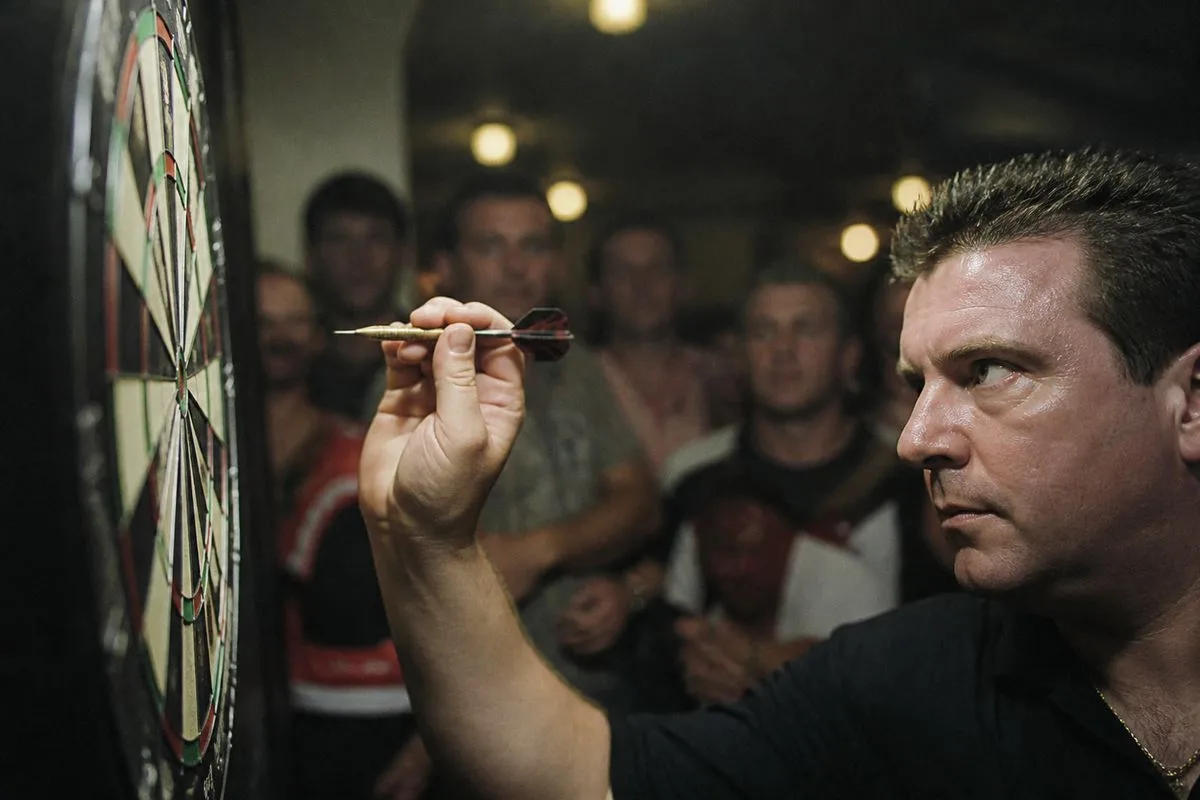
There is also a tactical layer that fans sometimes miss. Players have to decide which double to aim at to begin. Some prefer double 16 because it sets up familiar finishing routes. Others like double 20 because it is visually comfortable. But comfort is not always optimal, and optimal is not always comfortable. In a tense match, those choices become a mental tug of war, especially if the first plan is not working.
That is why early rounds can feel like a minefield. A top player can be in good form, but if the starting doubles do not land, the match becomes a grind. The Littler result, framed as a shock, fits that pattern. The Humphries win fits the other pattern: the best players find a way to survive the awkwardness and let their overall quality show through.
Key players in focus: Littler, Woodhouse, Humphries, and Chisnall
Luke Littler is, at this point, not just a competitor but a gravitational force in darts. Even without match details in the scraped material, the significance of him losing in round one is obvious. His matches attract attention, and his presence shapes expectations. When he goes out early, the tournament loses a headline act, but it also gains a new kind of suspense because the bracket opens up.
Luke Woodhouse benefits from that dynamic immediately. Beating a player of Littler’s profile is the sort of win that can change how an opponent approaches the next match. It can also change how Woodhouse approaches himself, which sounds a bit soft until one remembers what this format does to confidence. If a player believes their doubles are solid, they play freer. If they do not, they tighten up. A big scalp can loosen the shoulders.
Luke Humphries progressing is, in contrast, a stabilising force for the event. He is one of the names expected to go deep, and the supplementary material around the tournament positions him among a group of leading contenders. In a week where the format can produce sudden exits, simply getting through round one is a statement of professionalism. It is not glamorous, but it is essential.
Dave Chisnall, the opponent Humphries beats, is no soft touch. Again, the source material does not provide the match score or key moments, so it would be wrong to pretend there was a specific turning point. But the pairing itself tells a story: early rounds can throw up heavyweight clashes, and the double in rule makes even experienced players vulnerable if the first dart at a double does not behave.
World Grand Prix 2026 in Leicester: schedule, setting, and what the week represents
The 2026 World Grand Prix takes place at the Mattioli Arena in Leicester, with play underway by 28 September 2026, as indicated by the results listings and discussion around day one. The venue matters because this tournament thrives on tension. It is not just about big scoring, it is about the hush before a dart at double top, the groan when a player clips the wrong side of the wire, the sudden roar when someone finally gets in.
Supplementary coverage around the event highlights that it is a week long tournament featuring many of the PDC’s best known names, including Luke Humphries, Gerwyn Price, James Wade, and Gary Anderson. The source material provided here does not include the full draw, the full schedule, or prize money figures, so those specifics cannot be responsibly listed. But the broader point stands: this is a major stop on the calendar, and players treat it as such.
There is also a cultural element to the World Grand Prix that is easy to underestimate. Some tournaments reward relentless scoring and allow players to settle. This one rewards a certain kind of stubbornness. It asks players to solve a problem in real time, in public, with the opponent watching. Fans love it because it produces visible drama. Players fear it because it can make them look ordinary.
And that is why the Littler shock resonates beyond one match. It is not just “a big name loses”. It is the tournament reminding everyone what it is. The World Grand Prix is a format event, and the format always gets a vote.
What the early results mean for the world grand prix title race
With Littler out, the most obvious impact is on the narrative. The tournament loses a potential marquee run, and broadcasters lose the easy storyline of a star moving through the rounds. But the competitive impact is arguably bigger. One section of the draw is now more open, and players who might have expected to face Littler later will be recalculating their path and, quietly, their chances.
For Humphries, the win over Chisnall is the opposite kind of message. It suggests he is handling the format well enough to let his broader strengths show. In the World Grand Prix, that is half the job. The other half is maintaining that composure as the pressure rises, because later rounds tend to magnify every missed double. Early survival is not a guarantee of a deep run, but it is a necessary condition.
There is a wider industry point here too, about how darts markets itself. The PDC calendar is packed, and each event needs a hook. The World Grand Prix’s hook is structural, not cosmetic. It does not need gimmicks because the double in rule creates genuine volatility. Upsets are not manufactured, they are baked in. That is good for entertainment, but it also means the sport’s biggest names have to accept more risk.
Historically, format driven tournaments often produce repeatable patterns: players who are comfortable on doubles, who manage tempo, and who do not panic when a leg starts badly, tend to go further. The early 2026 results fit that logic. Littler, for all his talent, hits a roadblock. Humphries finds a way through. And the rest of the field will be watching closely, because the lesson is not subtle.
What’s Next
The immediate next step is straightforward: the tournament moves deeper into round two and beyond, and the pressure on remaining favourites increases. When a headline name exits early, the event does not calm down, it usually gets twitchier. Players start thinking, “If it can happen to him, it can happen to me.” That thought can be useful, sharpening focus, or it can be poisonous, tightening arms at the exact moment a player needs freedom.
Humphries’ path now becomes one of the central threads. In a double in, double out environment, momentum is fragile. A player can feel brilliant one night and then spend the next match stuck outside, throwing at doubles and watching the opponent build a lead. The best performers tend to have a practical response: change the starting double, adjust the pace, simplify the finish. If Humphries keeps doing the boring things well, he gives himself a real chance.
And then there is the opportunity created by Littler’s exit. For players in that part of the draw, the psychological landscape changes. Matches that might have been framed as “survive to face Littler” become “this is a route”. That can lift performance levels across the board. It can also create its own pressure, because suddenly an unexpected quarterfinal or semi-final looks possible, and players start thinking about outcomes rather than process. In this tournament, that is usually when doubles go missing.
Closing thoughts: a reminder of why this tournament still matters
The 2026 World Grand Prix starts with a jolt because it is designed to. Littler losing to Woodhouse is the kind of result that will dominate conversation, and fairly so. It is a genuine shock in a major event, and it reshapes the week’s storyline in one night. But it is also a reminder that the World Grand Prix is not a normal test. It is a specialised exam, and even brilliant students can fail if they misread the first question.
Humphries progressing at the same time provides balance. The tournament is not pure chaos, it is selective chaos. It rewards players who can adapt, who can keep their heads when the first dart at a double refuses to cooperate, and who can win ugly when necessary. That is not always pretty to watch, but it is compelling because it is honest.
As the week unfolds in Leicester, the story is likely to keep returning to the same theme: doubles, and the nerves that come with them. Some players will thrive on that edge. Others will hate every second. Either way, the World Grand Prix does what it always does. It exposes things. And that is why it remains such a big deal on the darts calendar.