Qatar's Cautious Airspace Reopening Amid Regional Conflict
On the evening of Friday, March 6, 2026, the Qatar Civil Aviation Authority announced a limited, partial reopening of the nation's airspace. This decision came days after a complete closure on February 28, a drastic measure forced by an escalating barrage of Iranian missile and drone strikes. The reopening is not a return to normalcy; it is a tightly controlled contingency operation. Flights are restricted to operating through "designated navigational contingency routes with limited operational capacity," a move coordinated with the Qatari armed forces to ensure security. Crucially, scheduled commercial flights to and from Doha's Hamad International Airport remain suspended. The partial reopening applies only to a narrow category of flights: those "designated for passenger evacuation" and essential air cargo services. This marks a critical, if fragile, first step in restoring air links to one of the world's most important aviation hubs, which has seen over 2,000 flight cancellations since the conflict began.
The backdrop to this aviation crisis is a severe military conflict now in its seventh day. The strikes from Iran are described as retaliation for "Operation Epic Fury," a United States-Israeli military campaign. According to Iranian officials cited in the source material, this campaign has killed at least 1,332 people in Iran since it began on Saturday, February 22, 2026. Qatar itself has been directly in the line of fire. The country's Ministry of Defence confirmed it was struck by 14 ballistic missiles and four drones fired from Iran on Thursday, March 5, just one day before the cautious airspace reopening. This persistent threat has forced Qatar to activate its air force, using interceptors to defend its territory, illustrating the severe security challenges underpinning the aviation shutdown.

The Wider Gulf Aviation Meltdown
The disruption is not confined to Qatar. The entire Gulf region, a global nexus for international air travel, is experiencing an unprecedented aviation meltdown. According to analytics firm Cirium, an estimated 23,000 flights have been cancelled across the region since late February. Dubai International Airport, the world's busiest for international passengers, was evacuated on Sunday, March 1, following Iranian strikes and has recorded close to 4,000 cancellations since Monday. Emirates airline, based in Dubai, is operating a reduced schedule, carrying approximately 30,000 passengers out on Friday, March 6, alone. The airline projected it would have 106 daily return flights to 83 destinations by Saturday, March 7—about 60% of its full network—with a hope to return to 100% "within the coming days, subject to airspace availability."
The situation is even more dire in other Gulf states. Abu Dhabi's Zayed International Airport has seen more than 1,000 cancellations and continues to operate at limited capacity. Kuwait's airport sustained physical damage from drone strikes, resulting in minor injuries to some workers, and its airspace remains fully closed to commercial traffic. Kuwait Airways has resorted to rerouting citizens with prior bookings through Jeddah, Saudi Arabia. This regional paralysis has triggered a dramatic rerouting of global air traffic, with airlines scrambling to find alternative hubs. This shift is captured in related headlines noting that "Muscat is the new Dubai as airlines switch Middle East flights," indicating Oman's capital is emerging as a critical, safer alternative for carriers needing to bypass the conflict zone.
Key Players and Operational Responses
Qatar Airways and the Repatriation Mission
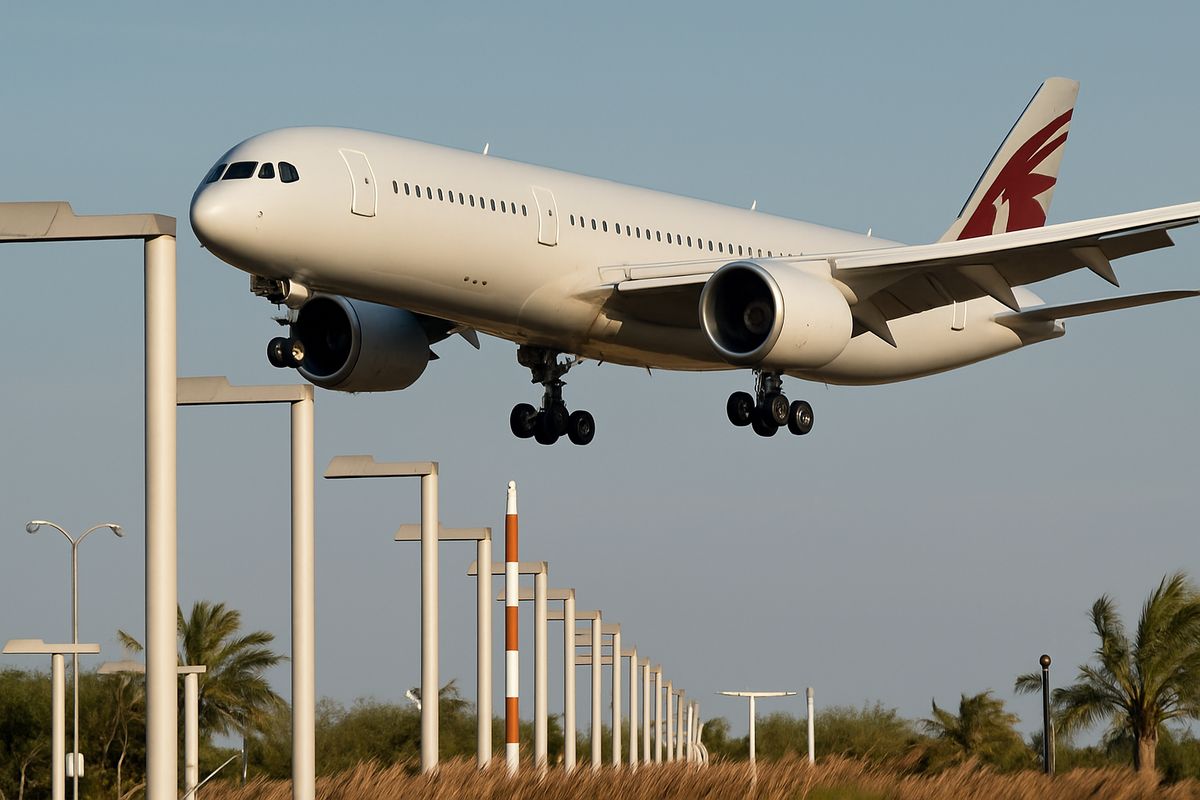
As the flag carrier of a nation under direct fire, Qatar Airways is at the epicenter of the crisis response. Following the civil aviation authority's announcement, the airline moved quickly to outline its plan for limited repatriation flights. On Saturday, March 7, it announced its intention to operate flights from Hamad International Airport to five major European hubs: London Heathrow (LHR), Paris Charles de Gaulle (CDG), Madrid (MAD), Rome Fiumicino (FCO), and Frankfurt (FRA). The airline explicitly stated that priority would be given to "stranded passengers with families, elderly passengers, and those with urgent medical and compassionate travel needs." This targeted approach underscores the severe capacity constraints and the humanitarian focus of the initial reopening phase. Related headlines also note the airline's efforts to operate relief flights from alternative locations like Muscat and Riyadh, showcasing a strategy to maintain some operational footprint outside the immediate danger zone.
The Role of Gulf Civil Aviation and Military Authorities
The crisis highlights the intricate, security-dependent nature of modern aviation. The Qatar Civil Aviation Authority's announcement explicitly notes coordination with the Qatari armed forces. This is not merely procedural; it is a necessity when airspace is an active theatre of conflict. The use of "designated navigational contingency routes" suggests pre-planned, militarily vetted flight paths designed to minimize risk from ongoing strikes. Similarly, in the UAE and Kuwait, aviation authorities are working in lockstep with national defence systems to assess threats and authorize any flight movements. This fusion of civil aviation management and military air defence is a stark feature of this crisis, differentiating it from disruptions caused by weather or technical failures.
Historical Context and Regional Comparisons
The scale and cause of this aviation shutdown are historically significant for the Gulf region. While the area has faced previous disruptions—such as the 2017 Qatar diplomatic crisis which led to airspace bans by neighboring states, or the global COVID-19 pandemic grounding—this is arguably the first time a full-scale, multi-nation military conflict has directly and simultaneously shuttered the hubs of several major international airlines. The closest parallel might be the early days of the Gulf War in 1990-1991, but the global connectivity of hubs like Doha and Dubai was far less developed then. Today, these airports are critical global transfer points; their closure creates ripple effects across every continent.
The conflict also exposes the vulnerability of highly centralized global aviation networks. The Gulf's rise as an aviation superhub was built on geographic advantage, massive investment, and relative political stability. The current conflict shatters that stability assumption. The rapid pivot of airlines to Muscat, as noted in related coverage, demonstrates how quickly traffic can be rerouted, but also underscores the lack of immediate, equivalent alternatives. No other region can instantly absorb the hundreds of thousands of daily passengers that transit through Doha and Dubai. This event may lead to a long-term strategic re-evaluation by global airlines about over-reliance on any single region, no matter how efficient its hubs.
Analysis: Implications for Global Aviation and Geopolitics
The partial reopening of Qatari airspace is a barometer for the conflict's intensity and a test case for managing aviation in a war zone. Its highly conditional nature—limited routes, limited capacity, only for evacuation and cargo—signals that authorities perceive a continued high level of threat. A full resumption of commercial service appears contingent on a de-escalation of military strikes, which, given the stated US-Israeli timeline of a "four to six week" campaign per the source material, may not be imminent. The aviation industry, therefore, must brace for a prolonged period of severe disruption in one of its most important regions. This will lead to significant financial losses for airlines like Qatar Airways and Emirates, massive inconvenience for passengers worldwide, and severe strain on global supply chains reliant on air cargo through hubs like Doha.
Geopolitically, the targeting of civilian aviation infrastructure, even if not the primary aim, is a grave escalation. The physical damage to Kuwait's airport and the repeated strikes near Qatari and Emirati airspace blur the lines between military and civilian targets. It places neutral countries with complex diplomatic ties—like Qatar, which maintains channels with Iran—in an exceptionally difficult position. The crisis forces Gulf nations to balance their crucial role in global commerce with their immediate national security imperatives, a balance currently tipping decisively towards the latter. The conflict and its aviation fallout also risk drawing regional economic powers deeper into the confrontation, as their critical infrastructure and global reputations suffer damage.
What This Means For You
If you have travel plans connecting through the Middle East in the coming weeks, immediate and proactive management is essential. Do not assume your flight will operate as scheduled. The situation is fluid, with capacity at major hubs like Doha and Dubai at a fraction of normal levels. Your first action should be to monitor updates directly from your airline, not just airport websites. Airlines are managing massive re-accommodation and are the final authority on flight status. As seen with Qatar Airways, they are prioritizing specific passenger groups for the limited seats available; if you do not fall into a category like "elderly" or "urgent medical need," you may face longer delays. Consider exploring refund options or re-routing via airlines that use alternative hubs like Muscat (Oman) or Istanbul, even if it results in a longer journey.
For businesses reliant on air freight, particularly those using express cargo services routed through the Gulf, expect significant delays and increased costs. The partial reopening for cargo is a positive step, but with "limited operational capacity," backlogs will take time to clear. Diversify your logistics plans immediately. Explore sea-air combinations or routes through European or Asian hubs. The disruption highlights a critical vulnerability in just-in-time supply chains dependent on specific aerial gateways. This event should serve as a catalyst to audit your logistics network for over-concentration risk. For the aviation investor or observer, watch how airlines and airports adapt their long-term network planning. A sustained period of risk in the Gulf could accelerate investment in alternative hubs in Southern Europe, Central Asia, or Southeast Asia, potentially reshaping global aviation geography for years to come.