Phone hacking scandal returns to centre stage as Prince Harry wins a key admission
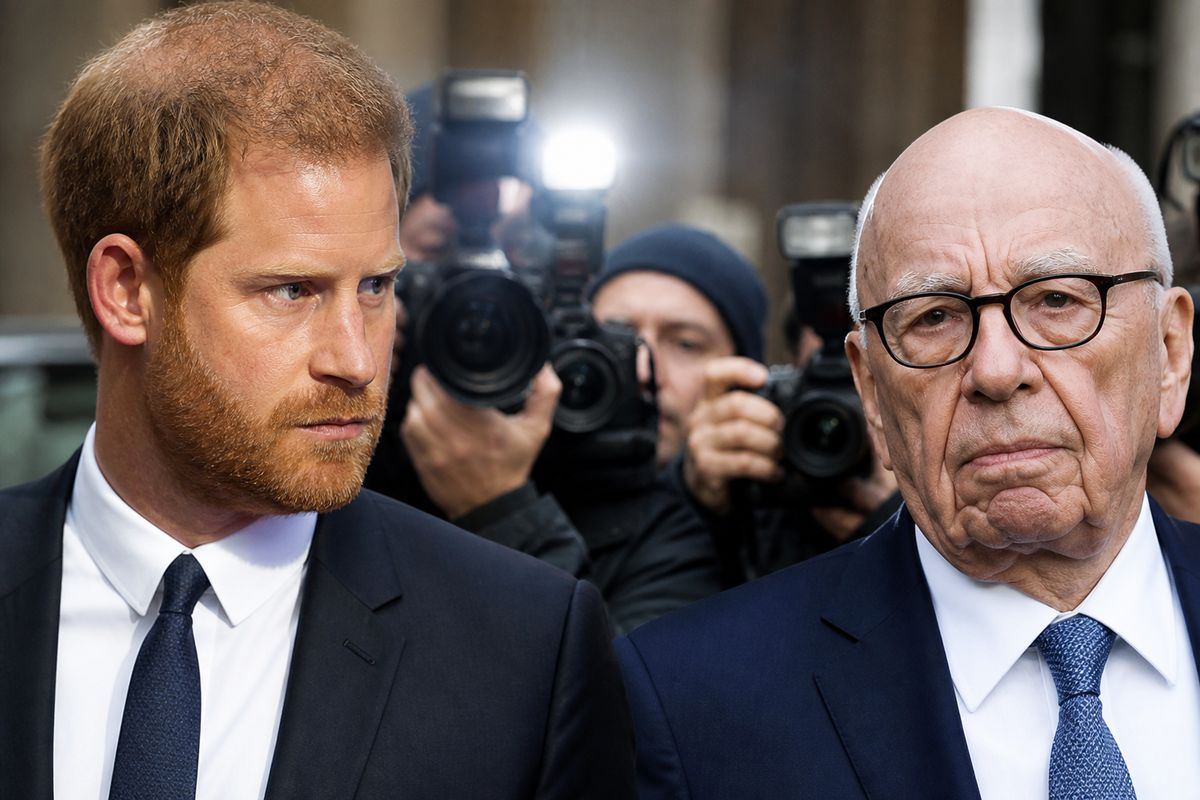
The phone hacking scandal, which many in Britain’s media industry would rather file under “history”, lurches back into the spotlight as Prince Harry secures something that has been stubbornly rare in this saga: an explicit admission of wrongdoing. Rupert Murdoch’s News Group Newspapers, the publisher behind The Sun, issues what it calls an “unequivocal apology” and, crucially, admits for the first time to unlawful activities at the title. It also agrees to pay what it describes as “substantial damages”.
That combination matters. Money talks in these cases, but admissions talk louder, because they cut through years of denials, careful wording, and settlements that often resolve claims without a clear public accounting. And it lands at a moment when the wider debate about press intrusion is already heating up again, with fresh reporting and official scrutiny into how surveillance powers and private data are used in Britain.
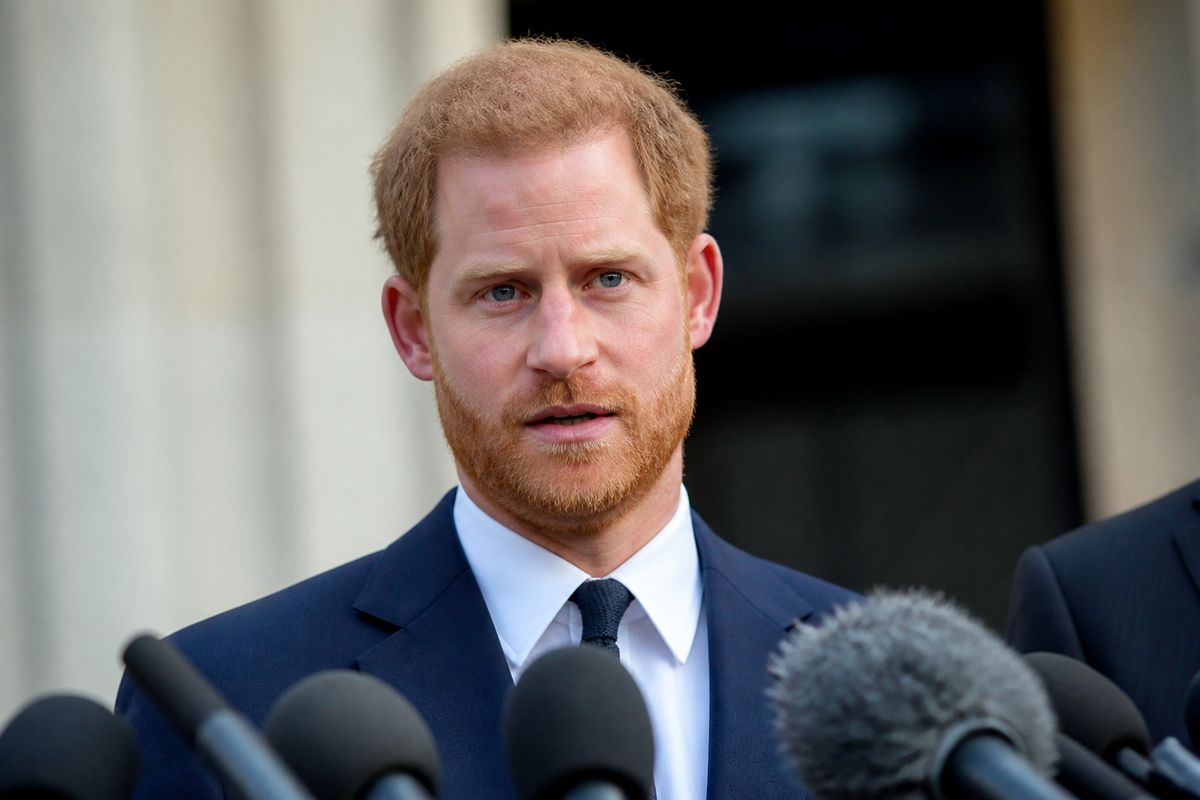
The immediate drama is legal, but the implications are cultural and commercial. This is not just about one royal’s grievances. It is about whether the post Leveson era really changed behaviour, or whether it simply changed the paperwork. And it is about whether the last big legal reckoning from the original phone hacking scandal is actually ending, or merely changing shape.

What happens in the Prince Harry v News Group Newspapers case, and why it matters now
The case is framed as a high stakes trial, with reporting indicating that last minute settlement talks halt proceedings and lead to an adjournment. That detail is telling in itself. When a defendant is prepared to settle at the eleventh hour, it usually signals risk, whether that is reputational, financial, or evidential. In this instance, the settlement produces an apology and an admission of unlawful activities at The Sun, which is a significant shift from the long running public line that wrongdoing was confined to the now defunct News of the World.
Prince Harry’s position is also shaped by what the courts will and will not allow him to argue. A judge rules that he cannot include Rupert Murdoch in the lawsuit, blocking an attempt to expand the claims to include allegations about Murdoch personally. That does not remove Murdoch from the story, not remotely, but it does narrow the legal battlefield. The focus stays on the corporate publisher and the actions carried out under its umbrella, rather than on whether the proprietor had direct knowledge or involvement.
There is another detail that adds tension inside the royal family itself. A court filing in Prince Harry’s case claims that News Group Newspapers paid a settlement to Prince William described as “a huge sum of money” to resolve phone hacking allegations. The filing does not provide a figure in the material available here, so it cannot be quantified. But the mere existence of a settlement, and the suggestion of its scale, underlines how deeply these practices allegedly reached into the most protected circles in the country.
It also sits alongside a separate milestone in this broader litigation wave. In February 2024, Prince Harry settles a phone hacking case with the Mirror group, with the publisher paying about £300,000 in damages plus his legal costs. That earlier settlement helps explain why the Murdoch case becomes the focal point. If the Mirror chapter ends with a payment, the Murdoch chapter is the one that can still force admissions, disclosure, and a public narrative that is not entirely managed by settlement statements.
Background: how the phone hacking scandal reshapes British tabloids after Leveson
To understand why this admission lands so heavily, it helps to remember what the phone hacking scandal represents in modern British public life. It is not one bad newsroom or one rogue reporter. It is a period in which parts of the tabloid press are accused of routinely crossing legal and ethical lines to obtain stories, including by accessing private voicemails and using private investigators. The scandal triggers criminal cases, civil claims, and a political crisis about media power and accountability.
Leveson becomes the shorthand for the era’s attempted reset. The Leveson inquiry and its report, referenced in the source material, are widely understood as a moment when Britain tries to draw a line under the worst excesses of press intrusion. The industry shifts, at least on the surface, towards compliance, legal oversight, and a more defensive posture. But the fact that major claims continue to surface, and that high profile figures continue to litigate, suggests the story never fully resolves. It just becomes more procedural.

There is also a structural change in the media landscape that complicates the neat “before and after” narrative. Reporting notes that the UK news environment has shifted since Prince Harry says he was hacked more than a decade ago, with hefty legal settlements, prison time for journalists, and the threat of regulation forcing change. Those are real pressures. But they do not necessarily produce a clean moral outcome. They can just as easily produce a more lawyered, more risk managed version of the same competitive instincts.
And then there is the public’s own ambivalence. Tabloids remain commercially powerful because audiences still buy celebrity and royal coverage. That demand does not excuse unlawful conduct, obviously. But it does help explain why the incentives to push boundaries never fully disappear. The scandal is, in part, a story about a business model under strain, trying to deliver exclusives at speed, in a market where attention is the scarce resource.
The key players: Prince Harry, News Group Newspapers, and the Murdoch factor
Prince Harry, the Duke of Sussex, is not a typical claimant. He is a global figure with a platform, resources, and a willingness to keep litigating when many others would settle and move on. He also has multiple legal actions involving newspapers, and his broader public stance is that parts of the press have caused serious harm to him and his family. That makes him both a litigant and a campaigner, which is unusual, and it changes the dynamics. A settlement is not just a private resolution, it is a public signal.
News Group Newspapers is the corporate entity that matters in court. It publishes The Sun, and historically published the now closed News of the World. The admission of unlawful activities at The Sun is therefore the headline within the headline. For years, the scandal’s centre of gravity is often portrayed as the News of the World era. An admission tied to The Sun broadens the reputational blast radius, because it touches a title that remains a major player in British media.
Rupert Murdoch looms over all of this, even when the court says he cannot be added as a defendant. Proprietors shape culture, priorities, and risk appetite, even if they are not in the room when decisions are made. The case’s potential consequences are described as extending beyond the royal family and Murdoch, even touching other institutions. That is not surprising. Phone hacking is one of those scandals that forces uncomfortable questions about who knew what, when, and how aggressively organisations protected themselves.
There is also an important side plot that shows how messy these stories can get. Reporting raises questions about Will Lewis, a senior figure in journalism leadership, with claims that he gave a “green light” to delete emails during a major scandal, and that Scotland Yard had doubts. The material here does not provide a full evidential record, so it cannot be adjudicated in an article like this. But it illustrates a recurring theme: in media scandals, the alleged wrongdoing is often compounded by what happens afterwards, including how records are handled and how institutions respond under pressure.
Industry analysis: why admissions and “substantial damages” change the calculus
Settlements are common in privacy and media cases. They are often pragmatic, sometimes cynical, and usually designed to limit risk. But an admission of unlawful activities is different. It becomes a reference point for future claimants, a reputational marker for advertisers and partners, and a governance issue for boards and executives. Even without a disclosed figure, the phrase “substantial damages” signals that the publisher sees enough downside to pay meaningfully to close the matter.
And it lands in a climate where concerns about surveillance and data misuse are not confined to tabloids. BBC reporting in September 2025 says there were 21 unlawful uses of covert powers to try to uncover reporters’ sources between 2011 and 2024, involving police use of journalists’ phone data to detect leaks by staff. That is a different problem, but it rhymes. The through line is the same: access to communications data is powerful, and institutions sometimes reach for it in ways that breach rules. The public, understandably, starts to wonder whether safeguards are real or just words on paper.

The phone hacking scandal also continues to pull in other public figures, which keeps the issue alive. In May 2024, former Prime Minister Gordon Brown says police should probe a hacking “cover up”, and he believes his phone may have been hacked while he was PM and is considering legal action. In October 2025, singer Charlotte Church recalls press intrusion as “insane”, saying many aspects of her life were “misconstrued and made seedy” by the media. These are not minor complaints. They are reminders that the alleged harms are personal, long lasting, and often tied to moments when people are at their most vulnerable.
For publishers, the strategic question becomes blunt: is it cheaper to fight or to fix? Fighting can deter claims, but it can also drag damaging details into open court. Fixing means investing in compliance, training, and culture change, and accepting that some kinds of stories are not worth the risk. The Murdoch publisher’s admission suggests that, at least in this instance, the cost of contesting is judged higher than the cost of conceding. That is not exactly groundbreaking, but it is revealing.
Historical context: from voicemail hacking to a wider battle over privacy and power
The original phone hacking scandal is often remembered for its most lurid elements, celebrity voicemails, tabloid bravado, the sense that nobody was off limits. But the deeper significance is institutional. It exposes how information can be extracted, traded, and weaponised, and how difficult it is for ordinary people to challenge it. Even for the rich and famous, the process is grinding. For everyone else, it can be impossible.
What changes over time is not the temptation to intrude, but the tools and the legal terrain. The scandal begins in an era where voicemail interception is a plausible route to a scoop. Today, the ecosystem is broader. Data brokers, social media, hacked databases, and sophisticated spyware all sit in the background of modern privacy fears. The BBC reports that Colombia investigates a police purchase of Pegasus spyware, with Colombian police paying an Israeli firm $11m in cash, as revealed by Colombia’s president. That is not a British tabloid story, but it is part of the same global arc: surveillance capabilities are expanding, and oversight often lags behind.
In Britain, the post Leveson period is supposed to represent a turning point. Yet the continuing stream of claims, apologies, and court battles suggests that the reckoning is incomplete. The question is not whether the industry has improved at all, it likely has in some respects. The question is whether the underlying power imbalance has meaningfully shifted. When a publisher admits unlawful activity only after years of litigation pressure, it hints at how hard it remains to extract accountability.
There is also a reputational comparison worth making. In earlier phases of the scandal, criminal prosecutions and public inquiries dominate the narrative. Now, the story is increasingly shaped by civil litigation, settlements, and corporate statements. That can feel less satisfying to the public, because it is less transparent. But it is also where real incentives live. If civil claims become more expensive, and if admissions become more common, behaviour can change faster than it ever does through speeches about ethics.

What This Means For You
For readers, the most practical takeaway is that privacy harms are not abstract, and they are not confined to celebrities. The phone hacking scandal shows how quickly personal information can become a commodity, and how hard it is to put the genie back in the bottle once a story is published. People who believe they have been targeted by unlawful newsgathering, or by intrusive data practices more broadly, should treat documentation as a priority. Keep records, save messages, and note timelines. In disputes about intrusion, detail is often the difference between a suspicion and a claim that can be tested.
It also changes how the public should read apologies and settlements. An apology that includes an admission of unlawful activities is materially different from a generic expression of regret. Readers can reasonably ask: what exactly is being admitted, and what is not? The source material here does not provide the full wording beyond “unequivocal apology” and the admission itself, so the precise scope is not clear. But the principle stands. When institutions concede unlawfulness, it is a signal that the legal system has forced a line to be drawn, not just a PR reset.
And there is a broader civic point. The BBC’s reporting about unlawful uses of covert powers to uncover journalists’ sources between 2011 and 2024 is a reminder that privacy and press freedom are intertwined. People who care about accountable government should care about how phone data is accessed, whether by tabloids, police, or anyone else. It is worth paying attention to how regulators, courts, and lawmakers respond, because the rules that protect public figures today often end up being the rules that protect everyone tomorrow.
Closing thoughts: a “last reckoning”, or the start of another chapter?
There is a temptation to treat Prince Harry’s case as the final act, the last big courtroom drama from a scandal that peaked years ago. Some reporting frames it that way, as the last major legal reckoning for victims and perpetrators. But the pattern of the past decade suggests caution. Each time the story seems to be fading, another claim, another admission, or another revelation pulls it back into view.
What is different this time is the clarity of the concession. News Group Newspapers admits unlawful activities at The Sun and apologises unequivocally, while agreeing to pay substantial damages. That is not a footnote. It is a marker of how far the scandal’s shadow still reaches, and how much risk still sits inside old practices.
And the wider environment is not getting simpler. Concerns about surveillance, data access, and institutional overreach are growing, not shrinking. The phone hacking scandal may have started with voicemails, but it now sits inside a much bigger argument about privacy in modern life. The courts can settle individual cases. The culture, and the incentives, take longer. Fair enough. But nobody should pretend this is over.