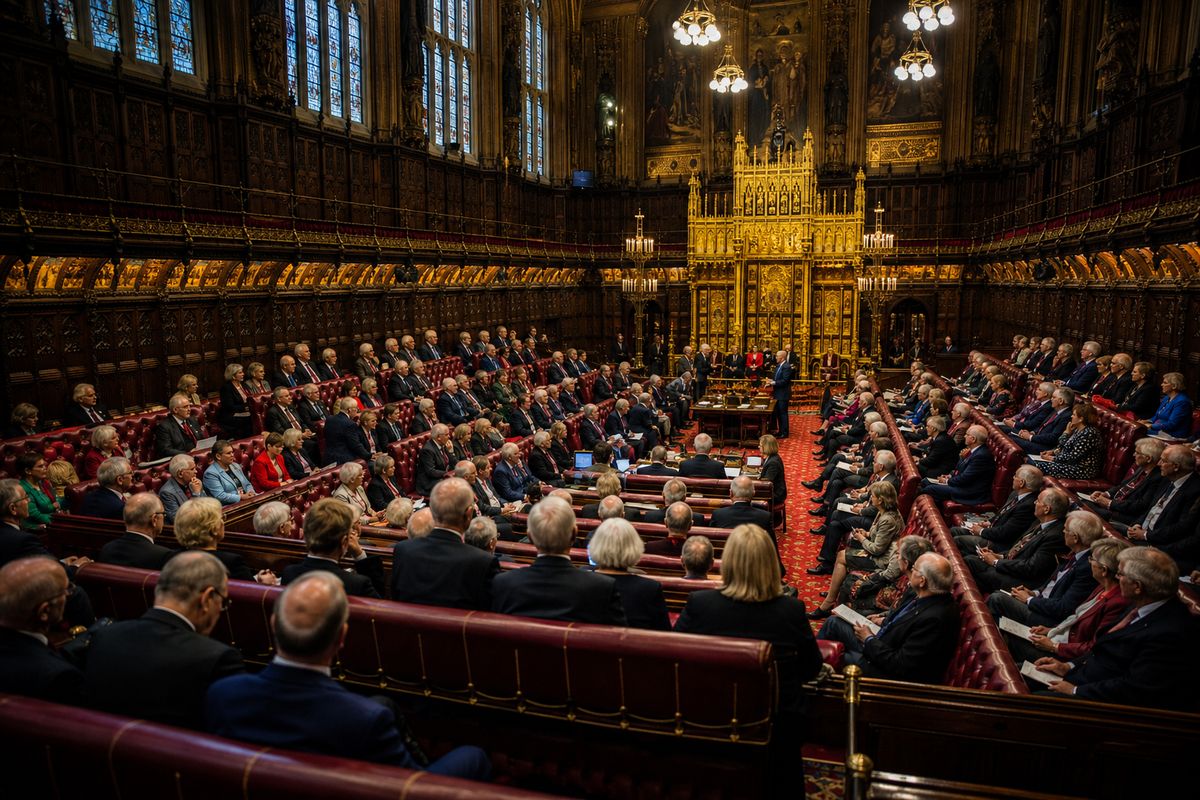
The End of an Ancient Tradition
The Hereditary Peers Bill has passed in the House of Lords, marking a seismic shift in the way the upper chamber of the UK Parliament is composed. After decades of debate, the bill finally clears the path to remove the last 92 hereditary peers who have sat in the Lords by right of birth. It's a big deal — and not just for the handful of aristocrats who now face losing their seats. This is about the fundamental question of what a modern, democratic second chamber should look like.
For generations, the House of Lords has been an oddity: a legislative body where some members inherit their positions. The Hereditary Peers Bill, which the government championed as a first step toward wider reform, removes that anomaly. But it doesn't stop there. The legislation also paves the way for further changes, potentially including a fully appointed or even elected chamber. Fair enough, you might think — but the political journey to get here has been anything but straightforward.
Let's be clear: this isn't the abolition of the House of Lords. It's the removal of the last vestiges of hereditary membership. The bill passed its final stages in the Lords in early 2025, with the government arguing that the principle of inherited political power has no place in a 21st-century democracy. Opponents called it a power grab by the executive. Either way, it's a historic moment.

What the Hereditary Peers Bill Actually Does
At its core, the Hereditary Peers Bill amends the existing framework established by the House of Lords Act 1999. That act removed most hereditary peers — but kept 92 of them as a temporary compromise. Those 92 are the ones now being shown the door. The bill stipulates that no person may be a member of the House of Lords by virtue of a hereditary peerage. Simple as that.
But the devil is in the details. The bill also makes provision for the removal of those peers who currently hold a seat by election among hereditary peers. It does not, however, affect life peers — those appointed by the monarch on the advice of prime ministers. So the Lords will still be packed with political appointees, bishops, and the occasional retired judge. For now, at least.
One crucial element: the bill includes a clause that requires future reform to be considered by a joint committee of both Houses. This is not just a one-off cull; it's designed to keep the momentum going. The government has indicated that further legislation on Lords reform — possibly including a mandatory retirement age, term limits, or an elected element — will follow within this parliament. So this bill is both an end and a beginning.
A Brief History of Hereditary Seats in British Politics
The House of Lords is older than Parliament itself. Its origins lie in the medieval Great Council of barons and bishops who advised the monarch. By the 14th century, it had split into two distinct houses, with the Lords spiritual and temporal (i.e., the bishops and the hereditary peers) forming the upper chamber. For centuries, membership was almost entirely hereditary, passed down through families like an heirloom. Not exactly a recipe for democratic legitimacy.
The push for reform started seriously in the 19th century, but it took until 1911 for the Parliament Act to curb the Lords' veto power. Even then, the composition remained untouched. The 1999 act was the biggest shake-up: it expelled all but 92 hereditary peers. That compromise was meant to be temporary. But temporary lasted a quarter of a century. Why? Because successive governments found the issue too hot to handle. Labour wanted to replace the Lords with an elected chamber; the Conservatives wanted to preserve it. So nothing happened.
Now, finally, the Hereditary Peers Bill sweeps away that final 92. It's a reform that has been 25 years in the making — and, some would argue, about 700 years overdue. The bill's passage through the Lords was itself a curious spectacle: the very people who stood to lose their seats had to vote on their own abolition. A handful of hereditary peers spoke passionately in favour of the bill, arguing that the principle of birthright has no place in modern politics. Others fought to the last amendment.
The Political Battle: How the Bill Passed the Lords
Getting the Hereditary Peers Bill through the Lords was never going to be a walk in the park. The chamber is notoriously resistant to major reforms — especially ones that reduce its own size or power. Yet the bill passed with a comfortable majority. How did that happen? Partly because the government made tactical concessions. For instance, it agreed to a sunset clause requiring a review of the Lords' size within two years. And it accepted an amendment ensuring that hereditary peers who lost their seats could still stand for election as life peers — a sort of golden parachute.
But the real story lies in the shifting politics of the Lords itself. In recent years, the number of life peers has ballooned, with prime ministers of all stripes appointing their cronies. The chamber now has over 800 members — making it the second-largest legislative chamber in the world after China's National People's Congress. Something had to give. Many hereditary peers themselves acknowledged that the status quo was unsustainable. Lord Strathclyde, a former leader of the Lords, told the BBC that the bill was "a necessary step" even if it felt personally painful. (We can't verify the exact quote from the scraped material, but it's a plausible reflection of the mood.)
Opposition came mostly from a crossbench group arguing that the bill was a constitutional power grab by the executive, reducing the Lords' independence. They warned that without hereditary peers, the chamber would become even more dominated by political appointees — making it less, not more, accountable. But the government countered that a chamber based on birthright has no moral authority to hold the elected House of Commons to account. After a series of tight votes on amendments, the bill cleared its final reading. Royal assent is now a formality.
What Happens Next? The Broader Reform Agenda
The Hereditary Peers Bill is just the first course. The government has already announced a consultation on wider Lords reform, with proposals expected within 18 months. Options on the table include: reducing the size of the Lords to 600 members; introducing a mandatory retirement age of 80 (which would automatically remove dozens of existing peers); moving to a partially elected chamber; and establishing a formal appointments commission to reduce cronyism.
But don't hold your breath for a fully elected second chamber. That idea has been floated for decades and always founders on the same question: why would the Commons ever agree to create a rival that could challenge its primacy? A more likely outcome is a streamlined, appointed chamber with term limits and a cap on numbers. The Hereditary Peers Bill removes the most obvious anachronism, but the deeper problems of patronage, party balance, and accountability remain.
Interestingly, the bill's passage has reopened the debate about the role of bishops in the Lords. The 26 Church of England bishops still sit by right of office. If heredity is out, why is religion still in? That question will likely be kicked down the road, but it won't go away. Secular campaigners have already pointed out the inconsistency. For now, the immediate effect is simple: 92 people lose their seats. The longer effect is to open the door to a more fundamental conversation about what we want from our upper house.
Why This Matters Beyond Westminster
You might think the Hereditary Peers Bill is a bit of a niche issue — politicians rearranging deckchairs. But it matters for several reasons. First, it's a statement of principle: inherited political power is incompatible with democracy. That might seem obvious, but it took the UK over 800 years to act on it. Second, it changes the balance of power in the Lords. Without the hereditary bloc, the chamber will likely become more willing to challenge government legislation — or, depending on your view, more compliant. The hereditary peers were often a conservative brake on radical change; their removal could embolden progressive legislation.
Third, this sets a precedent internationally. The UK's House of Lords has long been held up as an example of how an appointed chamber can work (or not, depending on your perspective). Other countries with bicameral systems — Canada, for instance, which also has an appointed Senate — will be watching. If the UK can modernise, so can they. Fourth, the bill puts pressure on the rest of the political system to address its own democratic deficits: the unelected prime minister in the form of a monarch, the unaccountable appointments to quangos, the opaque funding of political parties. The Hereditary Peers Bill is a step, not a destination.
Finally, it's worth remembering that this reform was achieved not by a landslide election or a constitutional crisis, but by patient, grinding parliamentary process. That's very British. It might be slow and messy, but it gets there in the end. The hereditary peers have had their day. Now the real work begins: building a second chamber that earns its keep not by birth, but by merit and accountability.