
NJC pay offer 2026-27 lands at 3.3%, after strike ballots fall short
The NJC pay offer for 2026-27 is now set to be implemented at 3.3% for local government and school staff in England, Cymru and Northern Ireland, after joint unions accept the employers’ offer. It is a clean outcome on paper, a single number, backdated to 1 April 2026. But it arrives with a messy backstory, because the same process also produces an “overwhelming” appetite for strike action among those who vote, while failing to clear the legal turnout bar in enough big workplaces to make action viable.
UNISON’s national messaging is blunt: councils and schools “need a fair pay rise”, recruitment and retention are already strained, and without dedicated staff “local government will collapse”. Yet the union also concedes that the industrial action route does not have the leverage it needs this time. The reason is procedural rather than ideological, turnout. In the ballot for industrial action in England and Cymru, the 50% turnout threshold is not met in enough large employers to have the impact needed to improve the offer, so the 3.3% settlement is accepted and will be implemented “as soon as possible” with back pay from 1 April.
That combination, strong support among participants but weak participation overall, is the story. And it matters beyond one pay round. It speaks to how public service pay disputes are now won or lost as much on organising mechanics and balloting rules as on the headline percentage itself.

What the 2026-27 NJC pay settlement means in practice
The immediate practical effect is straightforward: a 3.3% uplift, backdated to 1 April 2026, applied across the NJC workforce covered by the settlement. UNISON indicates the award will be implemented as soon as possible. A branch-level update from UNISON West Sussex expects, locally, that the award is “highly likely” to be applied from September 2026, with backpay for the five months from April to August paid in the September payroll. That is not a national guarantee, but it is a realistic illustration of what many staff may see: a new basic rate plus a one-off lump of arrears.
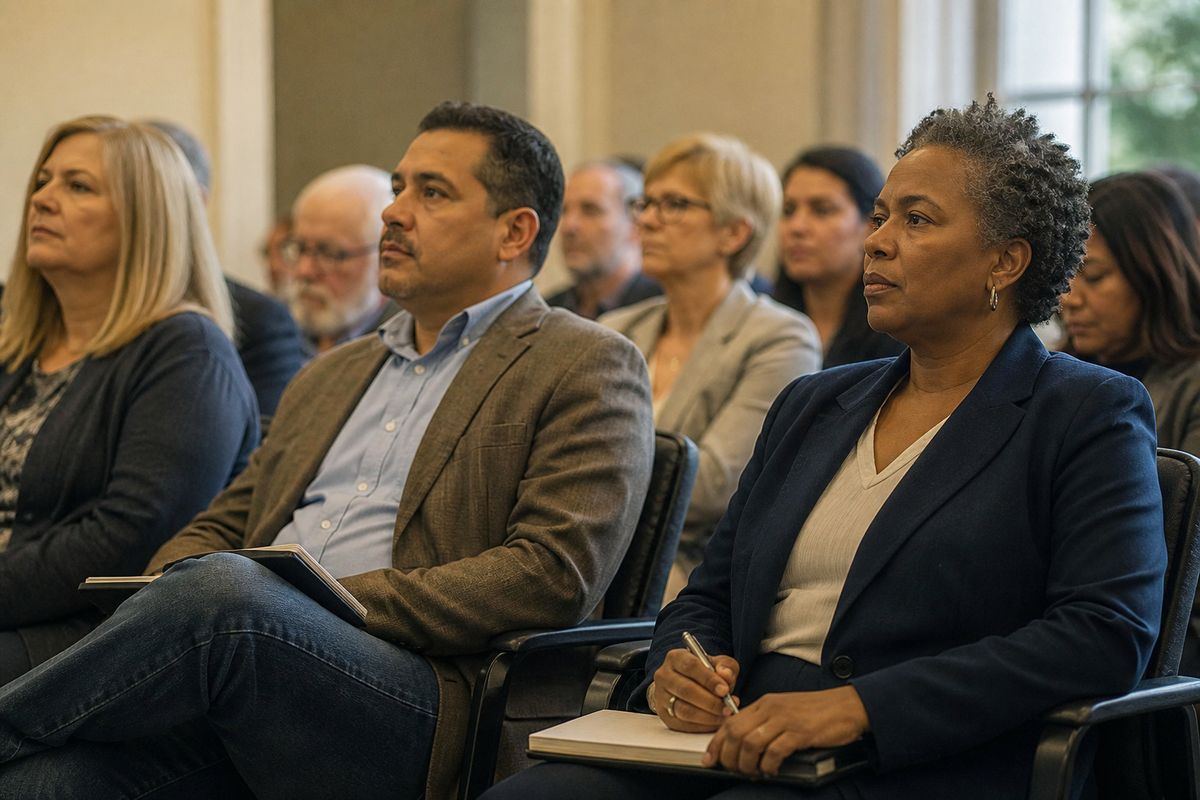
And that lump sum is where the real-world complications start. UNISON West Sussex flags that some members receiving Universal Credit may see knock-on effects, because the backdated award produces a one-off increase in earnings in a single assessment period. The branch cannot advise on individual cases (and does not try to), but it points staff towards explaining to their Work Coach that the backpay is not a permanent monthly uplift. It also notes a second practical snag: student loan deductions can be triggered if the backpay pushes monthly earnings above the repayment threshold, even if the employee drops below it again in later months. In other words, the settlement is not just a percentage, it is a payroll event with consequences.
There is also an administrative point that often gets missed in the headlines: staff who have left employment since 1 April 2026 are still entitled to back pay in arrears, and for pension members, for this to be added to their local government pension. UNISON West Sussex advises former staff to contact payroll to request it. That detail matters because turnover is part of the wider problem the unions keep returning to, and leavers are exactly the people most likely to miss out unless the system is proactive.
Inside the ballot numbers, strong “yes” votes, weak turnout
The West Sussex results put hard numbers on a pattern that UNISON describes nationally. In the county’s largest employer, West Sussex County Council, members vote for strike action with an 80% “yes” vote. That is not marginal. It is decisive. But turnout is 28.5%, well below the government’s mandatory 50% participation rate required for lawful strike action under the rules applied to that ballot. The branch also ballots members across 13 separate employers in West Sussex, reflecting the legal reality that some schools count as separate employers and all academy schools do. It clears the 50% threshold in only one of those employers, Bourne Community College, but that employer alone is not large enough to deliver impactful action.
Nationally, UNISON analyses results across 511 targeted employers. Aggregate turnout is 28.4%. The union’s elected NJC Committee concludes there is “no possibility” of organising industrial action that would improve the national pay offer, because the threshold is not met in enough large employers. That is the key point: even where there are pockets of high engagement, the law requires scale and distribution, not just intensity in a handful of workplaces.
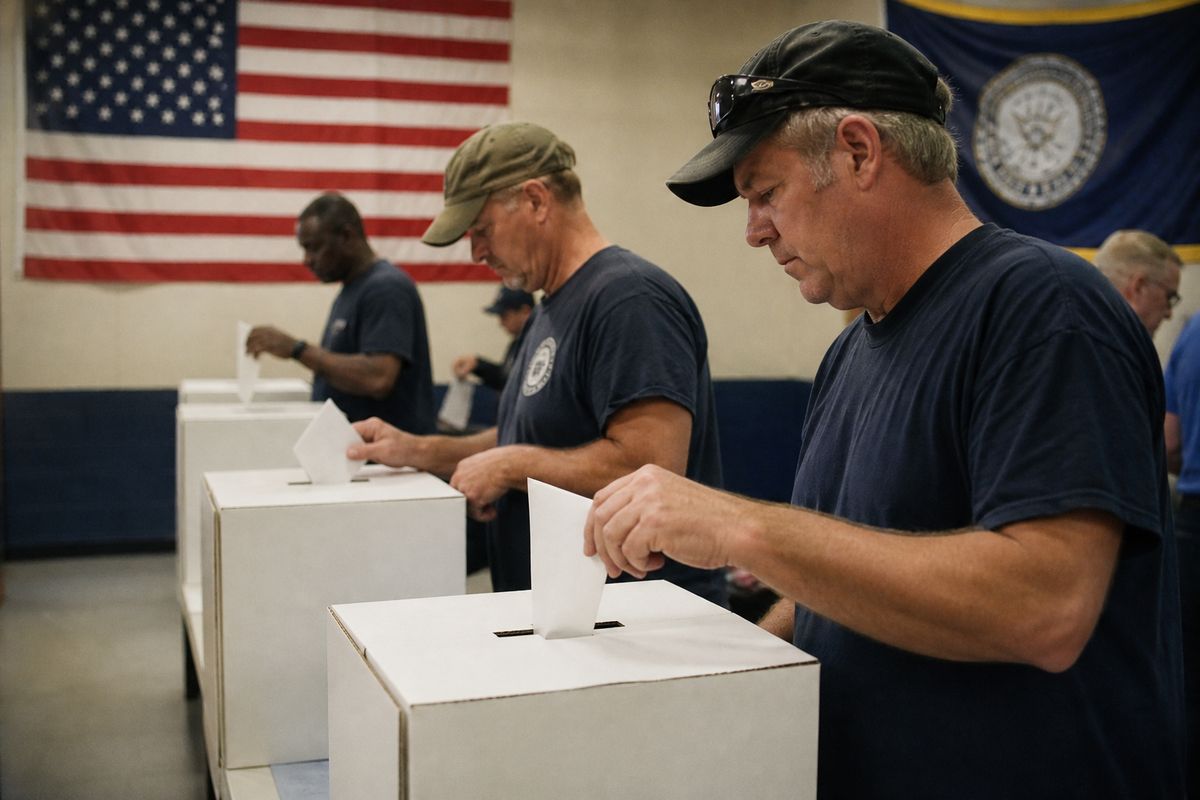
There is an important political footnote too. UNISON West Sussex notes that the 50% thresholds introduced under the Conservative government’s 2016 Trade Union Act are superseded by the Labour government’s Employment Rights Act 2025, and the thresholds are “due to be repealed imminently” when new regulations are laid by Parliament. The branch also says electronic balloting, replacing postal voting for most members, is imminent. Put those together and the 2026-27 NJC pay dispute starts to look like a case study in timing: a pay round fought under rules that may be about to change.
UNISON and the joint unions, why they accept a deal they do not love
UNISON’s wider campaign language is uncompromising. It frames local government staff as the people who keep communities “safe, clean and accessible”, often with “little to no recognition”. It warns that without fair pay, councils will continue to struggle to recruit and retain staff. And it argues, in stark terms, that without dedicated staff, local government will collapse. That is not exactly subtle, but it reflects the lived reality of many frontline services, where vacancies and churn translate quickly into slower responses, reduced capacity, and higher reliance on agency staff.
So why accept 3.3%? Because leverage is not just about moral argument, it is about the ability to disrupt. UNISON says that despite an overwhelming majority in favour of strike action among those who return ballots, the 50% turnout threshold is not met in enough large employers to have the impact needed to improve the offer. In other words, the unions can either accept a settlement now, or attempt action that is either unlawful in key workplaces or too fragmented to move employers. Fair enough, that is a hard calculation, but it is a rational one.
There is also a strategic dimension. A union that calls a strike it cannot lawfully deliver risks burning credibility with members and employers alike. Accepting a suboptimal offer can be framed as a tactical retreat, especially if the legal and technological environment for balloting is about to shift. If electronic balloting arrives, and if turnout thresholds are repealed as anticipated, the next pay round could be fought on very different terrain. The 2026-27 settlement may therefore be less an endpoint than a holding pattern.
Higher education pay talks show a parallel dispute, and a different kind of pressure
While the NJC pay offer for 2026-27 settles at 3.3% in local government, higher education is dealing with its own 2026-27 pay round under New JNCHES. The University and College Employers Association, UCEA, represents 138 member higher education institutions in the negotiations. It issues a “Full and Final” offer on 15 May 2026, and trade unions consult their members across participating institutions.
The response is clear on one key point: EIS, GMB, UCU, Unite and UNISON members reject the pay element of the offer. UCEA says that once it has heard from all trade unions on whether any union is invoking the New JNCHES dispute resolution procedure, it will arrange required meetings quickly after formal dispute notification. The tone is procedural, but the implication is obvious, the sector is not aligned, and escalation is on the table.

UCEA also signals a second track that could become more important than the immediate percentage: it proposes starting negotiations on a review of the pay spine, aiming to begin over the summer and conclude by 31 December 2026. That matters because pay spines shape progression, compression, and the relative value of roles over time. A one-year uplift is visible, but a spine review can rewire the system. And that is where higher education’s dispute starts to rhyme with local government’s, both are wrestling with recruitment, retention, and the credibility of pay structures in a tight labour market.
The Bigger Picture
The most revealing thing about the 2026-27 NJC pay offer is not the 3.3% figure itself, it is the gap between willingness and participation. An 80% “yes” vote in a major council is politically potent, but legally irrelevant if turnout is 28.5%. Nationally, 28.4% turnout across 511 targeted employers tells the same story. This is what modern industrial relations looks like in fragmented workforces with high workloads, dispersed sites, and staff who are often too stretched to engage with postal ballots. People can be angry, even determined, and still not return an envelope. That is not apathy in the simple sense, it is a structural problem.
If the anticipated repeal of turnout thresholds and the shift to electronic balloting arrive as UNISON West Sussex expects, the balance of power could move quickly. Employers have, for a decade, been able to rely on turnout rules as a kind of backstop. Remove that, and the question becomes whether unions can translate “yes” sentiment into actual action at scale. Electronic balloting could help, but it is not magic. It reduces friction, but it also raises the bar for unions to run sharper, faster campaigns because members can vote quickly, and disengage just as quickly.
There is also a deeper issue that sits underneath both local government and higher education disputes: pay is now inseparable from workforce capacity. UNISON’s earlier warning, in June 2025, that shortages of planning officers could derail housing efforts and hamper growth, is a reminder that staffing gaps are not just a service issue, they are an economic one. Councils are asked to deliver growth, housing, safeguarding, waste, and resilience, often simultaneously. Universities are asked to compete globally while managing cost pressures and staff churn. In both cases, pay settlements that fail to stabilise the workforce do not just irritate employees, they create delivery risk for the public and for the economy.
What happens next for council and school pay, and what to watch
In the short term, the story moves from negotiation rooms to payroll systems. Staff will look for confirmation of implementation dates, and for clarity on backpay calculations. The West Sussex expectation of a September 2026 payment cycle, with five months of arrears, is likely to be echoed elsewhere, though timing will vary by employer. For some households, the backpay lump sum will be welcome breathing space. For others, it will come with administrative headaches, particularly around Universal Credit assessment periods and student loan deductions.
In the medium term, attention shifts to the rule changes flagged by UNISON West Sussex. If turnout thresholds are repealed imminently and electronic balloting is introduced, the 2027-28 pay round could look very different. The unions’ challenge will be to convert the clear “yes” sentiment among engaged members into broader participation, even when participation is no longer a legal hurdle. Employers, meanwhile, will need to decide whether to treat 2026-27 as a one-off containment exercise or as a warning sign that workforce pressures are building.
And then there is the parallel track in higher education. With multiple unions rejecting the pay element of UCEA’s Full and Final offer, and dispute resolution procedures potentially being invoked, the sector could see a more overt confrontation. UCEA’s willingness to negotiate a pay spine review by 31 December 2026 suggests employers understand that the argument is not only about this year’s uplift, it is about whether the pay architecture still makes sense. Local government may soon face the same question, because once recruitment and retention become chronic, the debate inevitably moves from annual percentages to structural reform.
The 2026-27 NJC pay offer is therefore both a settlement and a signal. It settles the number. It does not settle the underlying problem. And that is why, even with 3.3% agreed, this story is not going away.