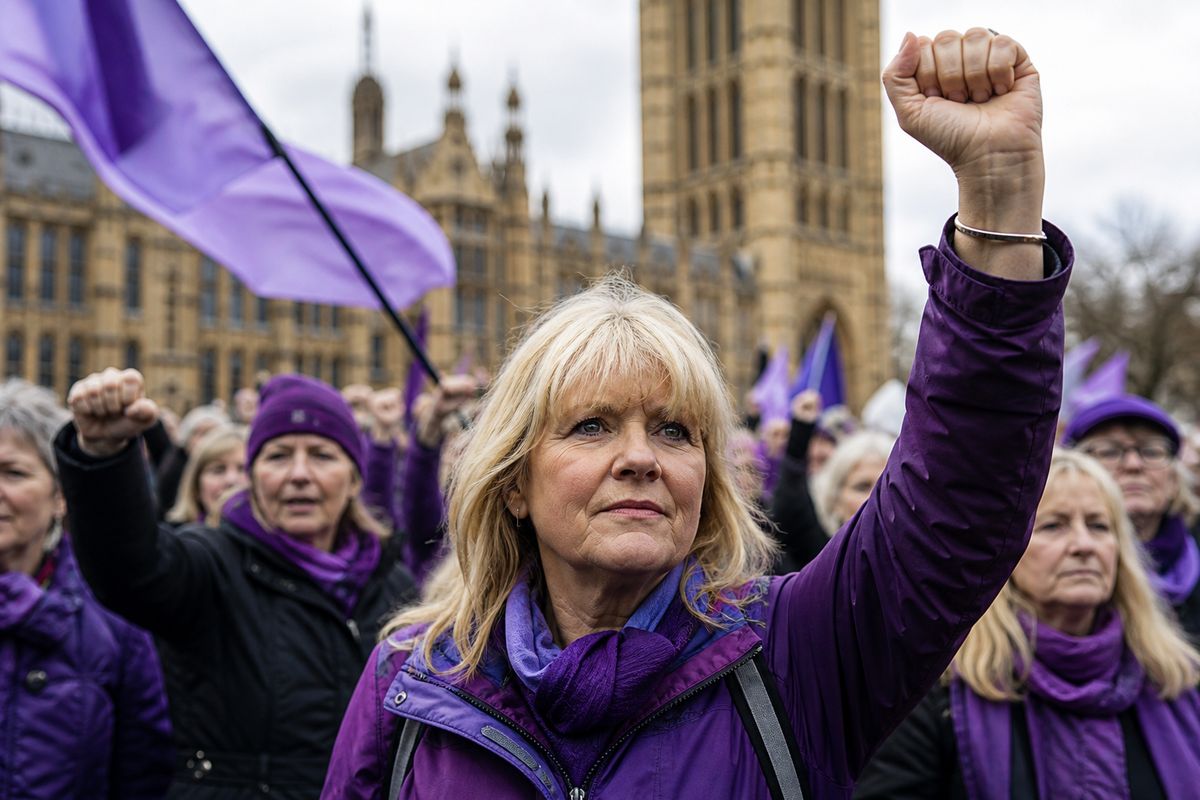
WASPI compensation dispute returns to centre stage with a new legal push
The WASPI compensation row is back in the headlines in September 2026 because the Women Against State Pension Inequality campaign confirms it is launching a fresh legal challenge after the Government again refuses to pay redress for the maladministration found in the handling of women’s State Pension age changes. It is not a new argument, but it is a newly sharpened one, and it lands at a politically awkward moment, with MPs repeatedly raising the issue in Parliament and unions and broadcasters being pulled into the wider public debate.
The immediate development is straightforward: WASPI campaigners say they are taking the first steps towards a new court action, framed in media coverage as a fresh legal challenge and, in some reporting, the preparation of a judicial review pre action protocol letter. That matters because it signals a shift from lobbying and parliamentary pressure back towards litigation, and because it forces ministers to defend not only the policy outcome but also the reasoning behind the refusal to compensate.
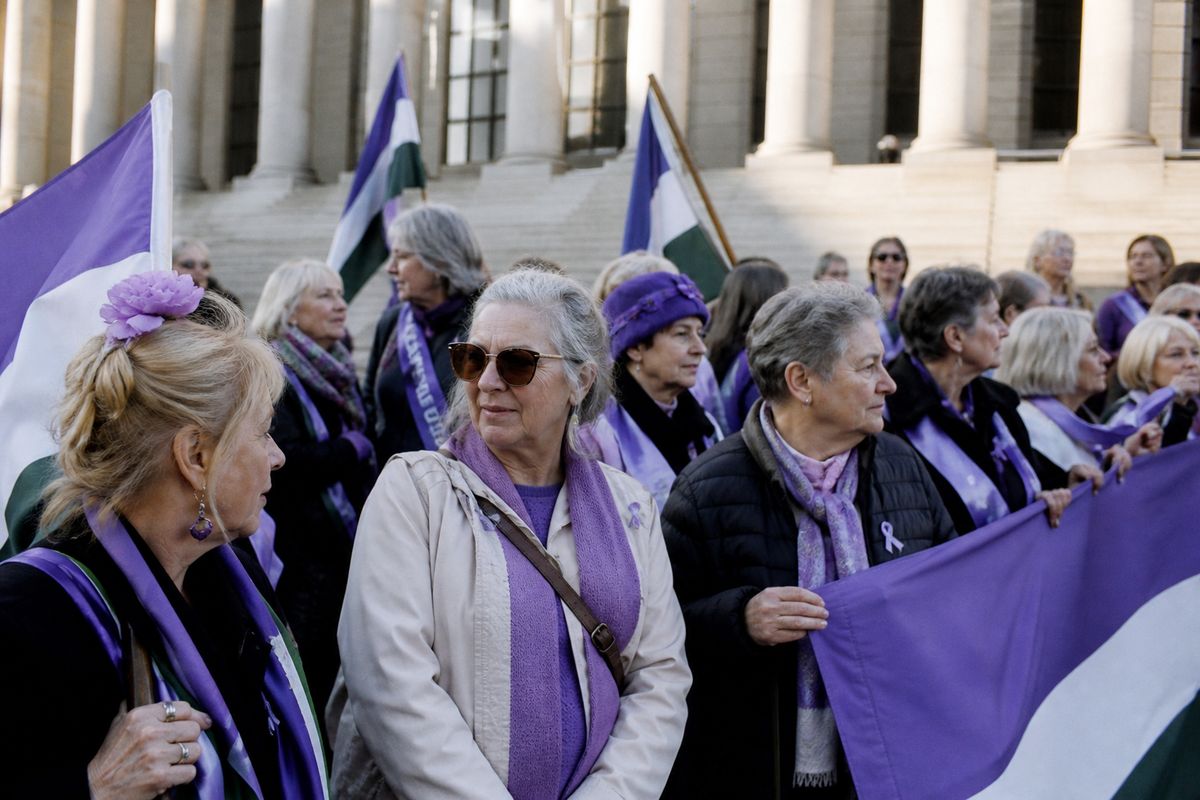
At the same time, the campaign’s media presence intensifies. Angela Madden, the chair of WASPI, appears across outlets, including BBC Breakfast and BBC Radio 2’s Jeremy Vine programme, setting out what the group expects from the Government and why it believes the case for compensation remains alive. And, crucially, the campaign points to the scale of those affected, with coverage citing that 3.5 million women were hit by the change in the State Pension age.

What happens now: the legal challenge, the messaging, and the pressure points
WASPI’s latest move is not presented as a symbolic gesture. It is described as a “fresh legal challenge” following the Government’s refusal to compensate, and it is accompanied by a clear message that the campaign will need support to pursue it. That is a practical reality of public law litigation, but it is also a political signal: the group is telling ministers that the dispute will not be contained by a statement at the despatch box or a closed door response to an ombudsman report.
In parallel, the parliamentary drumbeat continues. An Early Day Motion, EDM 263, is tabled on 02 June 2026 and focuses on the Government response to the Parliamentary and Health Service Ombudsman report on communication of changes to women’s State Pension age. EDMs do not change the law, fair enough, but they are a barometer of how much backbench energy exists and a way of keeping an issue on the record when the executive would rather move on.
MPs also keep raising WASPI in debates that are not, on the face of it, pensions debates. Carla Lockhart MP mentions WASPI during an Energy Security debate on 19 May 2026. Others bring it into the King’s Speech debate, with Jonathan Brash MP making a plea for justice and Dave Doogan MP highlighting WASPI women while criticising wider Government failings. That cross topic persistence is telling. It suggests the issue has become a shorthand for a broader argument about fairness, administrative competence, and whether the state takes responsibility when it gets something wrong.
And then there is the scrutiny of the Department for Work and Pensions itself. The Work and Pensions Committee questions the DWP Permanent Secretary, Sir Peter Schofield, about delays in formally implementing an action plan intended to ensure the maladministration experienced by WASPI women does not happen again. That line of questioning does not settle compensation, but it does underline a central tension: ministers can say “lesson learned”, but Parliament wants to know whether the machine has actually changed.
Who are WASPI, and what exactly are they arguing about State Pension age changes?
WASPI, Women Against State Pension Inequality, campaigns for “justice for all women born in the 1950s affected by the changes to the State Pension Age”. The group is explicit about one point that often gets muddled in public debate: it says it is not against equalisation. The argument is about the way the changes are communicated and implemented, and the claim that women received inadequate or no notice, leaving many unable to adjust their retirement plans.
That distinction matters because it shapes both the moral case and the legal framing. If the dispute were simply about equalising pension ages, it would be a much harder political sell in 2026. But WASPI’s core claim is about maladministration and communication failures, and that is why the Parliamentary and Health Service Ombudsman report sits at the centre of the story. The ombudsman’s work is repeatedly referenced in parliamentary questions and media coverage, including a written question by Jonathan Brash MP that explicitly cites the report and its publication date, 21 March 2026.
Angela Madden is the most visible spokesperson, appearing in broadcast interviews and newspaper coverage. Alongside her, campaigners such as Jan Fulster also appear on BBC Breakfast, making what the campaign describes as “hard hitting points”. The tone is not conciliatory. It is a campaign that believes it has already won the argument on maladministration and is now fighting over what the state does about it.
It is also a campaign that has learned how to operate across institutions. It pushes in Parliament, it pushes in the media, and it pushes through legal routes when it believes politics is stalling. That multi track approach is one reason the issue keeps resurfacing, even when ministers try to close it down with a single announcement.
Inside Parliament: WASPI compensation becomes a test of political nerve
The Government’s position is presented in the WASPI campaign’s own parliamentary tracking as a firm refusal to compensate, even while offering apologies. Pat McFadden MP, the Secretary of State for Work and Pensions, is associated in the source material with an announcement in Parliament described as “No Compensation”, with the campaign emphasising that an apology is repeated but the decision does not change. That combination, apology without redress, is politically combustible because it invites the obvious question: what is an apology worth if the harm is acknowledged but not remedied?
Backbench MPs, and not only from one party, keep pressing. Lee Pitcher MP raises the issue in Business of the House, explicitly personalising it by saying his mother is a WASPI woman. Seamus Logan MP raises it during topical questions in a Work and Pensions debate, with Torsten Bell responding. The details of Bell’s response are not set out in the source material, but the fact the exchange is highlighted shows the issue is live in day to day parliamentary business, not just in set piece debates.
There is also organised parliamentary pressure. The All Party Parliamentary Group for State Pension Inequality for Women writes to pensions ministers with its reaction, and nearly 100 members reportedly sign a letter challenging the decision, according to coverage summarised in the campaign’s media roundup. That is not a trivial number, even if it does not guarantee a policy reversal. It signals that the Government cannot assume the issue will fade quietly, especially when MPs see the constituency impact up close.
And the debate is not confined to Westminster. In Scotland, the issue is raised at Holyrood. Shirley Anne Somerville, the Cabinet Secretary for Social Justice, expresses irritation at the national Government’s decision not to compensate and asks whether the same stance would apply if maladministration affected a different group. Labour MSP Mercedes Villalba also states her intention to continue lobbying for a fair result. Devolution does not change State Pension policy, but it does widen the political theatre and keeps the story in the public eye across the UK.
Media, unions, and the battle over public understanding
WASPI’s media strategy in 2026 is not subtle. It is about repetition, visibility, and challenging narratives that the campaign believes minimise the case for compensation. The campaign’s own media log highlights appearances on BBC Breakfast and on Jeremy Vine’s BBC Radio 2 show, plus coverage in national newspapers. The Daily Mail Plus runs a piece referencing Angela Madden’s view that WASPI women can be hopeful compensation will be agreed by the Prime Minister. The Mirror carries an exclusive saying Andy Burnham is set to meet campaign representatives over redress options, linking the dispute to promises and statements made during his election campaign.

That last point is important because it shows how the story is evolving. It is no longer only about what happened years ago with pension age notices. It is about what today’s political leaders said they would do, and whether they will now follow through. When a campaign can point to campaign trail commitments, it gains leverage. It also raises the stakes for the Government, because the argument shifts from “this is complicated” to “you told people you would fix it”.
Unions add another layer of pressure. Unite uses social media to call out the Government’s decision not to compensate, describing it as the second time in less than a year that the Government refuses. UNISON’s general secretary, Andrea Egan, condemns the refusal and calls for a change of course. Union interventions matter because they bring organisational muscle, member networks, and a broader framing about workers’ rights and state accountability. It becomes less of a niche pensions story and more of a workplace and justice story.
And then there is the information war, for want of a better phrase. The campaign notes that the BBC issues a correction addressing WASPI compensation coverage, after the broadcaster states that the Parliamentary and Health Service Ombudsman opposed the payment of compensation. The correction is significant not because it proves the campaign’s case, but because it shows how contested the basic interpretation of the ombudsman’s position has become. In a dispute like this, small misunderstandings can harden into public assumptions, and campaigns fight hard to stop that happening.
What this means for pensions policy and the DWP, beyond one compensation decision
The WASPI compensation fight is, on the surface, about a specific cohort, women born in the 1950s, and a specific grievance, inadequate notice of State Pension age changes. But the implications run wider. If the Government holds the line on no compensation even after maladministration findings, it sets a precedent about what happens when administrative failure is acknowledged. The state can apologise, promise process improvements, and still refuse financial redress. That is a big deal, because it shapes public expectations of accountability across departments, not just the DWP.
There is also a governance question. The Work and Pensions Committee’s focus on delays in implementing an action plan suggests that even the “never again” part is not straightforward. Large departments do not change quickly, and communications systems are only as good as the incentives behind them. If Parliament believes the DWP is slow to implement reforms designed to prevent a repeat, it will be harder for ministers to argue that refusing compensation is balanced by robust future safeguards.
Politically, the issue is sticky because it is personal. MPs talk about their mothers. Constituents write emails, and the campaign says those emails are having an impact, with more MPs taking action as the volume grows. That is the kind of pressure that does not disappear when the news cycle moves on. It sits in inboxes, surgeries, and local party meetings. And it can resurface at the worst possible time, like during a King’s Speech debate when the Government is trying to project momentum.
Legally, a fresh challenge also creates uncertainty. Even if the Government ultimately prevails, litigation forces disclosure, timelines, and a more formal articulation of reasoning. It can also keep the story alive for months. Ministers may calculate that they can ride it out. But the longer it runs, the more it becomes part of the Government’s reputation for competence and fairness.
The Bigger Picture
The WASPI compensation dispute is often covered as a single campaign versus a single department. That misses the deeper pattern. Britain is living through an era where big, long term policy shifts are colliding with public expectations of personalised communication and rapid redress when things go wrong. State Pension age changes are, by nature, slow moving and technical. But the public experience of them is immediate and emotional, because retirement planning is not an abstract policy exercise. It is rent, caring responsibilities, health, and whether someone can keep working.
And there is a second trend: the growing power of “accountability institutions”, ombudsmen, select committees, APPGs, and the courts, to shape political narratives even when they cannot directly force a policy outcome. The Parliamentary and Health Service Ombudsman report gives campaigners an authoritative anchor. Select committee questioning of senior officials like Sir Peter Schofield keeps administrative competence in the spotlight. EDMs and APPG letters keep parliamentary pressure visible. None of these mechanisms alone guarantees compensation. Together, they create a web of scrutiny that makes it harder for the executive to simply declare the matter closed.
Finally, the WASPI story shows how modern political pressure is built. It is not just marches and petitions, though those still matter. It is broadcast interviews that reach millions, corrections that prevent a narrative from settling, union statements that broaden the coalition, and constituency level email campaigns that nudge MPs into action. The result is a dispute that behaves less like a one off scandal and more like a long running stress test of how the British state admits fault, learns lessons, and decides who pays when systems fail.
Closing thoughts: a dispute that refuses to fade
In September 2026, the WASPI compensation fight is not winding down. It is escalating, again, because campaigners believe the Government has acknowledged maladministration yet refuses to provide meaningful redress. The fresh legal challenge is the sharpest tool left when parliamentary statements and apologies do not shift the policy. And the campaign’s media presence, from BBC Breakfast to national newspapers, suggests it is determined to keep public attention fixed on the gap between acknowledgement and action.
For ministers, the temptation will be to treat this as a settled decision and a noisy but containable backlash. But the parliamentary record suggests otherwise. MPs keep raising it across debates, an Early Day Motion is on the table, and select committees are probing the department’s follow through on reforms. Add in union condemnation and the risk of further media corrections and controversies, and the Government faces an uncomfortable reality: even if it can block compensation in the short term, it may not be able to stop the issue becoming a defining symbol of how it handles administrative failure.
For the women at the centre of the dispute, the stakes are simpler and harsher. They want justice, and they want it to be tangible. An apology is polite. Compensation is concrete. The next phase, played out through legal arguments, parliamentary pressure, and public campaigning, will determine whether the state’s acknowledgement of maladministration ever turns into something that feels like a remedy, rather than a footnote.