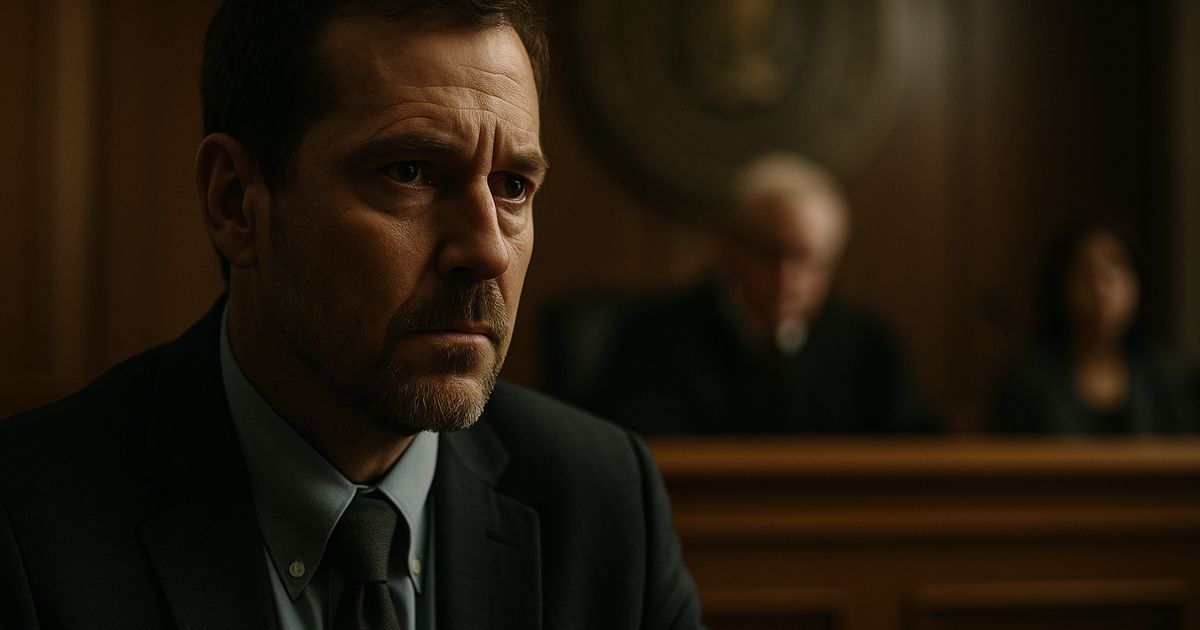
A Landmark Ruling on Self-Defence Law
In a pivotal ruling that cuts to the heart of self-defense law and its application in volatile confrontations, a South Carolina judge has denied businessman Weldon Boyd’s request for immunity under the state’s Stand Your Ground statute. The decision, handed down on February 20, 2026, marks a critical turning point in the nearly three-year legal saga surrounding the fatal shooting of Scott Spivey following a September 2023 road-rage incident in Horry County. The judge’s denial not only allows a wrongful death lawsuit filed by Spivey’s family to proceed but also opens the door for potential criminal charges, as a state grand jury is now set to review the case. Central to the ruling was the judge’s stark assessment of Boyd’s credibility and his characterization of the defendants’ actions as a dangerous pursuit, framing the legal question not as one of innocence, but of whether the law’s powerful shield of immunity should apply.

The Ruling and Its Immediate Legal Consequences
The stand-your-ground hearing, which spanned multiple days in an Horry County courtroom, concluded with Circuit Court Judge William Seals delivering a nuanced but decisive ruling. He denied immunity for Weldon Boyd, the owner of Buoys on the Boulevard in North Myrtle Beach, while stating he is still considering the request for Kenneth “Bradley” Williams, who was a passenger in Boyd’s truck during the shooting. The distinction drawn by the judge was based heavily on his evaluation of witness credibility and the defendants’ respective roles in the incident. He found Williams’s testimony more credible, noting that Williams had repeatedly urged Boyd to de-escalate the situation—first by telling him to slow down while driving and then, moments before the shooting, by telling him to back the truck up.
The legal ramifications of this denial are immediate and severe for Boyd. South Carolina’s stand-your-ground law, codified under Section 16-11-440(C) of the state code, provides a robust defense. If immunity is granted, it acts as an absolute bar to both criminal prosecution and civil litigation. By denying Boyd’s request, Judge Seals has cleared the path for the wrongful death lawsuit to move forward in civil court. Furthermore, he has removed a significant obstacle for potential criminal proceedings. The Seventh Circuit Solicitor’s Office had already confirmed in early February 2026 that a state grand jury would be convened to review the case for possible indictment. Had immunity been granted, that grand jury would have been dismissed. Now, prosecutors can proceed with presenting evidence to determine if criminal charges for homicide are warranted against Boyd.
Deconstructing the Fatal Confrontation: A Road-Rage Incident Turns Deadly
The events that led to the courtroom began on the evening of September 9, 2023, along Camp Swamp Road in the Longs area of Horry County. According to testimony and authorities, the incident originated as a road-rage encounter between Scott Spivey, a North Carolina man, and Weldon Boyd, who was driving with Kenneth Williams. The confrontation escalated into a high-speed chase, with the judge noting testimony that Boyd drove over 100 mph to keep up with Spivey’s vehicle. The central, and fiercely contested, fact of the case is who fired first. Boyd and Williams have maintained they acted in self-defense, testifying that Spivey shot at them first. However, this account was challenged by other evidence presented in court.
A critical piece of that evidence came from audio expert Robert Maher, a professor of electrical and computer engineering at Montana University. In a video deposition played during the hearing, Maher provided a spectrographic analysis of Boyd’s 911 call, which captured audio of the gunfire exchange. Maher testified that he discerned 29 distinct gunshots in the recording. Significantly, he found that the first 17 shots likely came from the same firearm and stated he found no audio evidence that any of the shots originated from outside Boyd’s vehicle—a finding that could contradict the claim that Spivey fired from outside his truck first. Maher also noted he identified no gunshots before the first “obviously audible” gunshot at the 3:33 mark of the call, though he conceded it was technically possible for a shot to go undetected. This forensic analysis created a stark counterpoint to the defendants’ narrative.
Witness Testimony and the Judge's Scrutiny of Credibility
Beyond the audio evidence, witness testimony played a decisive role in shaping the judge’s ruling. The judge pointed to “many discrepancies” between the accounts of an independent witness, Frank McMurrough, and those of Boyd and Williams regarding Spivey’s position and actions outside his truck. Most damningly, McMurrough testified that Spivey never pointed a gun at Boyd’s truck, directly contradicting the core of the self-defense claim. Judge Seals’s comments from the bench revealed a deep skepticism of Boyd’s version of events. He characterized Boyd’s decision to drive at extreme speeds to follow Spivey, whom they knew was armed, as “foolish.” He explicitly rejected Boyd’s claim that he didn’t need to match Spivey’s speed to stay close, implying Boyd was an active pursuer in the conflict.
The judge’s skepticism extended to Boyd’s actions after the shooting. He found Boyd’s testimony “lacking credibility,” particularly regarding his phone calls in the aftermath. Boyd claimed he wasn’t looking for help, yet he called former Horry County Police Deputy Chief Brandon Strickland, a friend, to come to the scene. Strickland did not go, stating he didn’t want the appearance of favoritism, but a call between the two the next morning proved damaging. In that conversation, Strickland revealed he had sent Detective Alan Jones, the lead investigator, to the scene and referred to Jones as a “good ole boy,” later telling Boyd he was “taken care of.” This exchange formed the basis of long-standing allegations by the Spivey family that the investigation was improperly influenced, allegations that contributed to Strickland’s subsequent resignation over misconduct in the case.
Stand Your Ground Law Under the Microscope: Application and Interpretation
The hearing served as a real-world stress test for South Carolina’s stand-your-ground law. Enacted in 2006, the law removes the traditional “duty to retreat” before using deadly force in any place a person has a lawful right to be, if they reasonably believe such force is necessary to prevent imminent death, great bodily injury, or the commission of a violent crime. The immunity provision is particularly powerful, allowing a defendant to petition for a pre-trial hearing where a judge, weighing evidence by a preponderance standard, can dismiss all charges and lawsuits before a full trial begins. This case highlights the high stakes of these hearings and the judicial discretion involved in applying the law’s subjective standard of “reasonable belief.”
Judge Seals’s ruling underscores that stand-your-ground immunity is not automatic, even when a defendant claims fear for their life. The law does not protect individuals who are the initial aggressors or who are engaged in unlawful activity. The judge’s focus on Boyd’s high-speed pursuit and his questioning of who truly created the imminent danger suggests he viewed Boyd’s actions as potentially provocative, thereby negating the lawful self-defense claim. This interpretation aligns with legal principles that prevent individuals from instigating a conflict and then invoking self-defense. The contrasting treatment of Boyd and Williams further refines this point: by urging de-escalation, Williams’s actions may be seen as more aligned with a genuine defensive posture, making his immunity request more viable in the judge’s eyes.
Broader Implications: Justice, Influence, and Legal Precedent
The Spivey case has transcended a simple wrongful death lawsuit, morphing into a public drama involving allegations of political and police favoritism. The Spivey family’s attorney, Mark Tinsley, framed the judge’s ruling as a victory against impunity, stating, “It’s said that with great power comes great responsibility. And that ain’t saying, no and digging in.” This comment implicitly references Boyd’s status as a local businessman with connections. The resignation of Deputy Chief Strickland and the troubling “taken care of” phone call have cast a long shadow over the Horry County Police Department’s initial investigation, raising questions about equal treatment under the law. The judge’s decision to deny immunity can be seen, in part, as a judicial correction to these perceived investigative failures, ensuring the case receives a full and fair airing in court.
For the legal community, the ruling is a significant data point in the ongoing national debate over stand-your-ground laws. It demonstrates that judges can and will deny immunity in cases where the facts suggest aggression or a lack of credibility. It reinforces that these laws are not a “get out of jail free” card for any violent encounter but require a stringent, fact-specific analysis. The detailed consideration of forensic audio evidence also sets a potential precedent for the type of expert testimony that can be pivotal in these hearings. As similar laws exist in over 30 states, the nuanced application seen here will be studied by attorneys and legal scholars arguing both for and against the broad protections these statutes provide.
What Comes Next: The Road to Criminal and Civil Accountability
The legal journey for all parties is far from over. The immediate next step is the judge’s final ruling on immunity for Kenneth Williams. A denial for Williams would mean both men face the full brunt of the civil lawsuit and potential criminal indictment. A grant for Williams would create a legally fractured scenario where the passenger is shielded while the driver is not, highlighting their differing levels of culpability as assessed by the court. Following that, the state grand jury will convene to review evidence presented by the Seventh Circuit Solicitor’s Office. This secretive proceeding will determine whether there is probable cause to indict Boyd, and potentially Williams, on criminal charges such as murder or manslaughter.
Concurrently, the civil wrongful death lawsuit will proceed to discovery and potentially a trial. In that arena, the burden of proof is lower (a preponderance of evidence versus beyond a reasonable doubt), but the focus will be on financial damages rather than incarceration. The family, including Spivey’s sister Jennifer Foley who emotionally stated after the ruling, “There’s been a lot of noes the past two-and-a-half years, and this is the first yes,” seeks both monetary compensation and a public adjudication of responsibility. The evidence from the immunity hearing, including the judge’s strong doubts about Boyd’s credibility, will undoubtedly shape these parallel proceedings. Every legal move from this point forward will be scrutinized, as the case continues to test the intersections of self-defense, accountability, and the influence of power within the justice system.