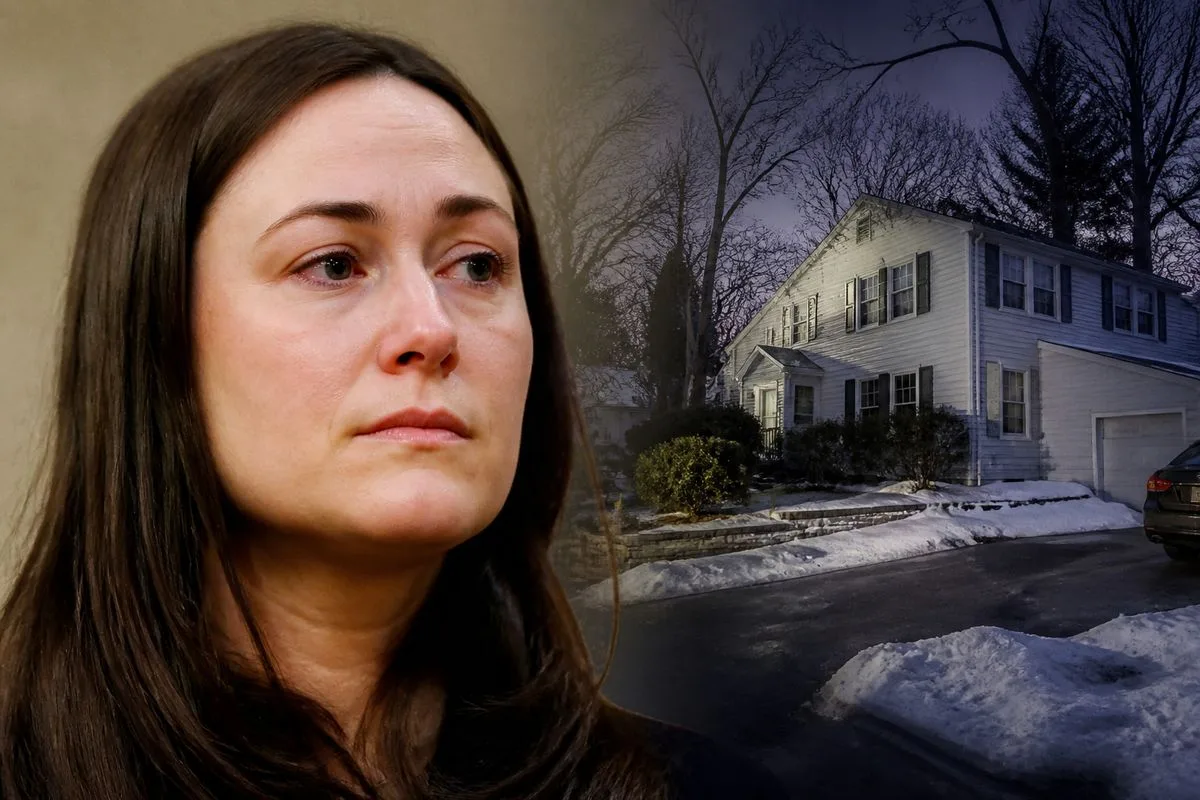
Why the Lindsay Clancy case is back in the spotlight in September 2026
The Lindsay Clancy case returns to public view this week for two reasons that, taken together, say a lot about where the story is heading. First, a holdout juror from the recent trial speaks publicly for the first time, lifting the lid, at least a little, on how a jury wrestles with a case that sits at the uncomfortable intersection of mental health, motherhood, and criminal responsibility. Second, Lindsay Clancy is due back in court for the first time since a mistrial, a procedural reset that does not resolve anything but does change the pressure points for everyone involved.
It is hard to overstate how emotionally charged this prosecution is. The underlying allegation is that on 24 January 2023, Clancy fatally strangled her three children, Cora (five), Dawson (three), and Callan (eight months), in Massachusetts. Those names, and those ages, are now inseparable from the legal debate that follows. And in 2026, the debate is not simply about what happened, it is about how the justice system should evaluate a defendant’s mental state when the facts are horrific and the public’s patience for nuance is thin.
The new development, the juror speaking out, matters because mistrials often leave a fog of speculation. People fill in the gaps with assumptions, social media takes, and half remembered snippets. A juror’s account cannot answer every question, and it is not a substitute for evidence, but it can clarify what juries actually do: weigh instructions, argue over standards, and sometimes get stuck. That stuckness is the whole point of a mistrial.

What the holdout juror’s first public comments signal
According to the reporting summarised in CT Insider, a holdout juror from the Lindsay Clancy trial speaks publicly for the first time. The key point is not the personality of the juror, it is the fact of a holdout at all. A single juror can prevent a unanimous verdict, and in a case like this, that lone position becomes a kind of Rorschach test. Some observers assume the holdout must be “soft” on the defendant. Others assume the opposite, that the holdout refuses to accept a mental health defence. The reality is usually more mundane and more complicated.
Because the source material available here does not include the juror’s full remarks, it is not possible to quote or characterise their precise reasoning without guessing, and guessing would be irresponsible. But the existence of a holdout, followed by a mistrial, tells readers something concrete: the jury did not reach the unanimity required to convict or acquit on the charges presented. That is not a moral verdict. It is a procedural fact with major consequences.
And those consequences are immediate. A mistrial typically puts prosecutors and defence lawyers back into preparation mode, reviewing what landed, what confused, what felt persuasive, and what might be tightened up. The juror speaking publicly adds another layer. It can shape public perception, and it can also influence how future jurors approach the case, even if courts attempt to screen for bias. In high profile trials, the idea of a pristine jury pool is, frankly, a bit of a fantasy.
There is also a quieter implication. When a juror feels compelled to speak, it often reflects the strain of being cast as the person who “stopped” a verdict. That strain is part of the story too. Jury service is meant to be civic duty, but in cases involving child deaths and mental illness, it can be psychologically punishing. The system relies on ordinary people to make extraordinary decisions, then expects them to go back to ordinary life. That is a big ask.
Lindsay Clancy’s return to court after the mistrial
Multiple supplementary items indicate that Lindsay Clancy is set to return to court in late September 2026, described as her first appearance since the mistrial. Again, the available material does not provide a full docket, the specific motions to be heard, or the precise schedule for any retrial. What it does make clear is the direction of travel: the case is not over, and the court process is moving into its next phase.
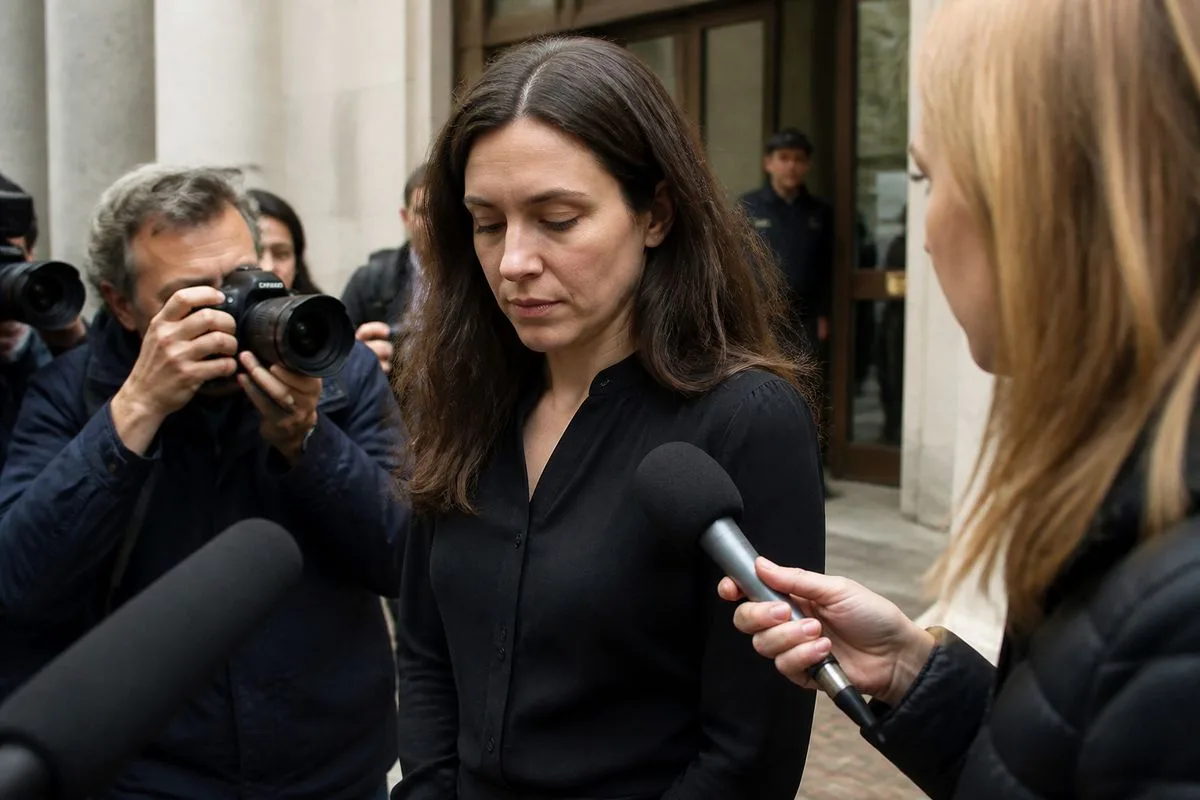
In practical terms, a post mistrial return to court can involve status hearings, discussions of scheduling, and arguments over what evidence will be admissible next time. It is also the moment when both sides start signalling their posture. Prosecutors may indicate whether they intend to retry the case on the same charges. The defence may push for adjustments, including renewed arguments about mental state evidence, expert testimony, or pre trial rulings that could narrow what the next jury hears.
The public tends to treat “mistrial” as a kind of cliffhanger. But legally it is closer to a reset button. The prosecution gets another shot, if it chooses to take it, and the defence gets another chance to persuade a new jury. That can be brutal for families, because it prolongs uncertainty. It can also be brutal for a defendant, because the weight of accusation does not lift. Everyone stays stuck in the same moment, replaying it, re litigating it, and re living it.
One detail in the supplementary material is particularly telling: it references testimony from a psychologist about whether Clancy was criminally responsible. That phrase, criminal responsibility, is doing heavy lifting. It is not just about diagnosis. It is about whether the law considers the defendant capable of forming the requisite intent, understanding wrongfulness, or meeting whatever legal standard applies in the jurisdiction. The courtroom becomes a place where medical language is translated into legal categories, sometimes awkwardly, sometimes contentiously.
Background: the Lindsay Clancy case and the people at its centre
The core allegation, as described in the supplementary material, is that on 24 January 2023 Lindsay Clancy killed her three children, Cora, Dawson, and Callan, by strangulation. The ages, five, three, and eight months, are not incidental details. They shape everything about how the public reacts, how jurors imagine the scene, and how prosecutors frame harm. In cases involving very young children, the emotional temperature rises quickly, and that heat can make careful reasoning harder, not easier.
There is also a civil dimension running alongside the criminal case. A document described as a civil lawsuit appears in the supplementary sources, indicating litigation connected to the deaths of the children. The material available here does not provide the full claims, the parties’ detailed arguments, or the current status of that civil action. But its existence is a reminder that high profile criminal cases often spawn parallel proceedings, each with different burdens of proof and different aims. Criminal court is about guilt and punishment. Civil court is typically about liability and damages. They can move at different speeds, and they can pull families through multiple rounds of trauma.
Then there is the cultural layer, which is harder to quantify but impossible to ignore. Online discussion threads referenced in the source list show how the case is debated in public forums, often in blunt terms. That is not evidence, and it should not be treated as such. But it does illustrate the environment in which the legal process now operates. Potential jurors do not live in a vacuum. They live in a world of commentary, outrage, empathy, and misinformation, all mixed together.
Finally, there is the comparison that appears in The Times headline: Christa Pike saying, “I have a kinship with Lindsay Clancy.” Without the full article text, it is not possible to responsibly unpack what Pike means, or how the piece frames that statement. But the mere act of drawing a line between cases is a familiar media move. It invites readers to see patterns across crimes, and it can influence how the public categorises a defendant: monster, patient, both, neither. Those categories are emotionally satisfying. They are not always legally useful.
What this legal fight is really about: mental health, intent, and criminal responsibility
At the heart of the Lindsay Clancy case is a question that courts have wrestled with for generations: when, if ever, does severe mental illness reduce or remove criminal responsibility for an act that is otherwise plainly criminal? The supplementary material’s reference to psychological testimony suggests that the trial turns, at least in part, on expert interpretation of Clancy’s mental state around the time of the killings. That is common in cases where the defence argues that the defendant was not criminally responsible, or lacked the required mental element for the charges.
This is where the public conversation often goes wrong. People hear “mental health defence” and assume it means “no consequences”. It does not necessarily. Even in systems that allow findings of not criminally responsible, the outcome can involve secure hospitalisation and long term supervision. The legal question is narrower: whether the prosecution has proved the required elements beyond reasonable doubt, and whether the defence has established any legal basis that changes culpability. It is technical, and yes, it can feel unsatisfying when the facts are emotionally overwhelming.
The mistrial itself is a clue that jurors may have struggled to apply the law to the evidence. That struggle could stem from conflicting expert testimony, unclear legal instructions, or simple human difficulty in reconciling compassion and condemnation. And it is worth saying plainly: jurors can believe that something happened and still disagree about what it means legally. That is not weakness. That is the system working as designed, even if the result is messy.
For prosecutors, the challenge in a retrial is to simplify without oversimplifying. They need a narrative that is coherent, legally grounded, and resilient against reasonable doubt. For the defence, the challenge is different. They must persuade jurors to focus on mental state at the relevant time, not on the emotional horror of the outcome. That is a hard sell in any courtroom. In a case involving three young children, it is harder still.
The Bigger Picture
The Lindsay Clancy case sits inside a broader shift in how societies talk about maternal mental health, especially the most severe forms that can involve psychosis, delusions, or profound disconnection from reality. Over the past decade, public awareness has grown, but awareness does not automatically translate into better systems. Healthcare, social services, and criminal justice still operate in silos. When something goes catastrophically wrong, those silos become painfully visible, and the debate turns reactive. Who missed what? Who should have done more? Who is to blame? It is understandable. It is also often too late to be useful.
There is also a media pattern worth noticing. High profile cases involving mothers and children tend to attract a particular kind of coverage, heavy on identity and morality, lighter on the mechanics of treatment, risk assessment, and continuity of care. That is partly because the details are complex and sometimes sealed. But it is also because moral storytelling is easier. The problem is that moral storytelling can flatten the real policy questions. If a case is framed purely as evil, there is little appetite to examine mental health provision. If it is framed purely as illness, there is little appetite to examine accountability and safeguarding. The truth, in many cases, is that both frames contain something real, and neither is sufficient on its own.
And then there is the jury system itself. The mistrial and the holdout juror’s decision to speak publicly highlight a tension that rarely gets sustained attention: modern juries are asked to adjudicate increasingly technical disputes, including battles between credentialed experts, while being told to ignore the noise outside the courtroom. That is not exactly groundbreaking as an observation, but it is a big deal in practice. As public trust in institutions wobbles, jurors may arrive more sceptical of experts, or more inclined to treat expert testimony as partisan. Retrials do not just repeat evidence. They repeat this cultural context, too, and the context is changing fast.
Historical context and comparisons, and why they matter here
Comparisons to other cases, like the one hinted at in The Times headline referencing Christa Pike, are tempting because they offer a shortcut. Humans like categories. But legal outcomes depend on jurisdiction, charges, evidence, and the specific legal tests applied. Two cases can look similar in a headline and be fundamentally different in court. Without the full text of that Times piece, it is not possible to responsibly map the claimed “kinship” onto any particular legal argument. What can be said is that such comparisons often shape public expectations, sometimes unfairly.
Historically, cases involving claims of severe mental illness have swung between two public fears: fear of punishing someone who is profoundly unwell, and fear of letting someone “get away with it”. Those fears drive policy, and policy drives courtroom practice. Over time, many jurisdictions have tightened standards, demanded more rigorous expert evidence, and placed more emphasis on structured assessments. But no legal test can fully resolve the moral discomfort people feel when a defendant’s mind is itself part of the contested terrain.
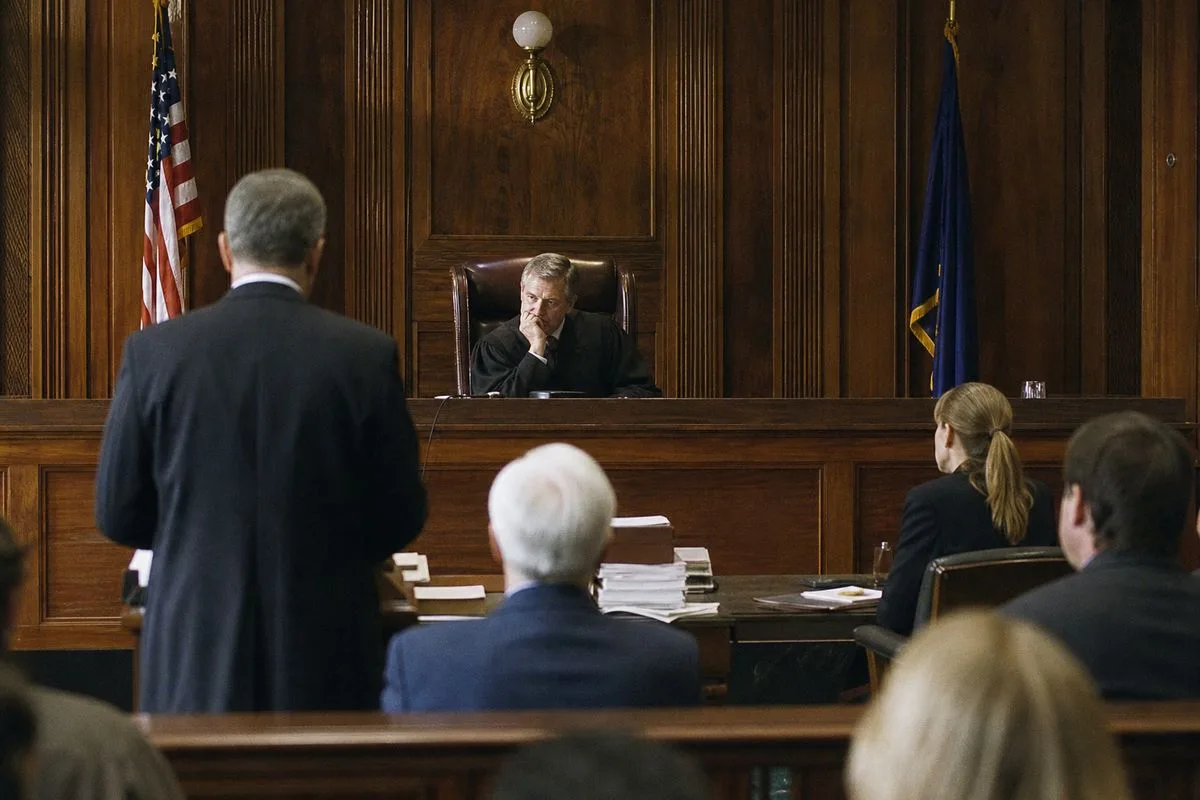
There is also a long running debate about whether criminal courts are the right venue for questions that are, at least partly, medical. Courts can decide responsibility. They cannot provide care in the way a health system can. Yet when tragedies occur, the criminal process becomes the main public forum for understanding what happened. That is why trials like Clancy’s are watched so closely. They are not just about one defendant. They become a proxy for how society thinks about mental illness, parenting, and risk.
In that sense, the mistrial is not merely a procedural hiccup. It is a sign that the case sits at the edge of what lay decision makers can comfortably resolve. A retrial may produce a verdict. Or it may produce another deadlock. Either way, the case will continue to be cited in future debates about mental health defences, expert evidence, and the limits of jury comprehension in emotionally extreme cases.
What happens next, and what to watch as the case moves forward
With Lindsay Clancy returning to court after the mistrial, the next steps are likely to revolve around scheduling and the shape of any retrial. Observers should watch for signals about whether prosecutors intend to proceed on the same theory, whether the defence will adjust its presentation, and how the court manages expert testimony. In cases that hinge on criminal responsibility, small evidentiary rulings can have outsized impact. Which experts testify, what records are admitted, and how jurors are instructed can be the difference between unanimity and another stalemate.
The holdout juror’s public comments, while limited in what they can legitimately establish, will also echo through the next phase. They may influence how the public talks about the case, and that public talk can seep into jury selection. Courts can instruct jurors to avoid media. They cannot erase what people have already absorbed. That makes careful, methodical jury selection more important, and more difficult.
For the wider public, the uncomfortable truth is that there may not be a clean narrative ending. A guilty verdict would not answer every question about mental health and prevention. A finding that reduces criminal responsibility would not satisfy those who want punishment to match harm. Another mistrial would satisfy no one. But the legal system is not built to satisfy. It is built to decide, within defined rules, what can be proved and what cannot.
And so the Lindsay Clancy case moves forward again, carrying grief, anger, and argument with it. The court will focus on evidence and legal standards. The public will focus on meaning. The gap between those two things is where most of the tension lives, and where the next chapter will be written.